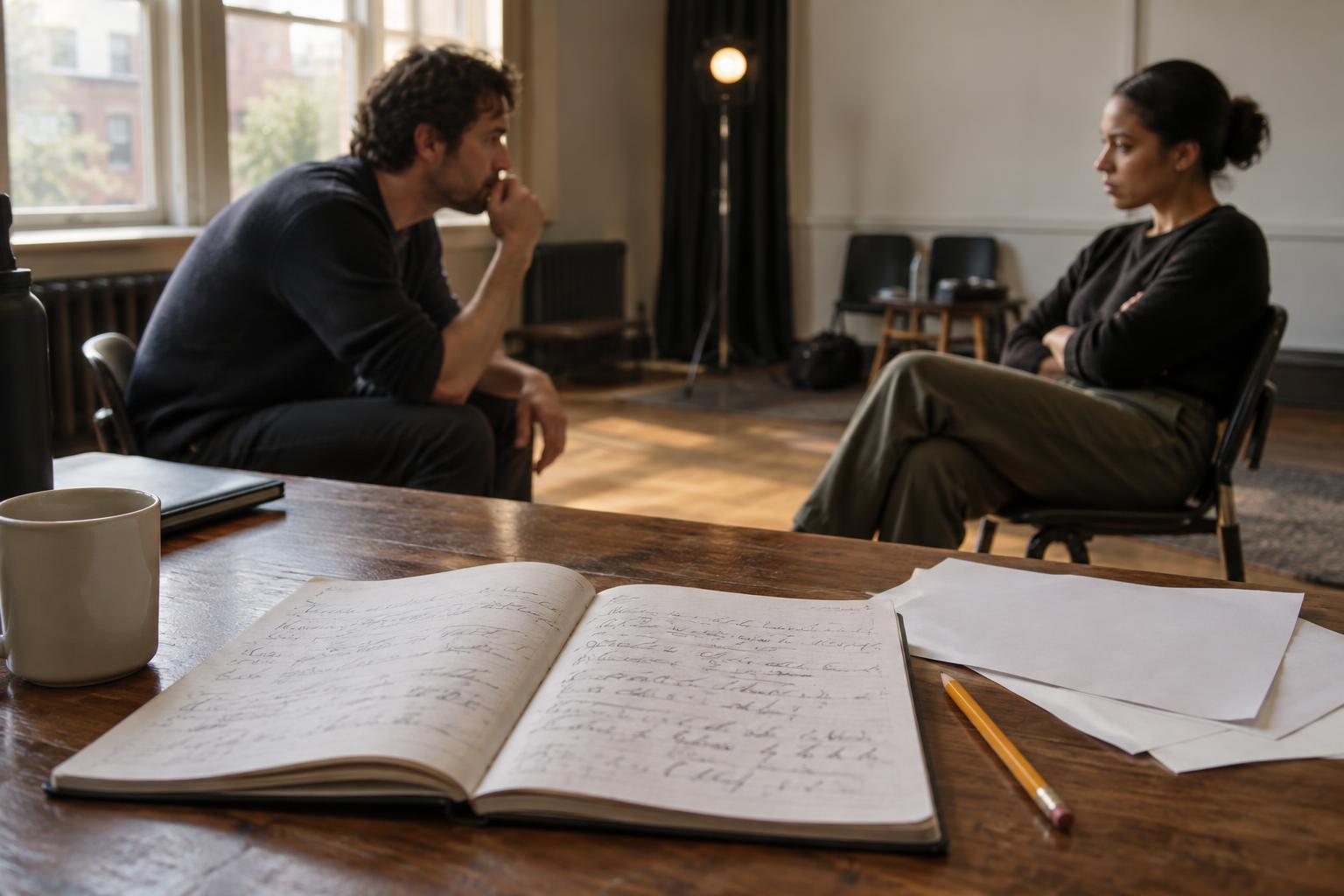
Give the camera and microphone something to capture
An action line describes what happens in a scene, not everything a character knows or feels. A reader can understand “Mara regrets opening the letter,” but a crew cannot directly photograph regret. Give the emotion an observable form: “Mara folds the letter into quarters. She reaches for the trash, then slips it into her pocket.” The second version leaves room for performance while making the change in her decision visible.
This does not mean every thought needs a dramatic gesture. Sometimes a character simply says something, stays still, or refuses to look at another person. Ask what an audience could see or hear that would let them follow the moment. If a sentence depends entirely on information inside a character’s head, consider whether that information belongs in dialogue, a visible choice, an earlier scene, or nowhere at all.
Choose details that affect the scene
Filmable writing is selective. A room may contain dozens of objects, but the action lines need only the ones that shape the story, clarify the space, or create an opportunity for a character. “A crowded kitchen” establishes a general impression. “Dirty plates block the sink. A spare key hangs beside the back door” gives the actors and crew specific elements to work with, especially if the key matters later.
Introduce important objects clearly enough that readers can recognize them when they return. Avoid loading an entrance with a complete inventory of clothes, furniture, and weather unless those details change what happens. A useful test is to remove a detail and ask whether the scene becomes harder to understand, stage, or feel. If nothing changes, it may be atmosphere you can suggest more economically.
Write actions in a playable order
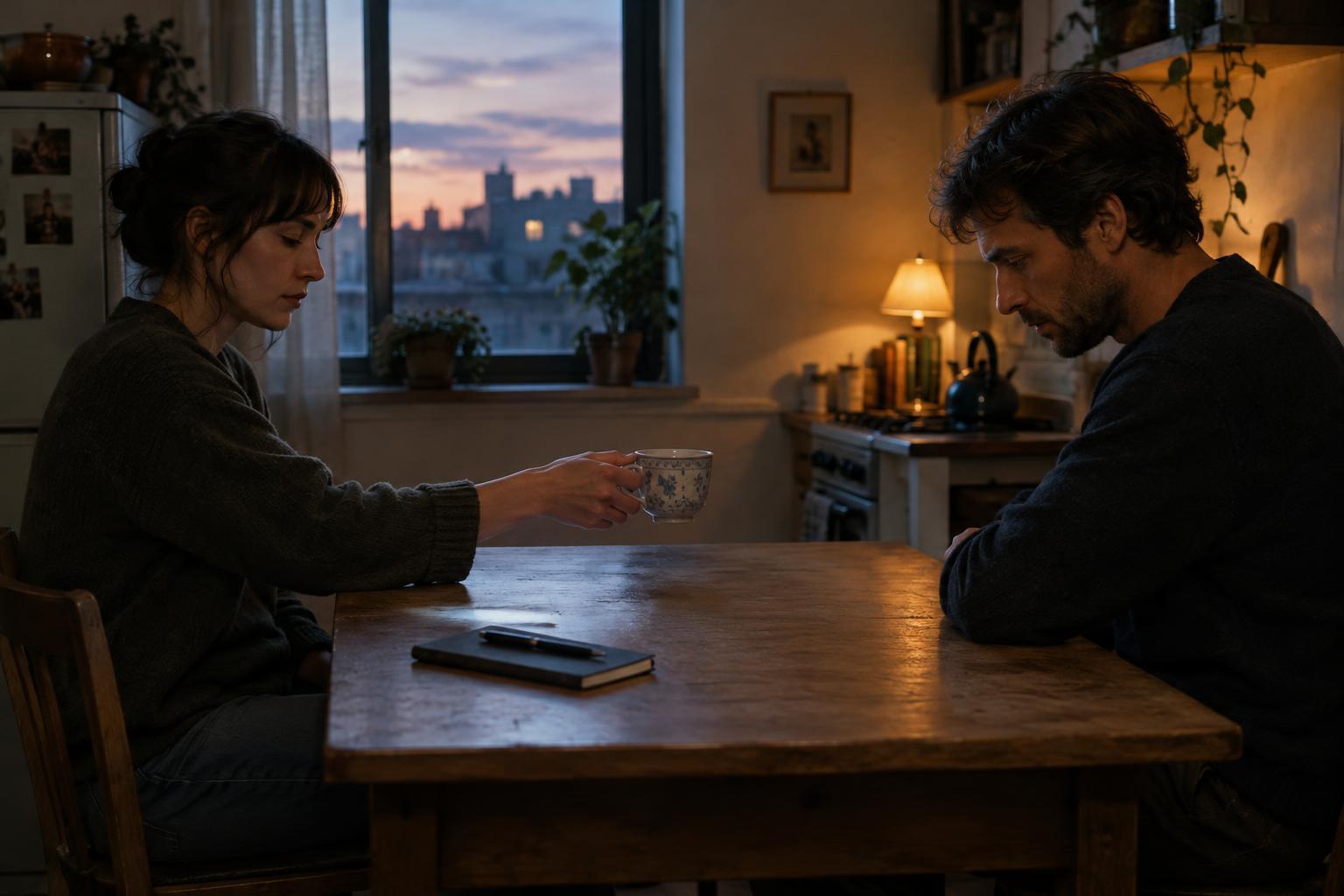
The order of sentences can establish the order of events. “The phone buzzes. Leo turns it face down. Across the table, Nina stops talking” gives each beat a cause and a response. If all three actions are packed into one long sentence, the moment may become harder to picture. Short paragraphs can help a reader register a reveal, a reversal, or a pause, though breaking every movement onto its own line can make an ordinary scene feel artificially momentous.
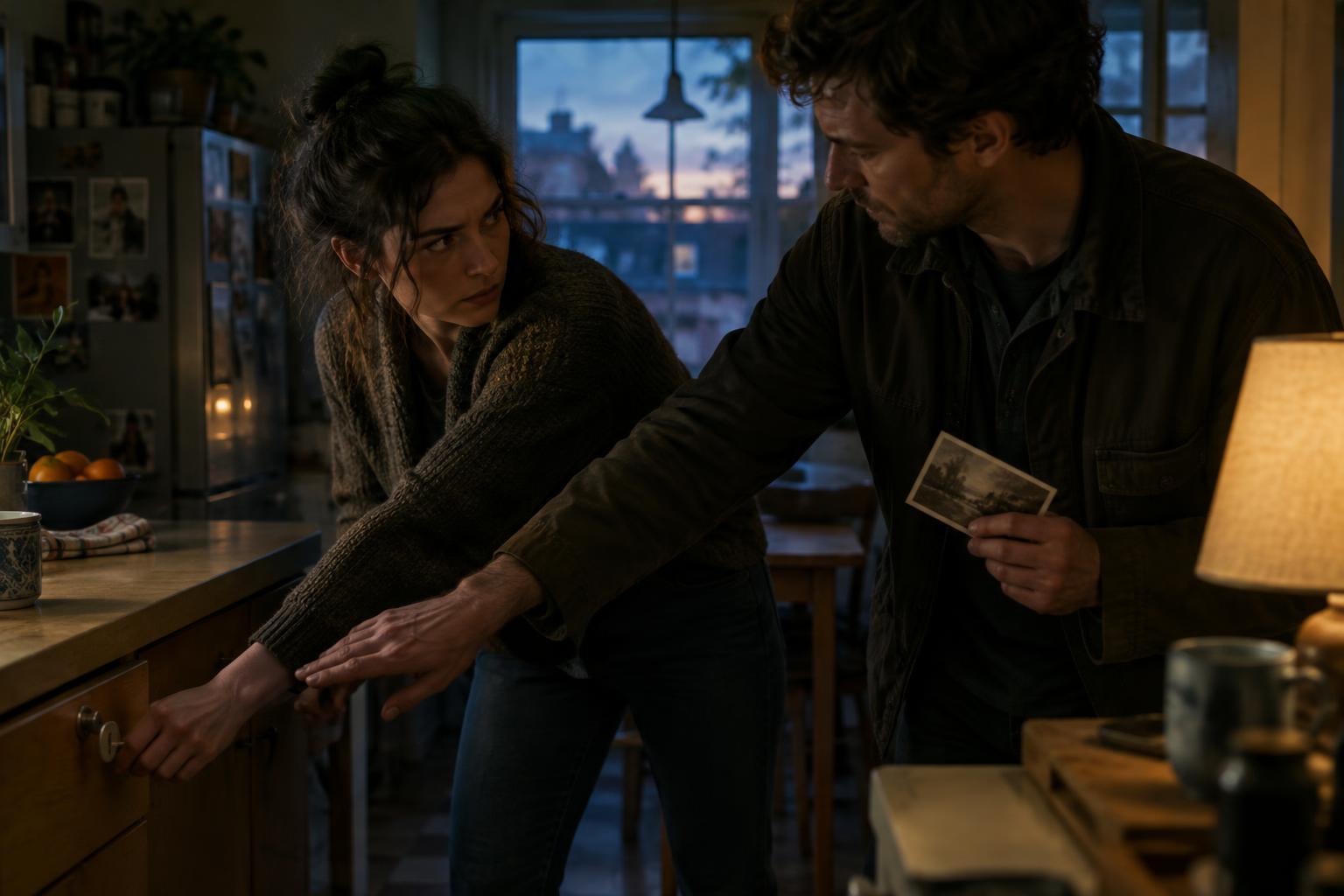
Use precise verbs where they earn their place. A character who “edges toward the door” is doing something different from one who “runs to the door.” But precision is not the same as cataloguing every motion. “Nina searches the drawer and finds a passport” may be enough. The scene probably does not need instructions for which hand opens the drawer, how far it slides, and where Nina’s eyes move unless one of those details creates the next beat.
Leave room for the people making the film
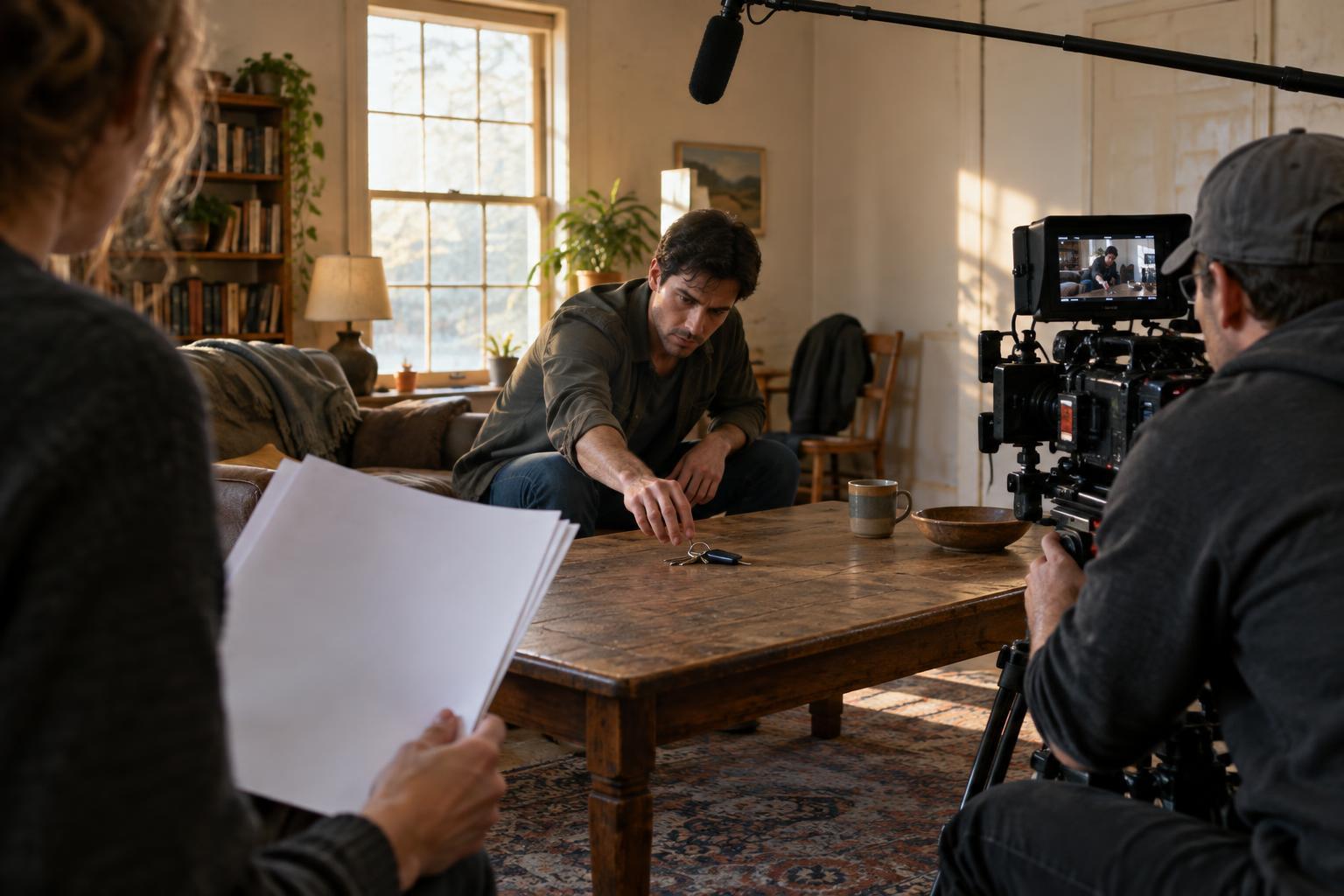
A screenplay can be visually specific without dictating a camera setup for every sentence. “The spare key is gone” tells the team what the audience needs to notice. “Dolly in to an extreme close-up of the empty hook” proposes one way to show it. That shot instruction might be useful when the precise framing is essential to a reveal, but routine camera directions can narrow choices that a director and cinematographer may solve differently on set.
The same principle applies to performances. “Nina smiles as Leo leaves, then drops the smile” provides a playable turn. “Nina delivers a perfectly heartbreaking expression of lifelong betrayal” asks for an effect rather than an action. Write the change that matters and let the actor find its texture. When geography is important, state it plainly: who is near the exit, what blocks the path, and where the crucial object sits.
Revise for clarity, sound, and scale
Read an action passage while imagining how it might be filmed and recorded. If the scene depends on a sound, name the sound: a latch clicks, an engine cuts out, footsteps stop outside the door. If the audience must know something that cannot be seen or heard, look for a concrete way to reveal it. An action line can also suggest scale without prescribing a production method: “The hallway fills with smoke” conveys a requirement; the team can decide how to achieve it.
On revision, mark any sentence that explains a character’s intention, repeats information already in dialogue, or introduces a detail that never matters. Then check that the remaining lines still let a reader track the scene’s physical and emotional progression. The goal is not to strip out personality. It is to make every sentence earn its space by helping someone picture an event, understand a choice, or anticipate what could happen next.