Give the foreground a reason to be there
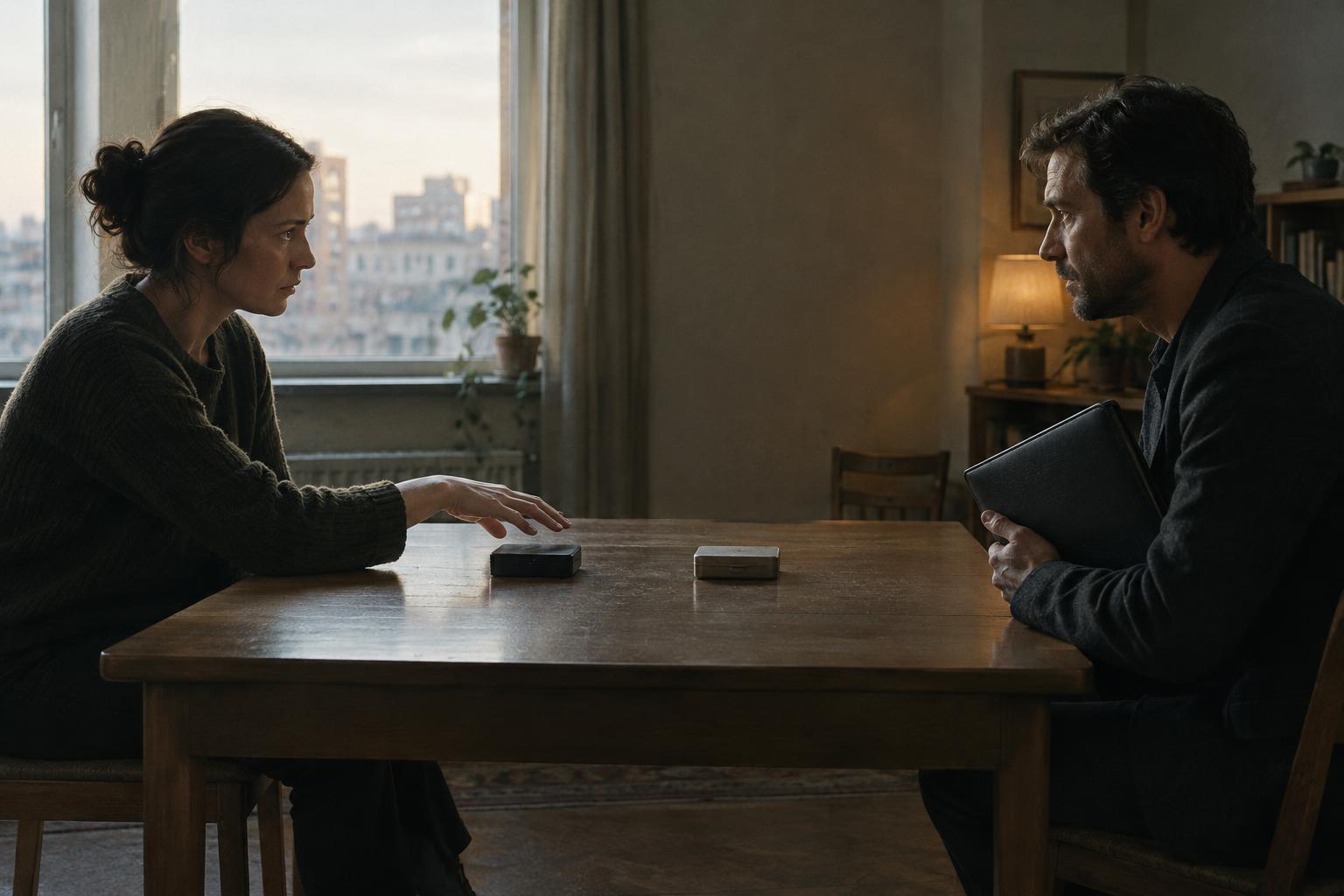
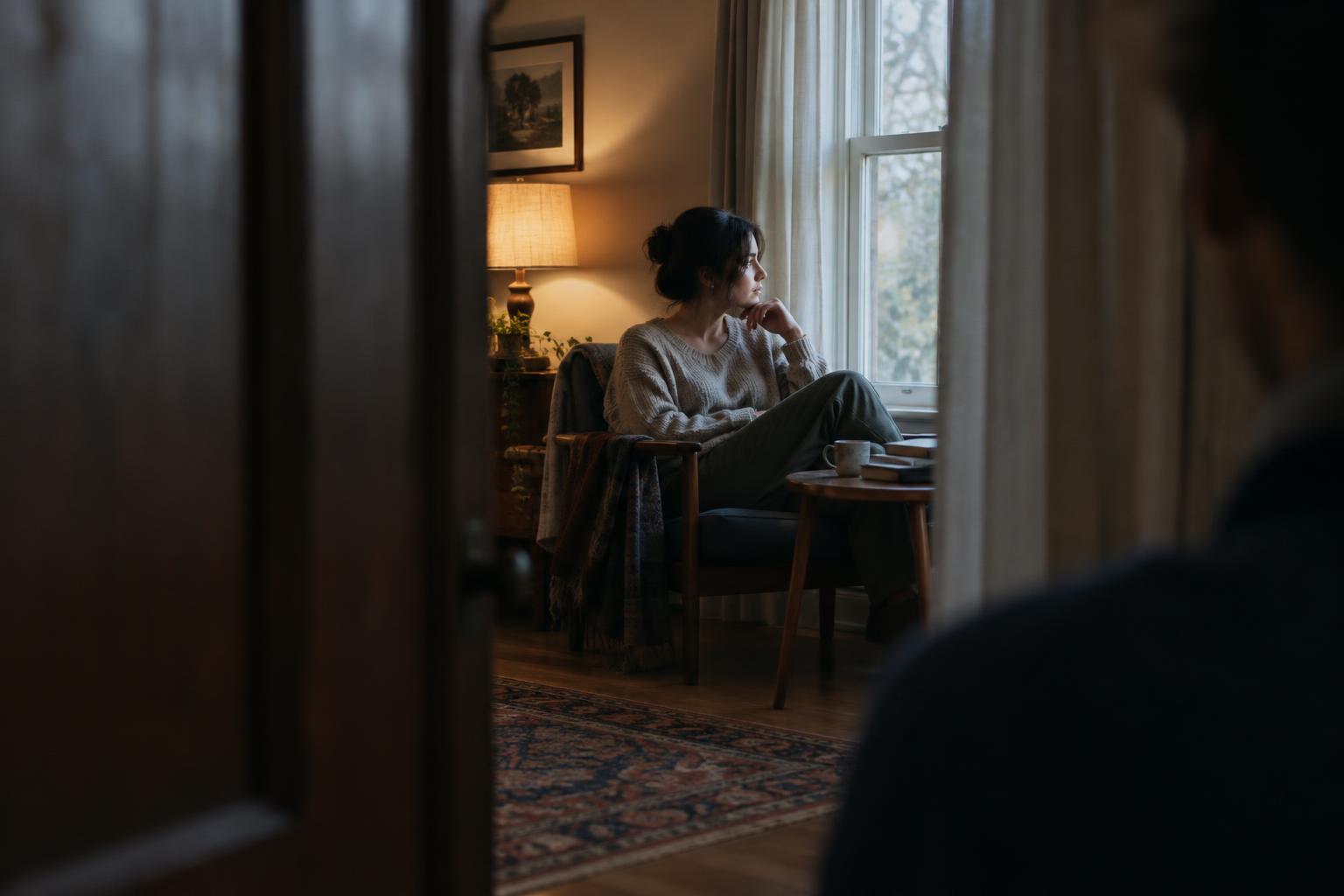
A foreground element is anything placed between the camera and the main subject. It might be a doorframe at the edge of a shot, a person’s shoulder during a conversation, or objects on a desk. Its value is not simply that it makes the image look layered. It can show where the camera is positioned in a room, suggest that a character is watching from a particular place, or make an open space feel enclosed.
Start with the scene’s purpose rather than hunting for something to shoot through. If the audience needs to notice a character entering, a doorway may help define that entrance. If the important moment is a quiet exchange of expressions, a large foreground object may compete with the faces. Ask what the element adds that a clean view would not, and leave it out if the answer is unclear.
Protect the subject’s outline and expression
Foreground framing works best when the viewer can still find the subject quickly. Check where the element meets the subject’s outline: a lamp, shelf, or plant can appear to grow out of a head when seen from one camera position. A small change in camera height or subject position may separate the shapes. Watch the space around eyes, hands, and any object the character needs to use; these often carry more information than the rest of the frame.
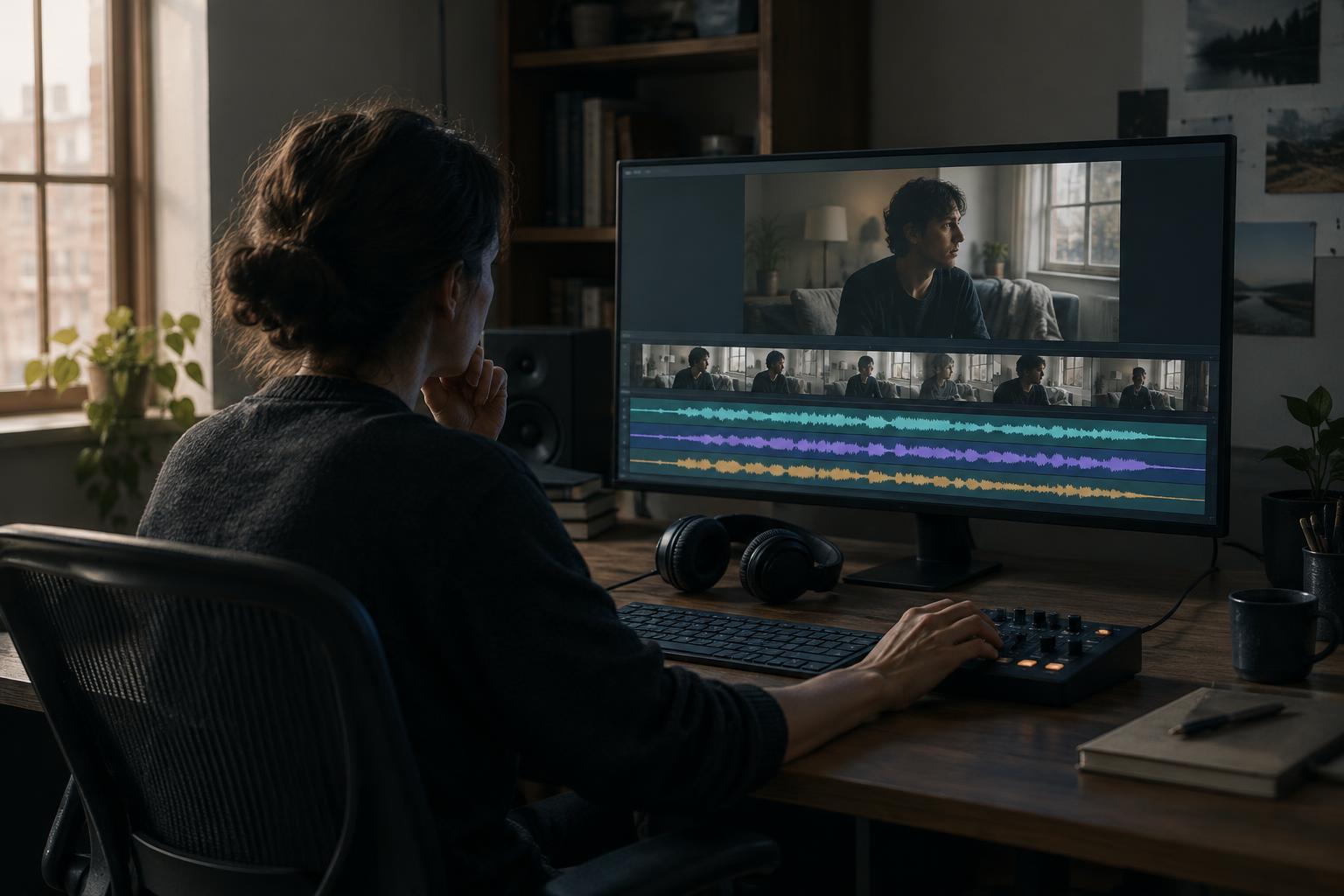
The amount of frame a foreground element occupies also matters. A thin strip along one edge can establish location without drawing much attention. A large dark shape can narrow the viewer’s view and create tension, but it may obscure a gesture or make the shot feel crowded. Record a short rehearsal and watch it at normal playback size. An arrangement that looks balanced on set can feel busy once people move.
Use focus and contrast to set priorities
Foreground elements do not always need to be sharp. An out-of-focus edge can suggest nearby space while allowing the subject to remain the clear point of attention. To test this, place the camera close enough to the foreground element that it falls visibly out of focus when the lens is focused on the subject. The result depends on the lens, aperture, and distances involved, so check the image rather than relying on a particular setting.
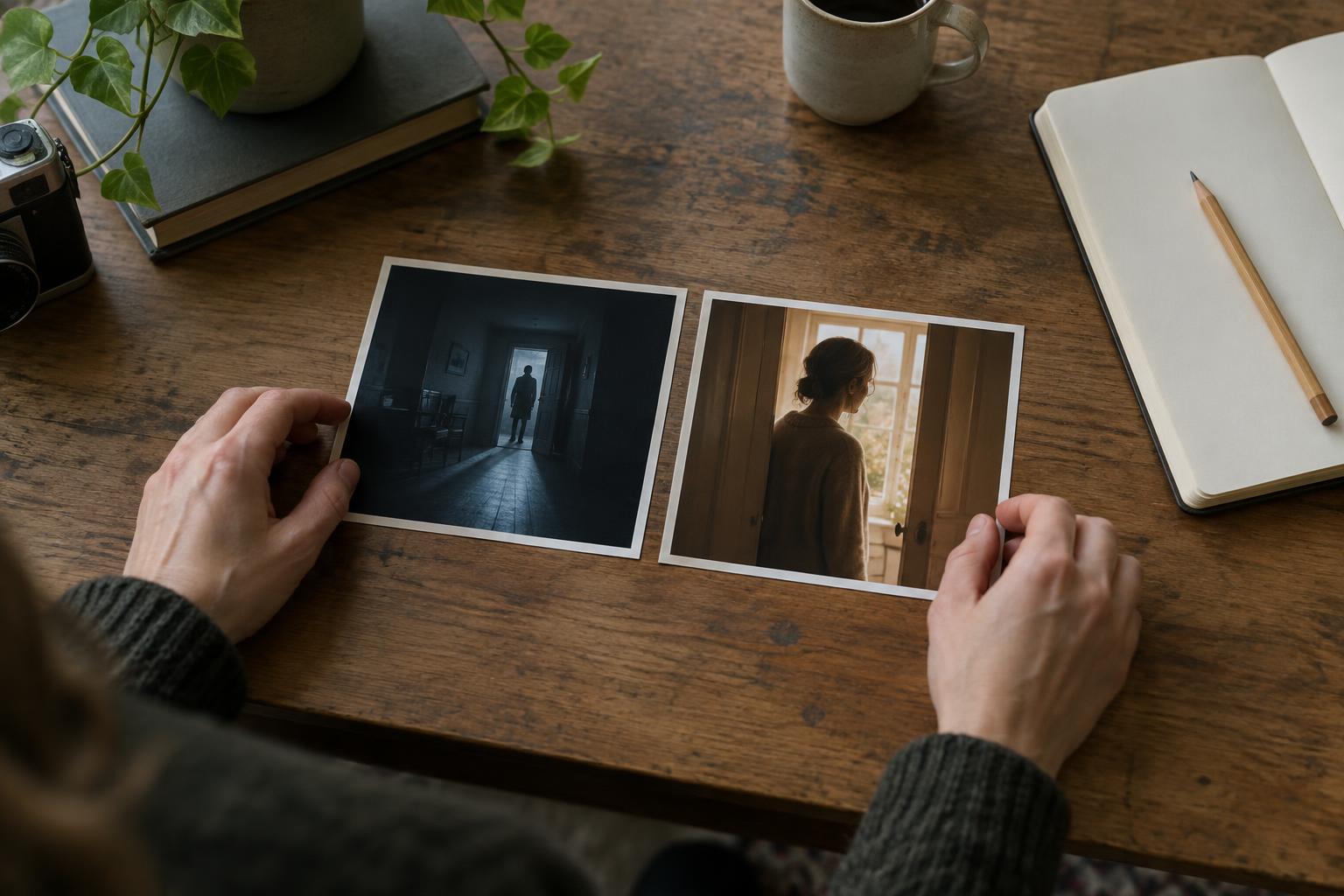
Brightness and color affect attention too. A bright object at the edge of a dark scene can pull the eye away from a face even when it is blurred. Likewise, a nearly black foreground shape may cover more of the frame than intended. Before adding light or moving the object, decide which part of the image should be noticed first. Then compare a clean version of the shot with the framed version to see whether the foreground helps establish that priority.
Plan for movement, not just a still frame
A foreground shape changes as either the camera or the actors move. A doorway that neatly borders a character at the start of a shot may hide them when they cross the room. Walk through the full action while watching the monitor. Mark the moments when a face, prop, or important gesture disappears, and decide whether that brief obstruction serves the scene. If it does not, adjust the camera path, the blocking, or the foreground element.
Moving past a nearby object can make camera movement more apparent because its position changes rapidly against the background. That effect can help reveal a new part of a room or shift attention between characters. It can also be distracting when the object sweeps across the frame without a clear purpose. Rehearse the move at the speed intended for the scene, then check that the viewer has enough time to understand what the shot reveals.
Keep the approach consistent across coverage
When a scene uses several angles, foreground framing can help the shots feel connected. You do not need to put an object in every frame. Instead, consider whether the camera seems to occupy a plausible place in the same room from shot to shot. A wide shot might show a table between the camera and the actors; a closer angle could retain a small part of that table near the edge. That relationship can make the closer view feel grounded.
Take a reference image of each setup before moving furniture or props. Note which objects are in front of the actors and whether they block any part of the action. When reviewing coverage, look for cuts that unexpectedly change how enclosed or open the space feels. A clean shot after several tightly framed views may be exactly the release the scene needs. The aim is not perfect visual uniformity, but deliberate changes that follow the story.