A label cannot settle the question
War films and anti-war films are not two neatly separate genres. Both may feature soldiers, combat, sacrifice, and fear. A film can admire the skill and loyalty of people under fire while questioning the decisions that put them there. Another can show devastating losses yet still frame a battle as necessary and triumphant. Calling a film “anti-war” therefore says less about whether it contains violence than about how it asks us to understand that violence.
Perspective is a useful starting point. Who gets a name, a private life, and a choice? Whose death is treated as a turning point, and whose is passing scenery? A story told through one unit’s immediate struggle may make survival feel like its only question. Widen the frame to include civilians, opponents, or the people waiting at home, and the same operation can take on a different meaning. The events have not changed; the viewer’s access to their consequences has.
Whose goal drives the story?
A conventional mission plot gives viewers a clear objective: reach a position, rescue someone, hold a line. That structure creates urgency because progress can be measured. It can also narrow attention. If every obstacle matters chiefly because it delays the mission, the people living where the mission takes place may become part of the terrain rather than participants in the story.
An anti-war perspective often complicates the goal without pretending the characters can simply walk away. A soldier may need to protect a friend while doubting the purpose of an order. A civilian may experience a “successful” advance as the loss of a home. Neither viewpoint automatically makes a film more truthful; each reveals some things and leaves others out. The revealing choice is whether the film lets those conflicts remain visible after the immediate danger has passed.
What the camera and sound make compelling
Combat can be filmed for orientation and excitement. Wide shots clarify the battlefield, quick cuts build momentum, and a swelling score can make a risky action feel heroic. These tools are not inherently pro-war. Viewers may need to understand where characters are and why they act. But if the film repeatedly turns danger into a satisfying display of mastery, its emotional effect may pull against dialogue that condemns war.
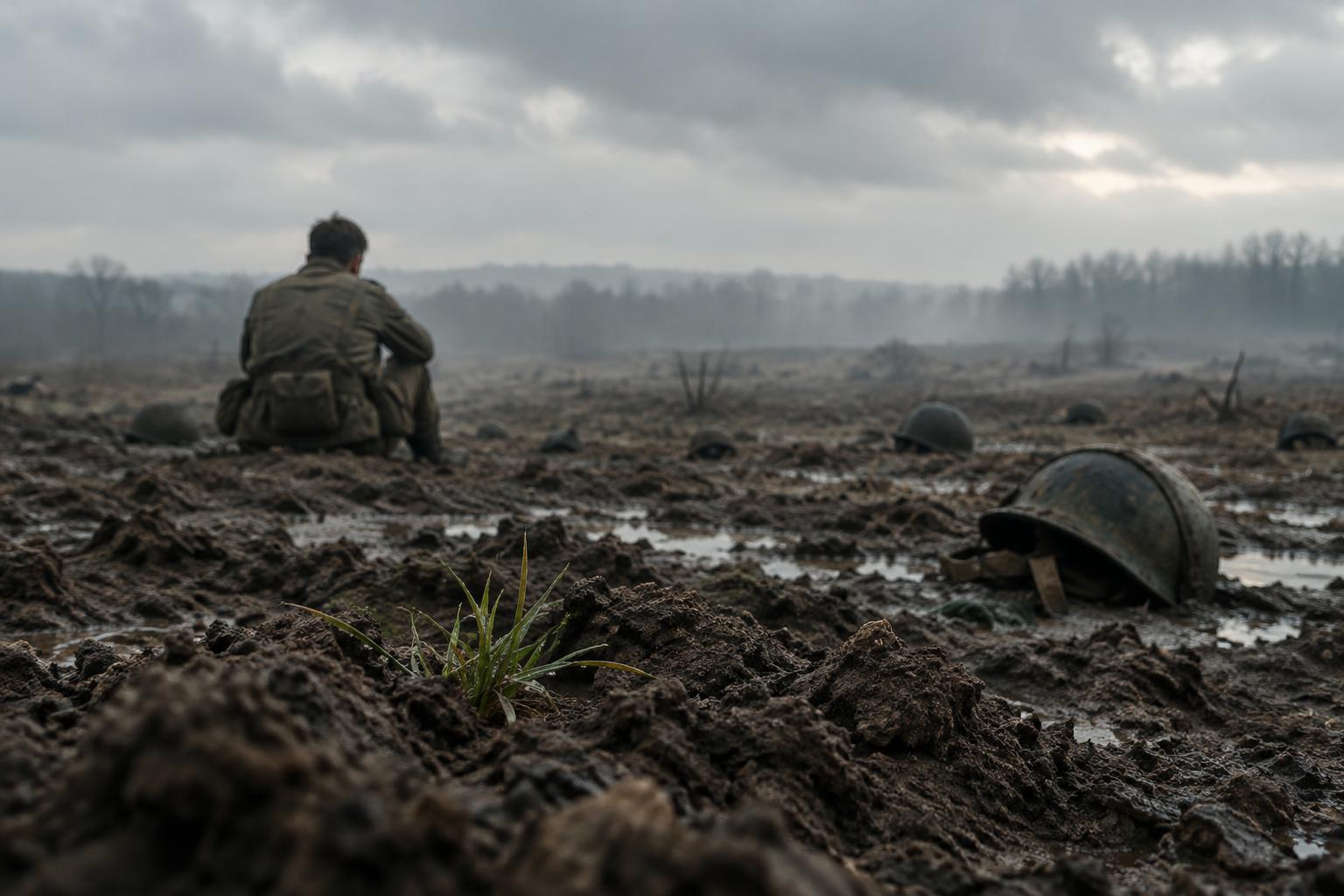
Other choices can make violence harder to consume as spectacle. A camera might stay with the effort of carrying a wounded person rather than follow the next attack. It might hold on a damaged room after the fighters leave. Sound can do similar work: confusion, interrupted speech, or an unsettling quiet may draw attention to what characters cannot process in the moment. Such choices need not be graphic. Often the strongest shift comes from giving consequences time that an action sequence would normally skip.
What happens when the battle ends?
Endings have particular power in war stories. Completing a mission can provide narrative closure even when the human damage remains unresolved. A medal ceremony, a return journey, or a final victory can make earlier losses seem justified if the film treats them as the price of a clear achievement. By contrast, an ending that leaves relationships strained or ordinary life difficult to resume may question whether any objective can contain what happened.
That does not mean an anti-war film must deny courage or end in despair. Showing a character care for someone else can be both moving and critical of the situation that made such care necessary. The question is where the story places its final emphasis: on the accomplishment alone, or also on the lives altered around it. Even a brief scene after combat can change the meaning of everything before it.
A practical way to watch the genre
When watching a war film, try separating what its characters believe from what its storytelling encourages you to feel. A character may call a mission noble, but does the film give you room to doubt them? It may include an anti-war speech, but do its images and music invite you to enjoy each act of destruction without reflection? Neither a line of dialogue nor a violent scene settles the matter on its own.
Then ask whose perspective you would need to add to tell the same story differently. The person across the battlefield, the medic arriving afterward, or a family member receiving fragmented news might change its emotional center. This does not produce a simple score for whether a film is “for” or “against” war. It offers a more useful way to see how genre works: through choices about attention, duration, and whose experience is allowed to matter.