The frontier as a story, not just a place
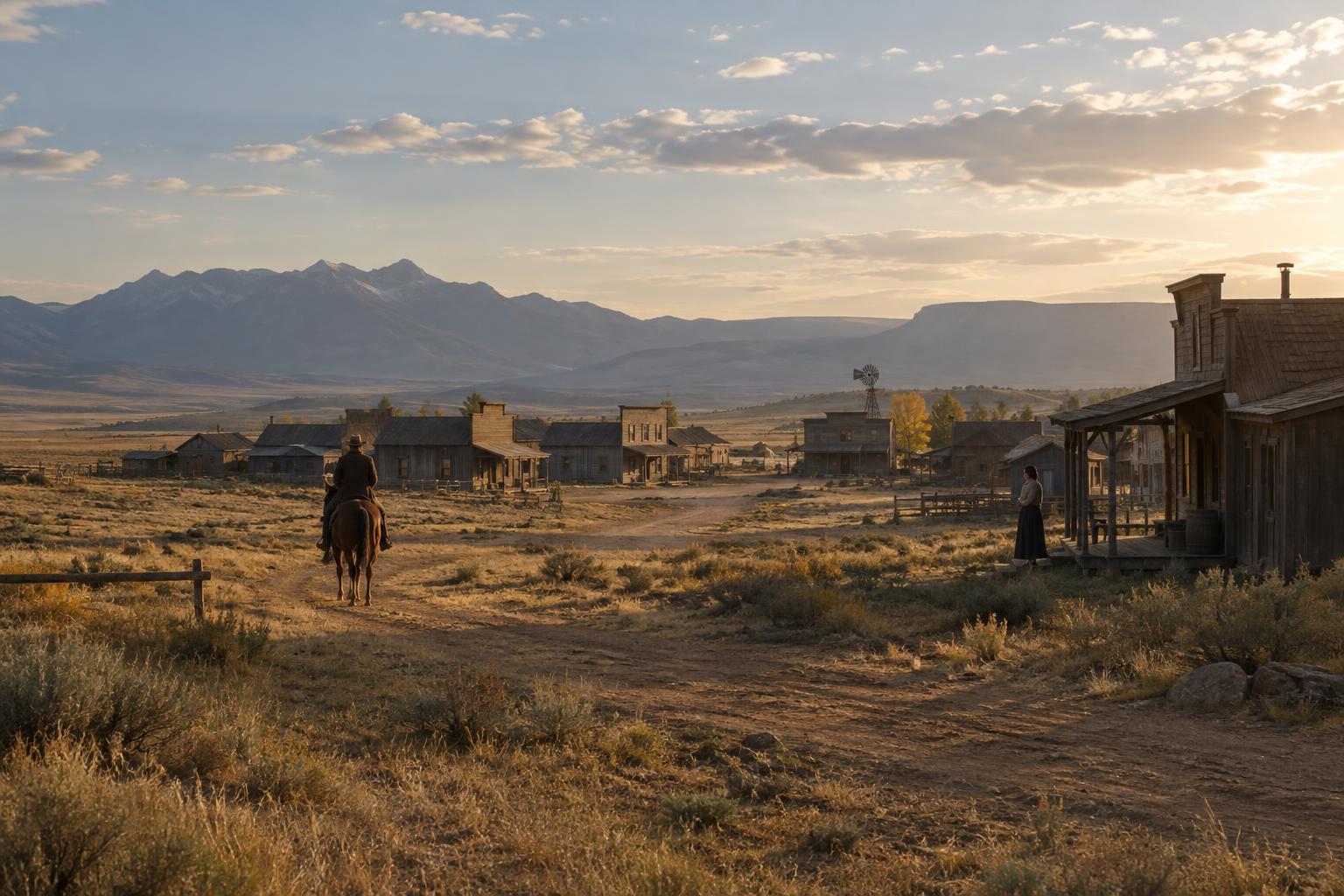
A Western may begin with an open landscape, a small settlement, and a stranger arriving on horseback. Those images establish more than a location. They suggest a world where rules are unsettled and people must decide what kind of community they want to build. A dispute over land, water, work, or authority can quickly become a dispute over who belongs.
The frontier is also a myth: a simplified story about opportunity, independence, and starting over. That myth gives Westerns much of their dramatic force, but it deserves scrutiny. A place that looks empty to one character may already be home to others. A character’s freedom to move or claim land may depend on someone else losing it. The genre becomes more interesting when it treats these tensions as part of the story rather than scenery behind it.
Why the familiar characters endure
The lone rider, the sheriff, the outlaw, the rancher, and the newcomer are recognizable because each carries a clear dramatic question. Can the rider remain independent while helping others? Can the sheriff uphold a law that seems inadequate or unfair? Is the outlaw a threat, a product of harsh circumstances, or both? These roles make conflict legible before a character says much at all.
Familiarity need not mean simplicity. A strong Western gives its characters competing needs and obligations. A sheriff might want peace but rely on force to maintain it. A newcomer might seek a fresh start while bringing old prejudices along. Even a brief supporting role can complicate the town’s apparent consensus: the person who runs a store, maintains a household, or does seasonal work may understand the cost of a showdown better than either gunfighter.
How Westerns make conflict visible
Western storytelling often turns moral pressure into physical distance. A rider approaches from far across a plain. Two opponents face each other across a street. A person pauses at a doorway, caught between the safety of an interior and the risk outside. These arrangements let an audience read hesitation, isolation, and power through blocking and framing.
Sound and pacing matter just as much as the wide view. Hooves, boots, wind, and a door closing can make a quiet scene feel charged. A long wait before a confrontation gives viewers time to consider its consequences; a rapid cut can make violence feel sudden and disorienting instead of triumphant. For filmmakers, the useful lesson is not to copy a particular hat or camera angle. It is to make setting, movement, silence, and duration express what a character stands to lose.
What modern revisions change
A revisionist Western can keep the genre’s roads, towns, and confrontations while asking different questions about them. Rather than assuming that violence restores order, it may show how violence leaves lasting damage. Rather than treating a settlement as a single community, it may reveal conflicting experiences within it. Women, Indigenous people, and workers who were pushed to the edges of many familiar frontier narratives can become central participants with goals of their own.
Revision is not simply a matter of making every hero cruel or every ending bleak. A thoughtful revision tests an inherited assumption and follows the result through the plot. If a story questions the lone hero, for example, its resolution might depend on cooperation instead of one decisive duel. If it questions the promise of a fresh start, a character may have to reckon with obligations that cannot be outrun. The Western remains recognizable, but its choices carry different weight.
A useful way to watch a Western
When watching a Western, ask what the story calls freedom and who gets to exercise it. Notice whose account of the land is taken for granted, whose labor keeps the community functioning, and what happens after a conflict is supposedly settled. The answers may reinforce the frontier myth, challenge it, or do both at once.
It also helps to watch for the gap between what a character says and what the film shows. A speech about justice may be followed by an empty street or a damaged home. A sweeping landscape may promise possibility while making a traveler look vulnerable. Westerns endure in part because their simple, readable forms can hold these contradictions. The genre invites stories about adventure and courage, but it can also ask what those ideals cost.