Think in layers, not just volume
A film’s soundtrack is often described as three layers: dialogue, effects, and music. The labels are simple, but they offer a useful way to make decisions. Dialogue gives us words and vocal behavior. Effects place events in a physical world, from footsteps to distant traffic. Music can suggest rhythm, mood, or a shift in perspective. A scene may use all three, only one, or none for a moment.
The goal is not to keep every layer equally prominent. Instead, ask what the audience needs to notice at each point in the scene. A whispered answer may need space around it; a slamming door may briefly take command; a musical phrase may carry a transition after the characters stop talking. Thinking in layers helps you decide what belongs in the foreground and what can remain in the background.
Dialogue: make the human exchange clear
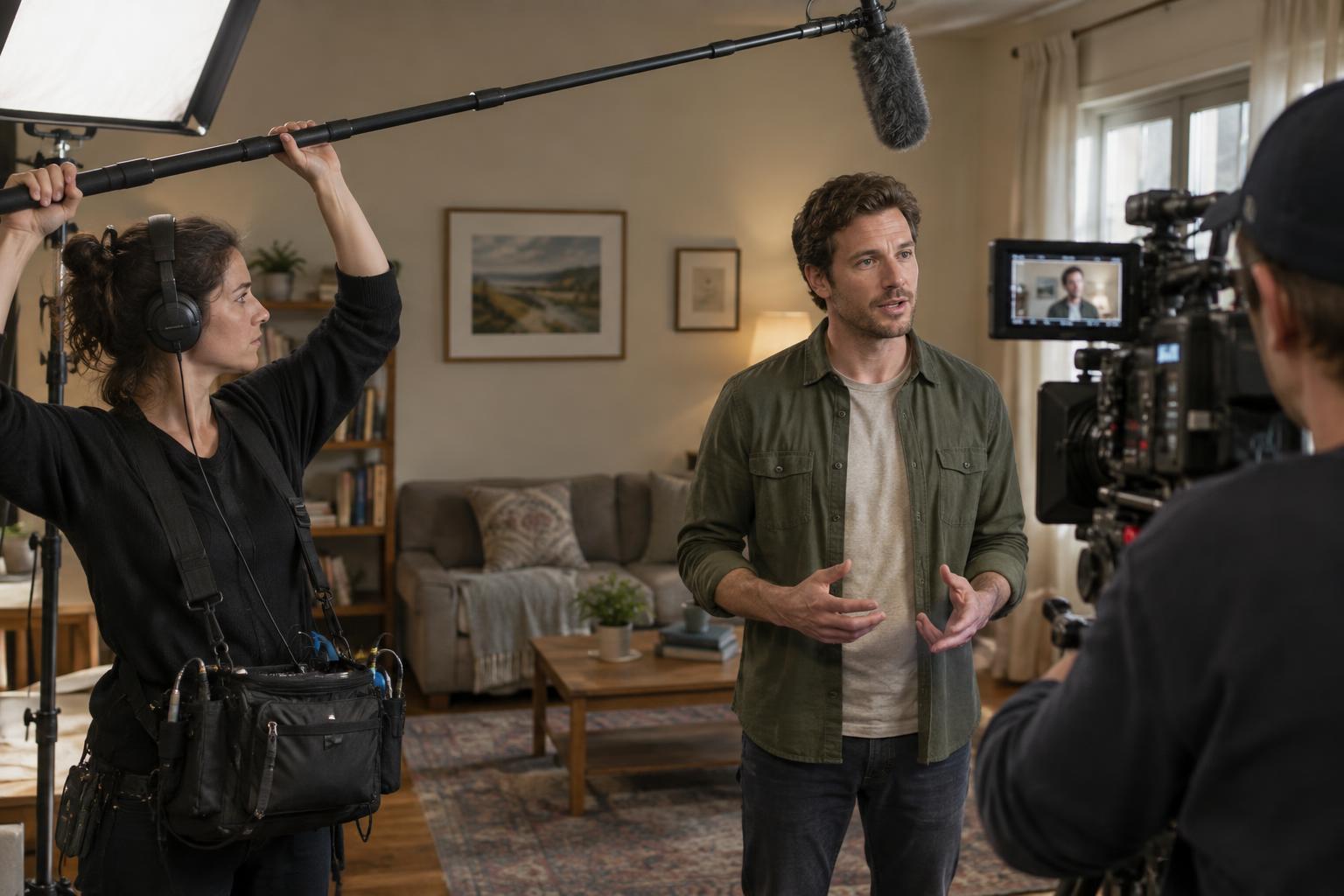
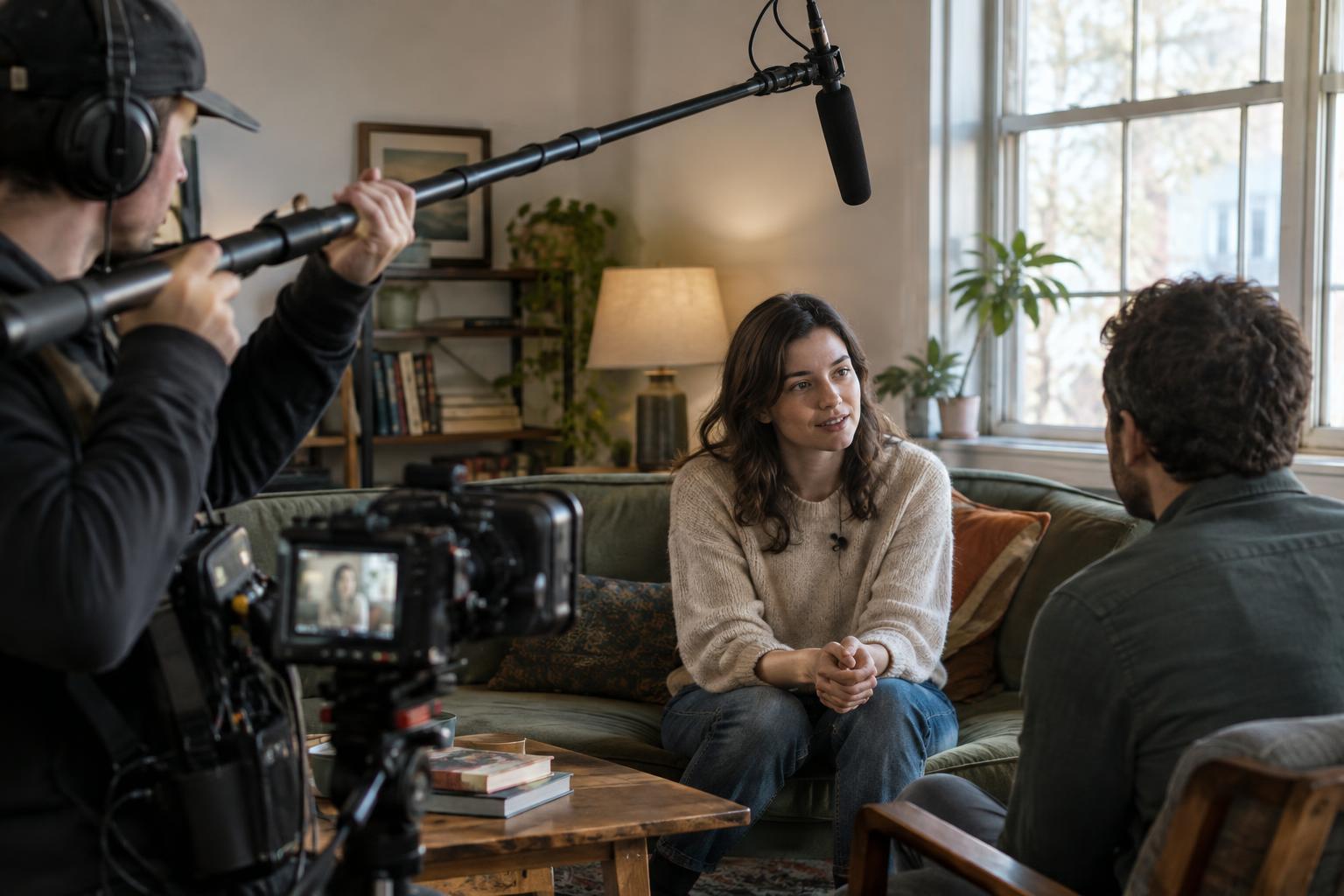
Dialogue carries more than information. Pace, hesitation, breath, and distance from the microphone can all affect how a line feels. Before adding other sounds, listen to a scene’s speech on its own. Are the words understandable? Do cuts between takes draw attention to changes in tone or room noise? A perfectly loud line can still feel out of place if the surrounding sound changes abruptly.
For a small filmmaking project, start with the cleanest usable recordings and adjust them so the conversation feels consistent. Room tone, the quiet sound of the recording space, can help smooth gaps between edits. Avoid treating every breath or pause as a flaw: some belong to the performance. When effects and music enter, check the dialogue again at a comfortable listening level. If an important line becomes hard to follow, try reducing or simplifying the competing layer rather than only turning the voice up.
Effects: give the scene a physical world
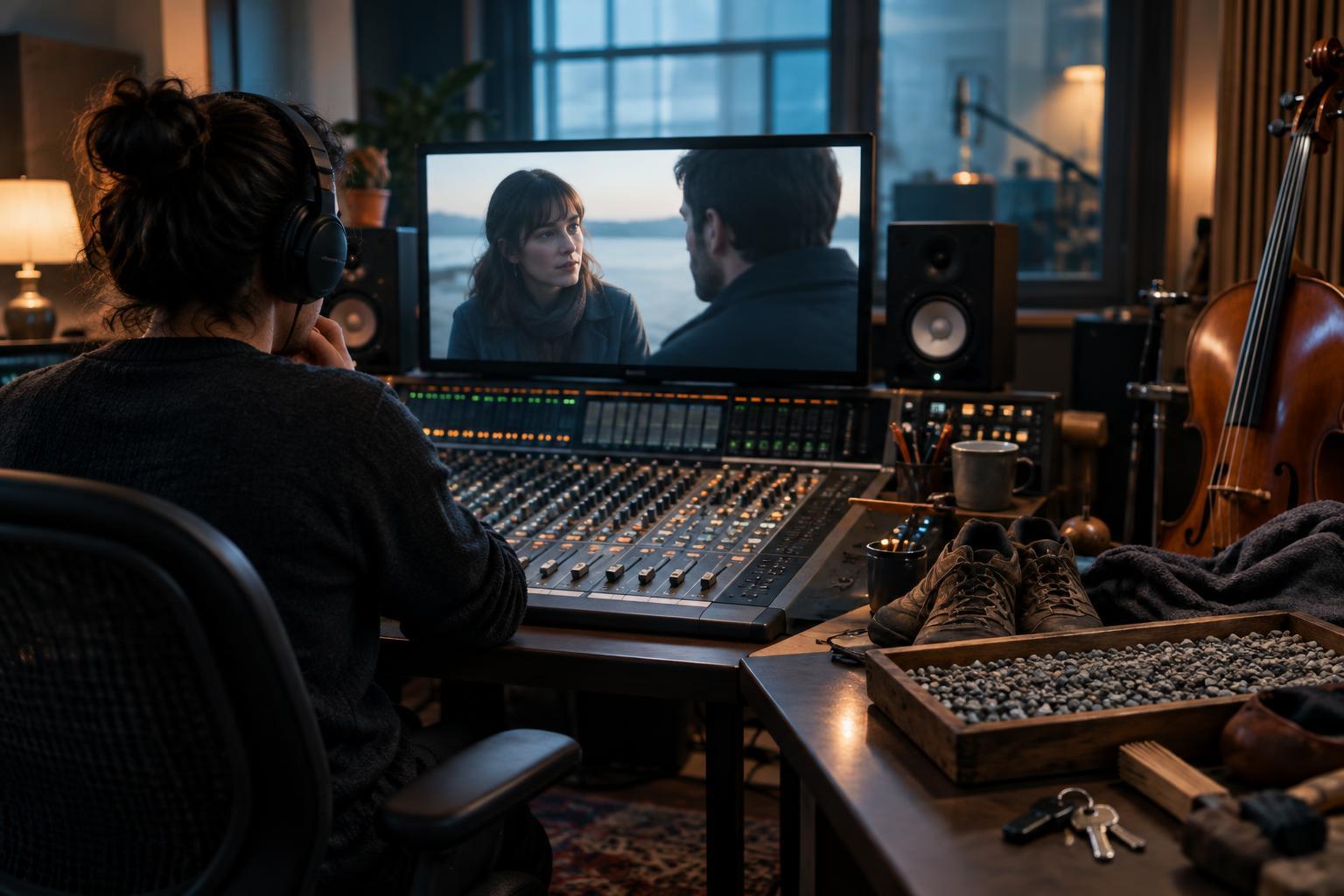
Effects include obvious actions such as a key turning in a lock, but also the less noticeable sounds that define a place. Wind outside a window, a refrigerator’s hum, or footsteps changing from pavement to gravel can help the viewer understand where characters are and how they move. These details are especially valuable when the image cannot show everything. A sound from outside the frame can suggest a larger world without adding another shot.
Choose effects for their storytelling purpose, not simply because an object appears on screen. A close, sharp cup being set down might underline irritation; a softer version might let the moment pass. Background ambience should give the scene continuity without becoming a blanket of noise. If every movement is emphasized, nothing feels important. Listen for the few sounds that reveal action, location, or a character’s attention, and let minor sounds stay minor.
Music: shape feeling without explaining it
Music can connect scenes, create momentum, or invite the audience to experience an image from a particular emotional angle. It can also narrow a moment that might be stronger left open to interpretation. Before placing a cue, watch the scene without one. Notice where the performance, editing, and natural sound already create tension or release. Then decide what music would add that the other layers cannot.
The start and end of a cue matter as much as its style. Music that enters just before a decision may build anticipation; music that begins afterward may feel like a response. Consider what happens beneath the cue, too. If a low musical passage competes with a low voice or environmental rumble, making it louder may not help. A quieter cue, a different arrangement, or a brief gap may serve the scene better.
Balance the layers around a changing focus
Once the layers work individually, play the scene from beginning to end and track where attention moves. At one point, the crucial sound may be a line of dialogue. At another, it may be an approaching vehicle heard before it appears. Rather than setting one level for the whole scene, adjust sounds as their roles change. A background can ease back during a quiet exchange and become more present when the characters fall silent.
A useful final check is to listen on more than one ordinary playback device, such as headphones and a small speaker. You may notice a word disappearing, an effect jumping out, or music masking a subtle action. Make changes in the context of the full scene, not just while a single track is soloed. The strongest soundtrack is rarely the busiest one: it gives each layer a job, then makes room for that job to be heard.