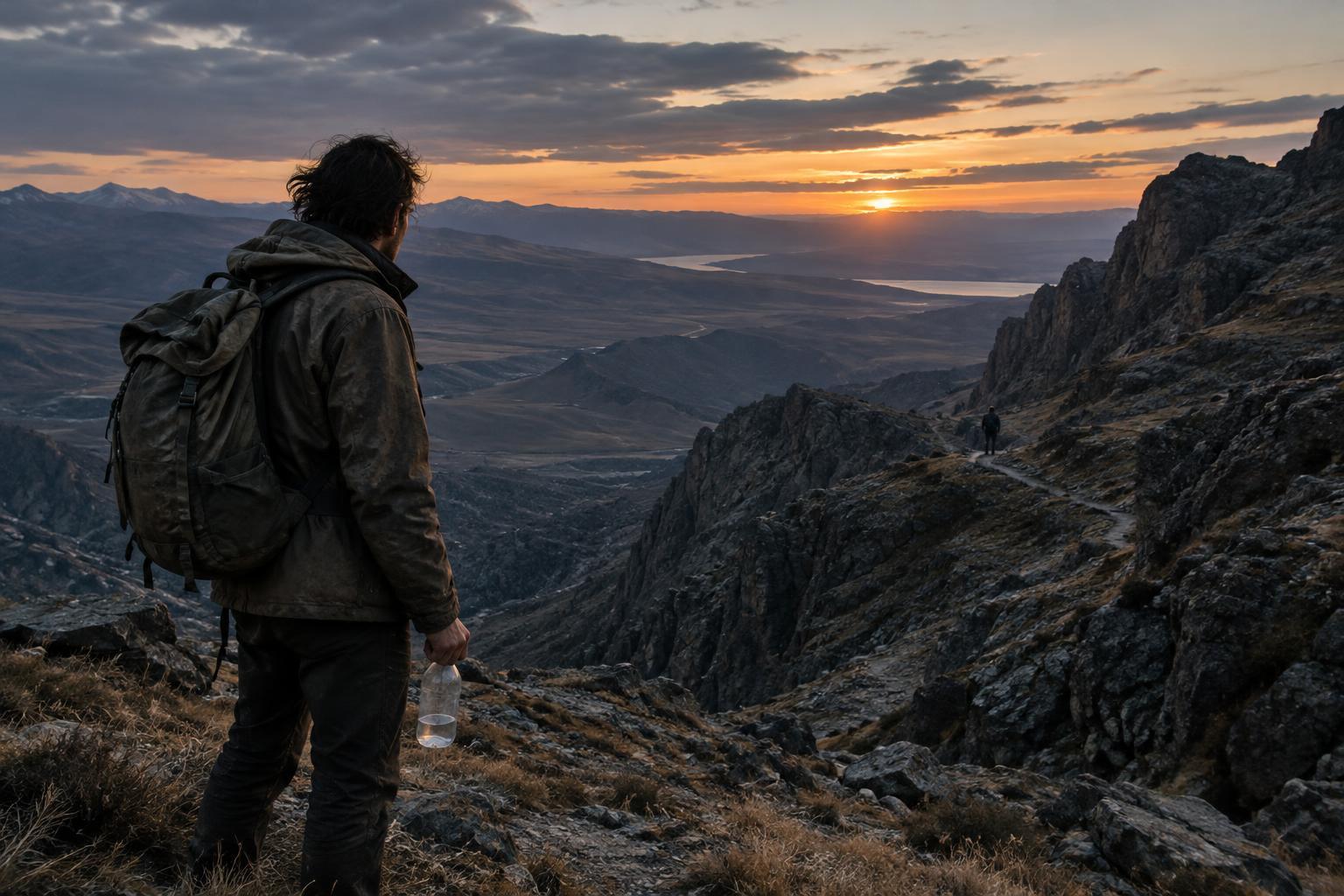
The survival film’s central question
A survival film asks whether its characters can endure a threat when ordinary support is out of reach. The threat might be a hostile landscape, an accident, extreme weather, or a breakdown in the systems people rely on. What matters is not just that the characters are in danger. It is that staying alive becomes their main task, and nearly every decision affects their chances.
That focus separates survival from a film that merely contains a dangerous scene. In an adventure, a character may cross a wilderness to find something. In a survival story, crossing it may be necessary to find water, shelter, or help. The same setting can serve either kind of film; the difference lies in the character’s immediate goal and the cost of failing to meet it.
Scarcity gives each decision weight
Survival stories often make resources visible early. Characters may have a limited supply of food, a damaged vehicle, inadequate clothing, or only a short period of daylight. Once viewers understand what is available, they can follow the consequences of using it. A decision to light a fire, carry extra equipment, or wait for rescue becomes dramatic because it solves one problem while potentially creating another.
The strongest obstacles are not always the largest. A small injury can slow a journey; a wet match can remove an option; a missed signal can force characters to reconsider their plan. These details work best when the film has established why they matter. If supplies seem to appear whenever the story needs them, scarcity loses its force. Clear limits allow viewers to assess choices alongside the characters, making suspense depend on more than surprise.
The setting changes what characters can do
In a survival film, the setting is more than scenery. Distance, terrain, temperature, and visibility determine which actions are possible. A route that looks direct may be impassable. A safe place may become dangerous after dark. Even a familiar environment can feel threatening when power, transport, or communication fails. The film can reveal these limits gradually as characters test their surroundings.
This does not mean the setting must act like a villain. A storm has no motive, and an empty road is not choosing to be cruel. Treating the environment as a set of conditions can make the conflict feel more grounded: characters observe, make a plan, discover an overlooked constraint, and adapt. For viewers, that sequence creates a useful question to ask during any survival film: what has the character learned that changes the next decision?
Other people can be help, risk, or both
When a survival film follows a group, its conflicts need not come from someone behaving irrationally. People can reasonably disagree about whether to stay put or move, share supplies or conserve them, take a risk now or wait for better conditions. Each person may know something the others do not, or value a different outcome. Those differences can test trust without reducing the group to simple heroes and villains.
Cooperation also gives the genre emotional range. Characters may divide tasks, teach one another a skill, or give up something they need so someone else can continue. Such moments matter because survival is not only a measure of physical toughness. The question of who gets help, who makes decisions, and who bears the cost can become as compelling as the external threat.
What the ending resolves
Rescue or escape can answer the film’s most urgent question, but it may not answer every one. A survival story can also examine what characters were willing to risk, which relationships changed, and whether their original goal still matters. Even when the outcome is uncertain, a satisfying ending usually follows from choices and constraints the film has made understandable.
To recognize the genre, look for the chain connecting need, decision, and consequence. What does the character lack? What options seem available? What does each attempt cost or reveal? Those questions help explain why a quiet scene of rationing water can hold as much tension as a dramatic encounter with danger. In a survival film, suspense comes from knowing that the next practical choice may change everything.