What makes a film a romance?
A romance film puts a developing relationship at the center of its dramatic questions. Other things may happen—a career changes course, a family gathers, a mystery unfolds—but the audience’s attention keeps returning to how two people see each other and whether that connection can survive. The central question is not always “Will they end up together?” It may be “Can they trust each other?”, “What would being together cost?” or “Will either person admit what they want?”
That focus separates romance from a film that merely contains a love interest. In a romance, encounters between the characters create the turning points. A first conversation alters an assumption; an act of care complicates a rivalry; an argument exposes a desire neither person has voiced. Even when the ending is sad or unresolved, the relationship has shaped the story rather than decorated it.
Attraction needs more than a spark
An early spark gives viewers a reason to watch the pair together, but chemistry becomes more compelling when it has a specific texture. Perhaps they share a sense of humor but disagree about responsibility. Perhaps one feels understood by the other and resents how unsettling that feels. The attraction can grow through small choices: listening closely, noticing a habit, or making space for someone whose life does not fit neatly into their own.
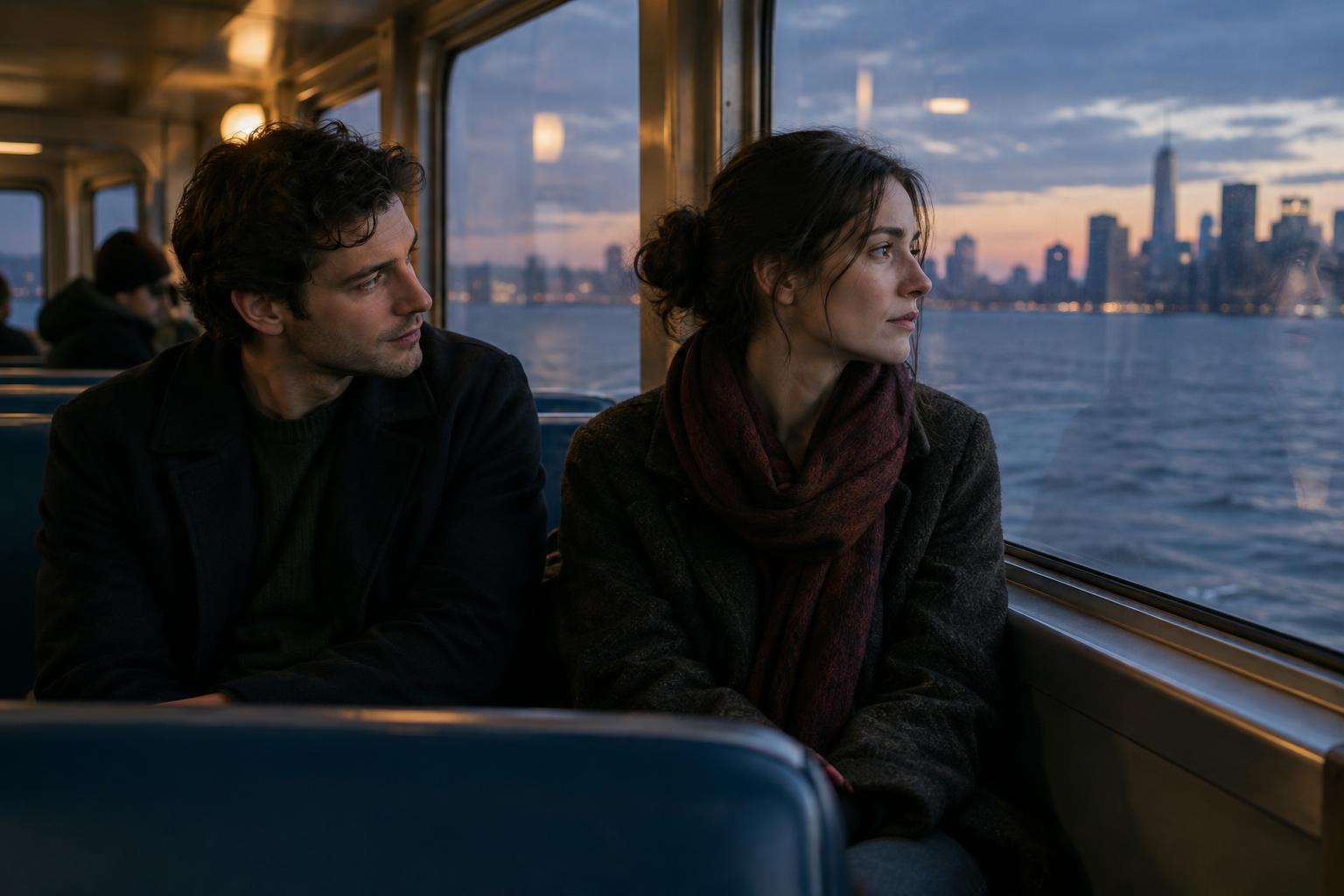
Romance films often use repeated encounters to let those choices accumulate. A location, gesture or line of conversation can return with a different meaning after the characters have changed. On screen, framing and performance can make that shift visible: two people who once kept their distance may sit comfortably in silence, while a familiar room feels suddenly awkward after a breach of trust. The convention is not a mandatory montage of falling in love. It is the gradual sense that each person matters more to the other than they did before.
Obstacles reveal what love asks of the characters
Romantic obstacles are sometimes described as things keeping a couple apart: geography, timing, competing obligations or disapproval from others. Those pressures can move the plot, but they matter most when they expose a difficult choice. A character who fears dependence might treat an ordinary commitment as a threat. Another may have to decide whether pursuing the relationship would mean abandoning a goal they genuinely value.
An obstacle works best when it cannot be solved by one convenient conversation. Misunderstandings can be useful, especially if they grow from believable fears or incomplete knowledge, but a story loses force when characters refuse to ask an obvious question only to prolong the runtime. Stronger conflicts allow both people to have understandable needs that do not fit easily together. The audience can then hope for closeness without assuming that closeness is the only fair outcome.
Genre patterns can create surprise
Romance has familiar beats: an initial meeting, growing intimacy, a setback and a moment when a decision can no longer be postponed. These patterns give an audience a way to follow emotional change. They do not require every film to use the same personalities, pace or conclusion. A quiet story may locate its turning point in an honest conversation; a comedy may build toward a public declaration that is funny precisely because the character dislikes being seen.
Romance also mixes readily with other genres. In a mystery, learning a secret might test whether intimacy can survive uncertainty. In a fantasy, an impossible rule might give physical form to the characters’ emotional limits. The surrounding genre can raise the stakes, but the romance remains legible when its key choices belong to the people involved. Spectacle cannot substitute for showing why these particular characters are drawn together—and why that bond is difficult to sustain.
An ending should answer the emotional question
A happy ending can be deeply satisfying when it feels earned. Commitment carries weight if the characters have faced the habits or circumstances that once made it unlikely. The final embrace is then more than a reward for waiting; it is evidence of a choice. An unhappy ending can be just as complete if it reveals what the relationship meant and why staying together would have required too much from one or both people.
Some romances finish between those poles. The pair may separate with affection, reconnect without promises, or choose an uncertain future together. What matters is not a guarantee of lasting happiness but a clear emotional resolution. Viewers should understand how the characters have changed and what they now know about love, themselves or each other. That is the romance film’s durable convention: it makes a relationship consequential, whether or not it lasts beyond the final scene.