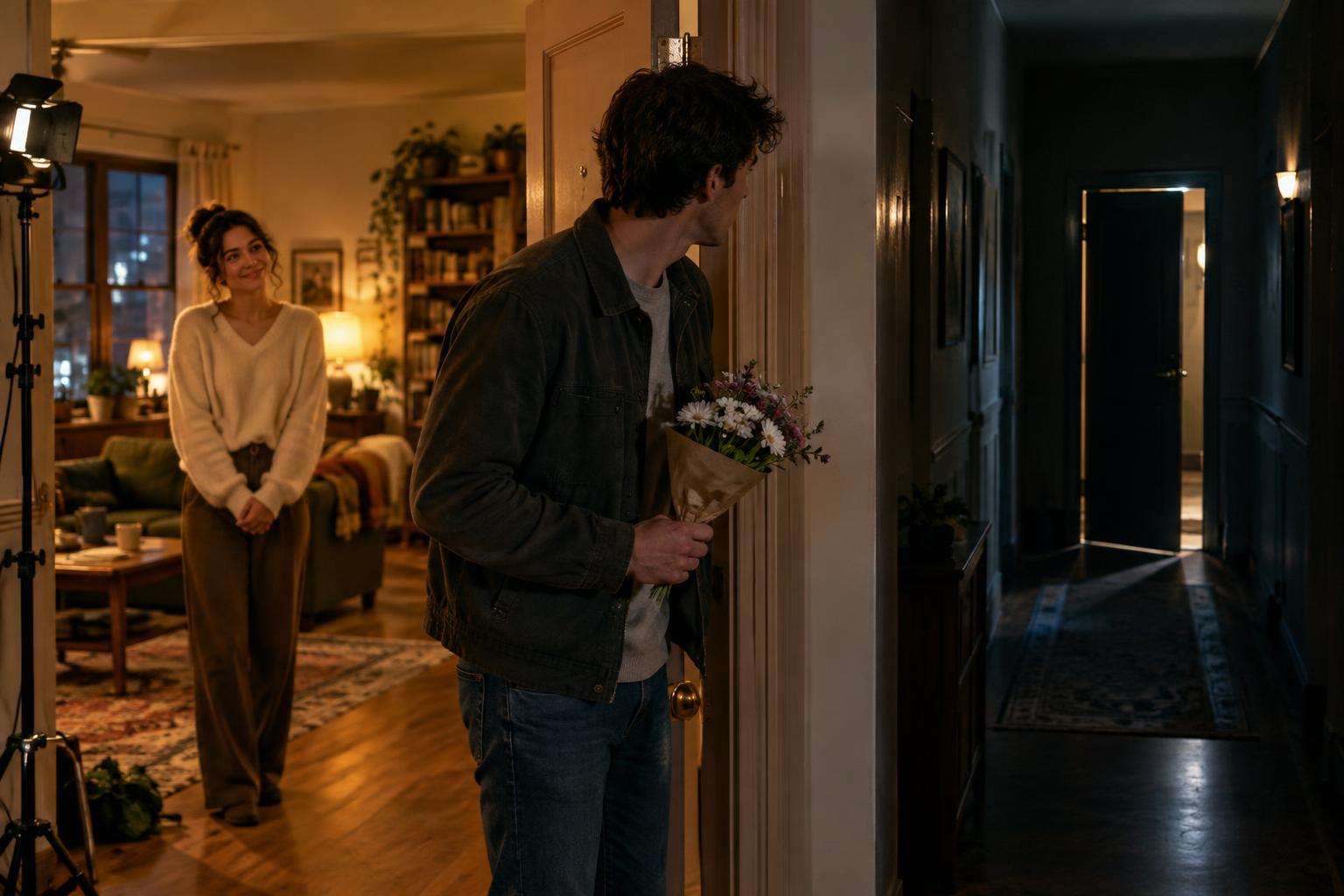
A song begins where ordinary speech falls short
In many movie musicals, characters sing when conversation can no longer contain what they feel. A character may know what they want but struggle to say it directly, or may not understand it until the song begins. Music gives that thought room to repeat, grow and contradict itself. The shift into song is therefore not necessarily a break from the story; it can be the moment the story becomes most specific.
A useful question is: why does this character sing now? An early song might establish a longing that guides the rest of the film. Later, a similar tune might expose how that longing has changed. Even an apparently joyful number can carry tension if the words, performance or images suggest that the singer is trying to convince themselves of something.
Songs can make something happen
A number need not stop the plot to express a feeling. Characters can make promises, issue challenges, recruit allies or decide to leave while singing. By the time the music ends, the situation may be different: two people have grown closer, a group has formed or a choice can no longer be postponed. The song has done dramatic work that a spoken scene would otherwise need to do.
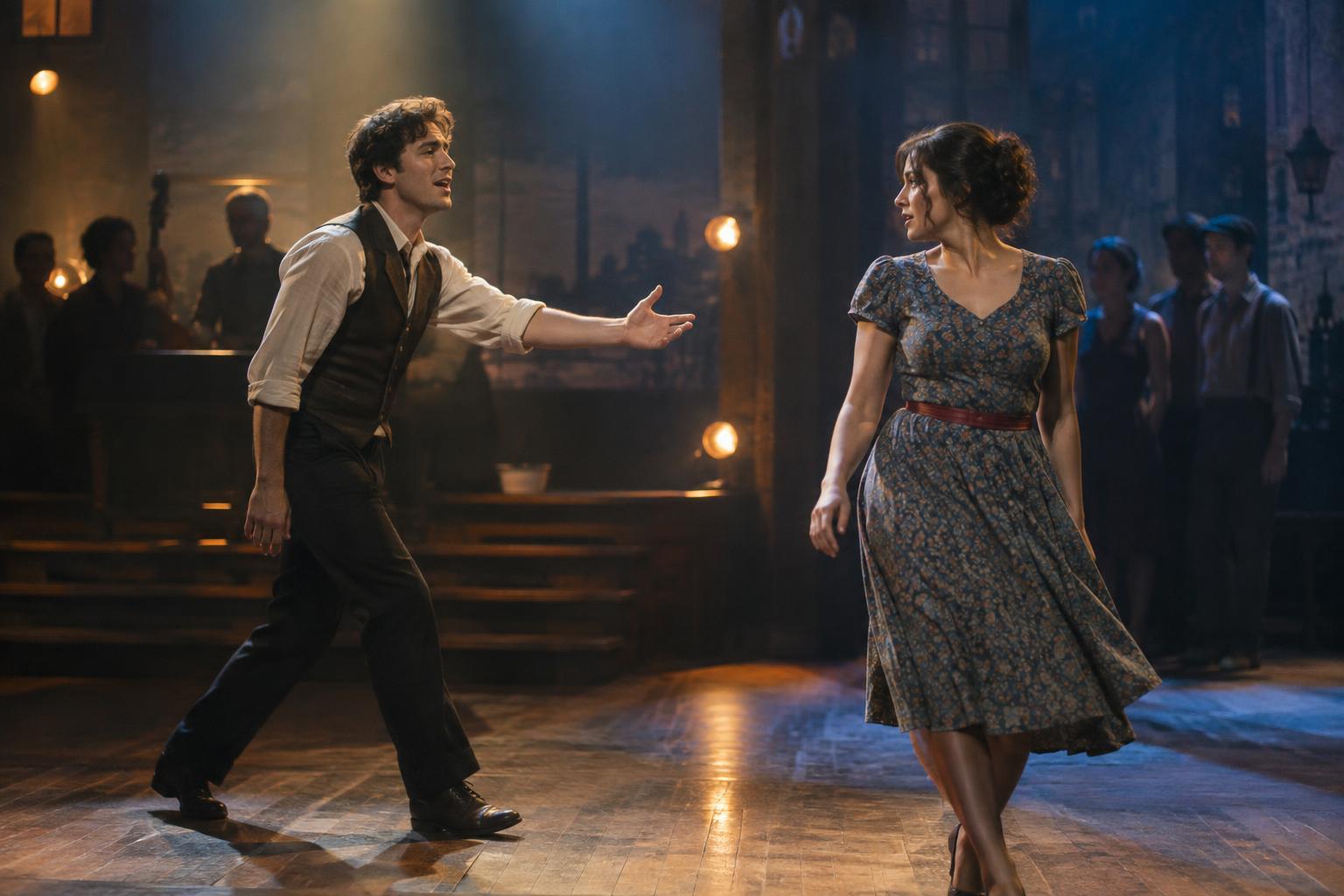
Film gives these changes a physical shape. Movement through streets or rooms can show a character gaining confidence, while a dance between two people can reveal cooperation or rivalry without explaining either one. Editing may carry the number across places and moments, suggesting a change that unfolds over time. When the action and music reinforce each other, the sequence feels consequential rather than decorative.
Not every song belongs to the same kind of reality
Some musicals place songs within the characters’ everyday world. A performer sings on a stage, someone plays music at a gathering or a group rehearses together. In these cases, other characters can usually hear the performance and respond to it. The song is an event as well as an expression.
Other numbers open a more imaginative space. A character may sing alone while a crowd joins in, or a familiar room may transform to reflect a private emotion. The film need not explain whether everyone can hear the music. Instead, camera position, lighting, sound and performance help establish the number’s rules. A musical can move between these approaches, but each shift invites the viewer to ask whose experience is being shown.
Repetition lets a song acquire new meaning
A melody or phrase heard more than once can trace the distance between two points in a story. A hopeful tune might return after a disappointment, now played quietly or sung by someone else. The notes remain familiar, but the circumstances change how they feel. A reprise can recall an earlier promise without requiring a character to explain it aloud.
This makes listening to musical films a little like following a visual motif. Notice who gets to sing a theme, who stays silent and whether the arrangement invites a different response. A full chorus may present a desire as shared; a single voice repeating the same idea later may make it sound lonely. What matters is not repetition by itself, but the difference the audience can hear.
Watch what changes when the music stops
The end of a song is often as revealing as its beginning. Does a character act on what they sang, or retreat into ordinary speech? Does another person accept the invitation offered during the number? Silence after a large ensemble sequence can make the return to everyday life feel suddenly narrow. The transition shows whether the song has altered the world of the film or only briefly imagined another version of it.
For viewers and emerging filmmakers, this is a practical way to study the genre: look at the scene before a song, the choices made within it and the first scene after it. The strongest numbers tend to have a reason to start and a consequence when they end. Their spectacle may be memorable, but their lasting power comes from making an inner change visible and audible.