Start with the scene, not the microphone
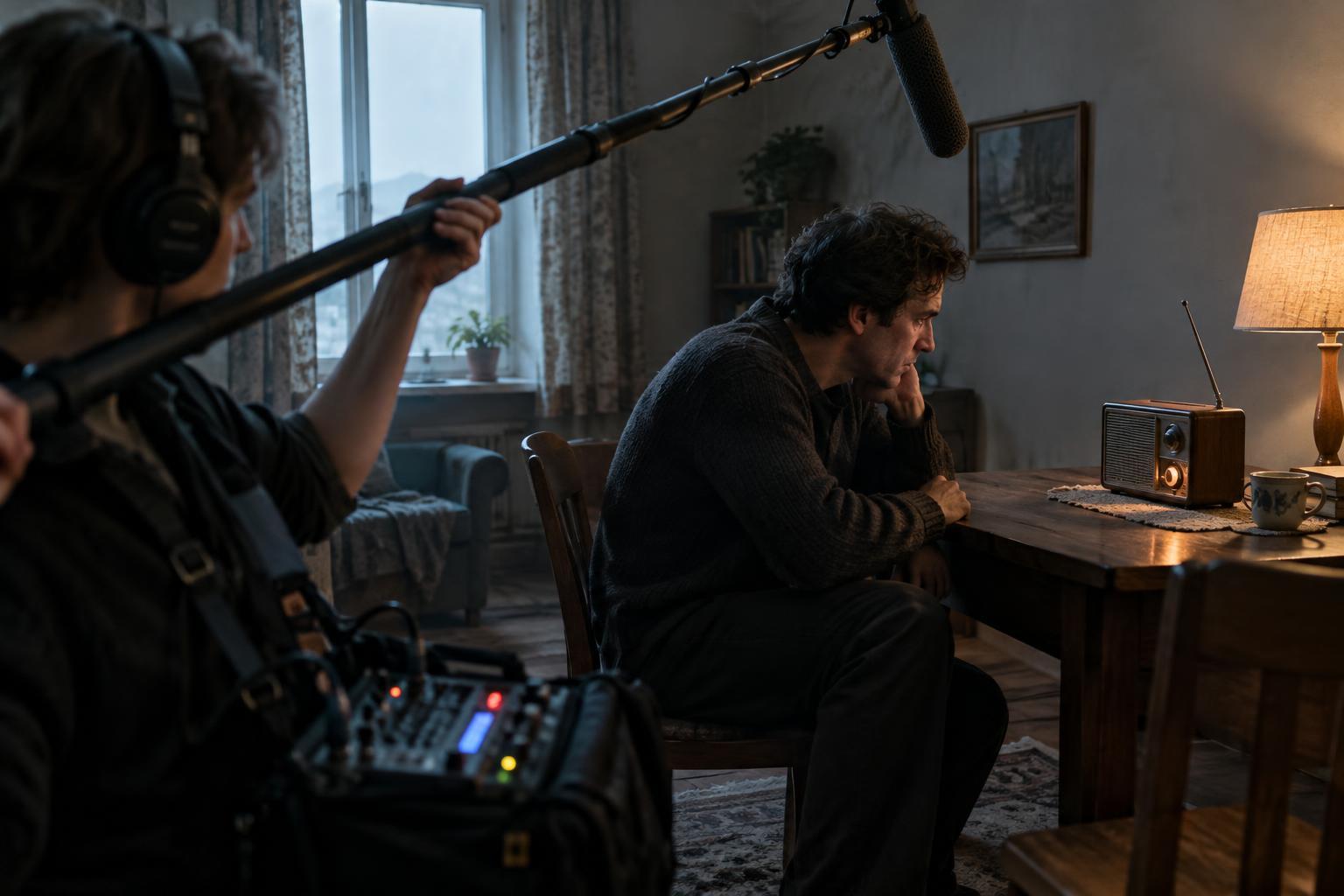
Clear dialogue is rarely a matter of buying the “best” microphone. It depends on where the actors stand, how they move, what the camera sees and what the location sounds like. A quiet close-up in a controlled room gives a sound recordist different options from a wide walking shot on a noisy street. Before choosing a mic, watch the blocking and identify the lines the audience must understand.
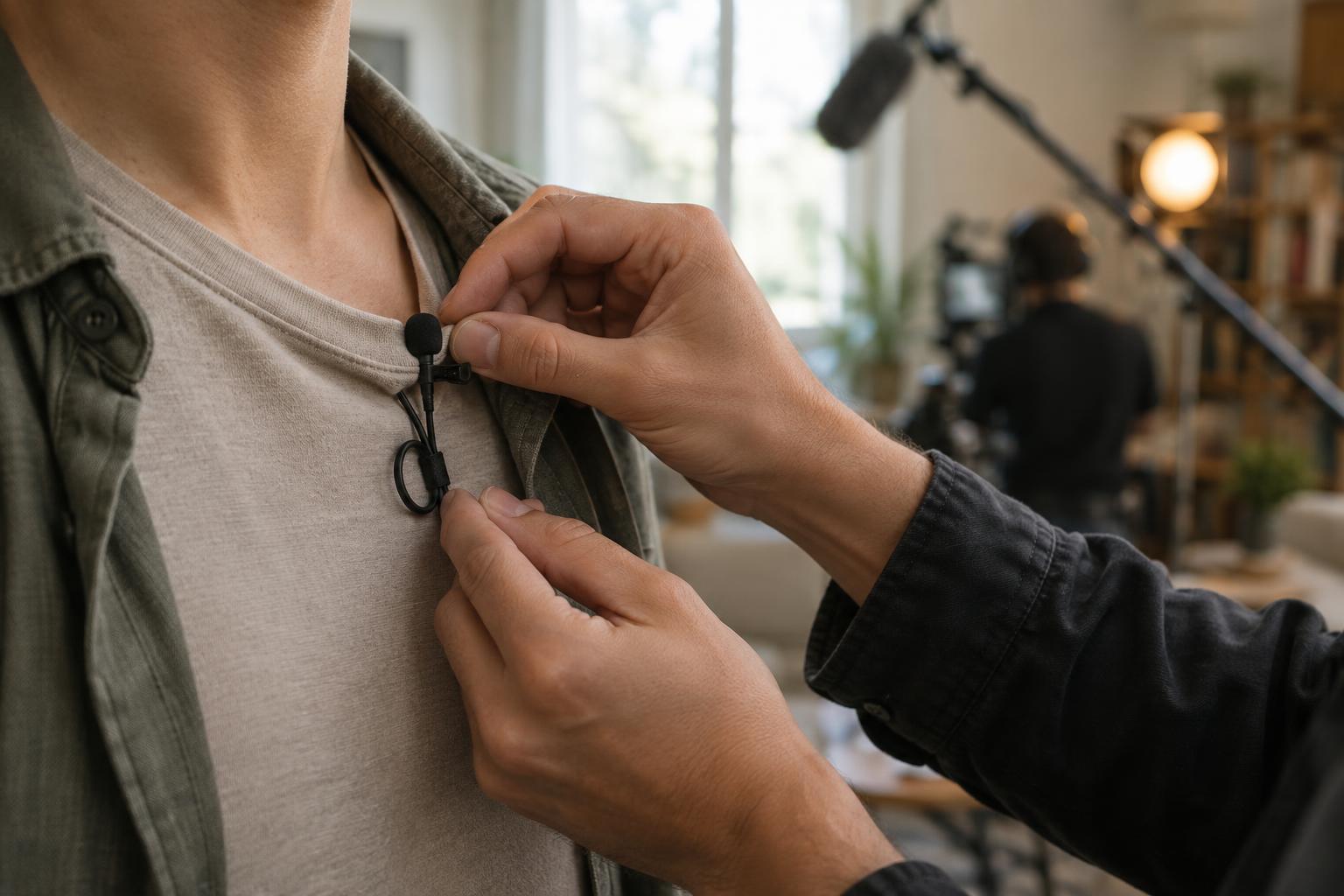
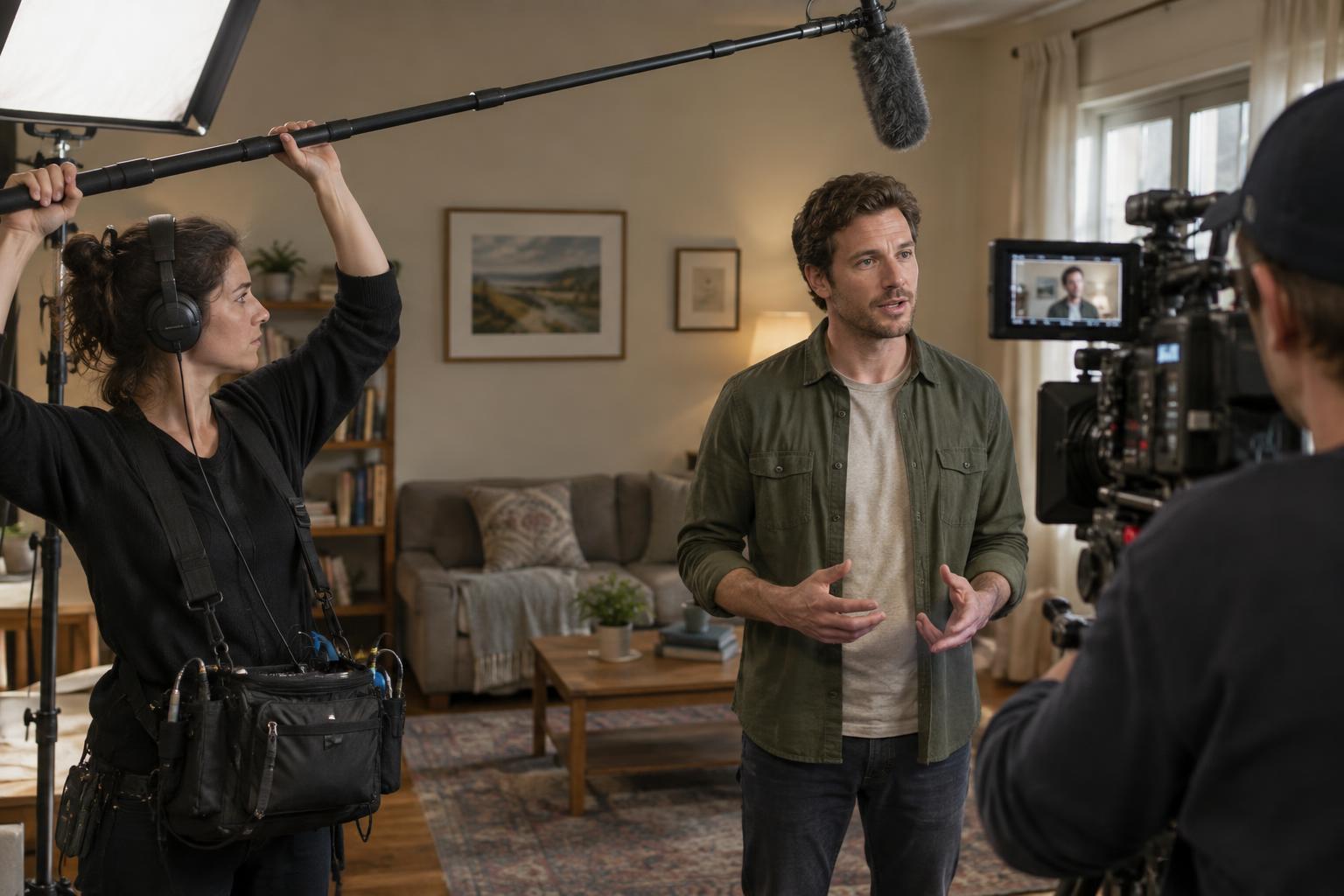
A shotgun microphone is commonly mounted on a boom and aimed toward the speaker from outside the frame. A lavalier is a small microphone worn on the actor, usually hidden in clothing. The boom lets the recordist follow the performance without attaching anything to the costume. The lav stays close to the actor as they move, but its sound depends heavily on placement and fabric. Neither is automatically the more natural or more reliable choice.
When a boom-mounted shotgun helps
A well-placed boom can capture dialogue with a consistent sense of the space around it. It is especially useful when the camera is close enough for the microphone to sit just out of frame and the actors’ positions are predictable. Because nothing is attached to the performer, there is no clothing rustle to manage and fewer concerns about hiding a microphone under a changing costume.
The limitation is distance. As the camera widens, the boom may have to move farther from the actor, making room noise and reverberation more noticeable. A highly directional shotgun can also sound uneven in a reflective interior, depending on the room and its placement. Directionality does not erase unwanted sound; it mainly changes what the mic picks up most strongly. Test from the position the boom will actually occupy, not from an ideal spot that will appear in the shot.
When a lavalier earns its place
A lavalier can keep dialogue present during a wide shot, a moving scene or blocking that leaves no safe space for a boom. It can also provide a useful backup when an actor turns away from the boom or another performer briefly blocks its path. For scenes with several speakers, individual lavs may give the editor more control over overlapping lines.
Close placement brings its own problems. A concealed lav may rub against a shirt, pick up jewelry or change tone when an actor turns their head. Thick layers and difficult costumes can make a clean hiding place hard to find. If the lav uses a wireless system, the crew should check the connection and record a test during the actual movement planned for the scene. A mic that sounds fine while the actor stands still may fail once they sit, embrace someone or handle a prop.
Let framing, wardrobe and acoustics decide
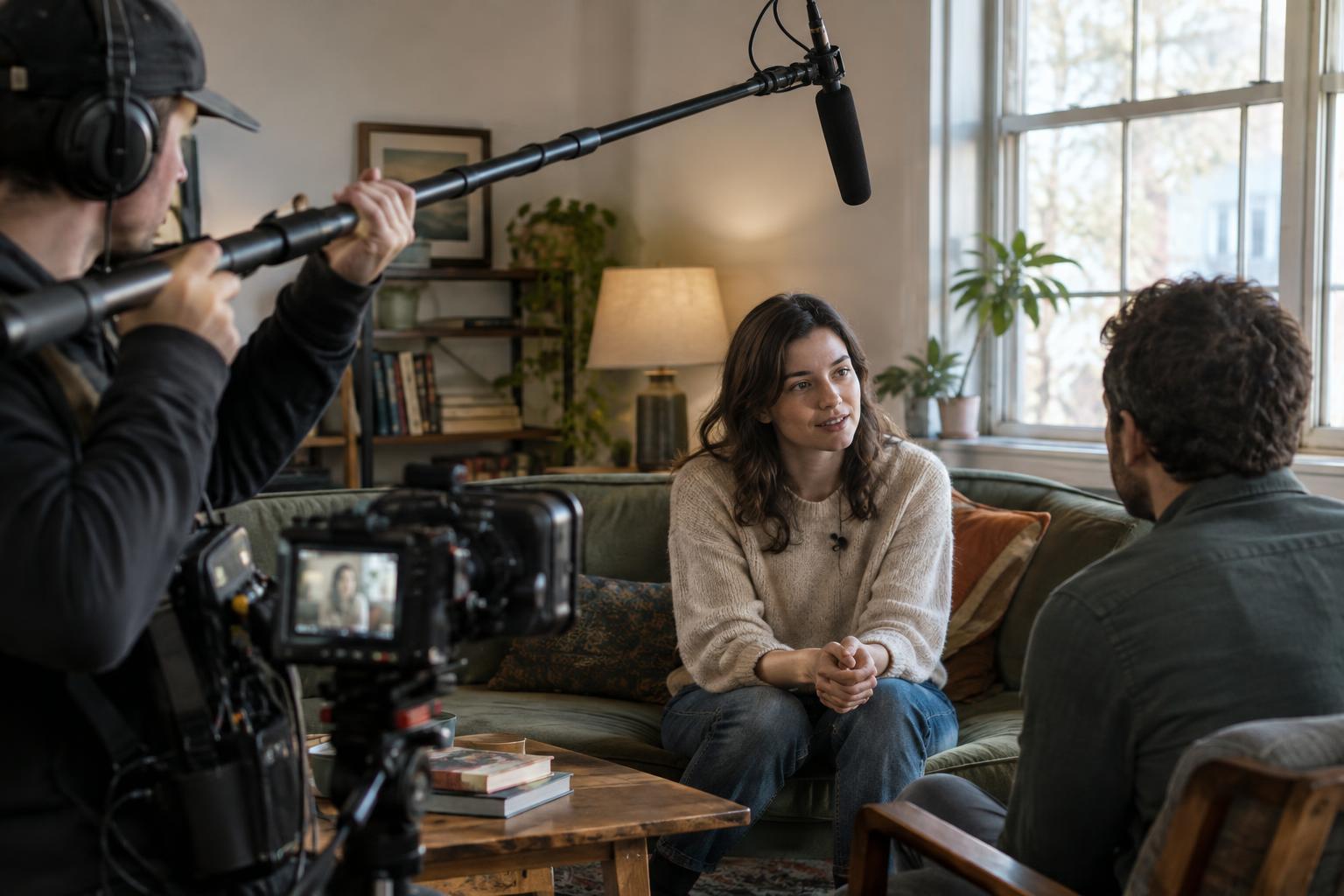
For an intimate conversation in a quiet room, begin by checking whether a boom can remain close throughout the coverage. For a wide exterior walk-and-talk, a lav on each speaking actor may provide steadier dialogue, while a boom can add a more open-sounding track when it can follow. In a reverberant room, compare the microphones by ear: a closer lav may improve intelligibility, but fabric noise could still make it the weaker recording.
Consider continuity across shots, too. A scene cut between close-ups and a wide master can sound jarring if one angle is airy and distant while the next is extremely close. Recording both boom and lav, when the crew and equipment allow it, gives the editor options. Keep them on separate tracks and label them clearly. Combining them is not always beneficial: small timing differences can change the tone, so listen before using both at once.
Run a short test before rolling
Have the actors perform the loudest, quietest and most physical parts of the scene while monitoring with headphones. Check the boom against the camera frame, listen for room reflections, and inspect lav tracks for rustle or muffling. Repeat the test after a wardrobe adjustment or a significant change in blocking. Set recording levels with room for unexpectedly loud delivery rather than aiming for the highest possible meter reading.
If only one microphone is available, choose the setup that gives the most dependable dialogue across the entire take, not just the best sound for a single line. If neither option works well, consider a practical change: move the scene away from a noisy appliance, adjust the blocking or find a closer boom position. The useful question is not “shotgun or lavalier?” in isolation. It is “which placement can capture this performance cleanly without disrupting the scene?”