Start with what the film must capture
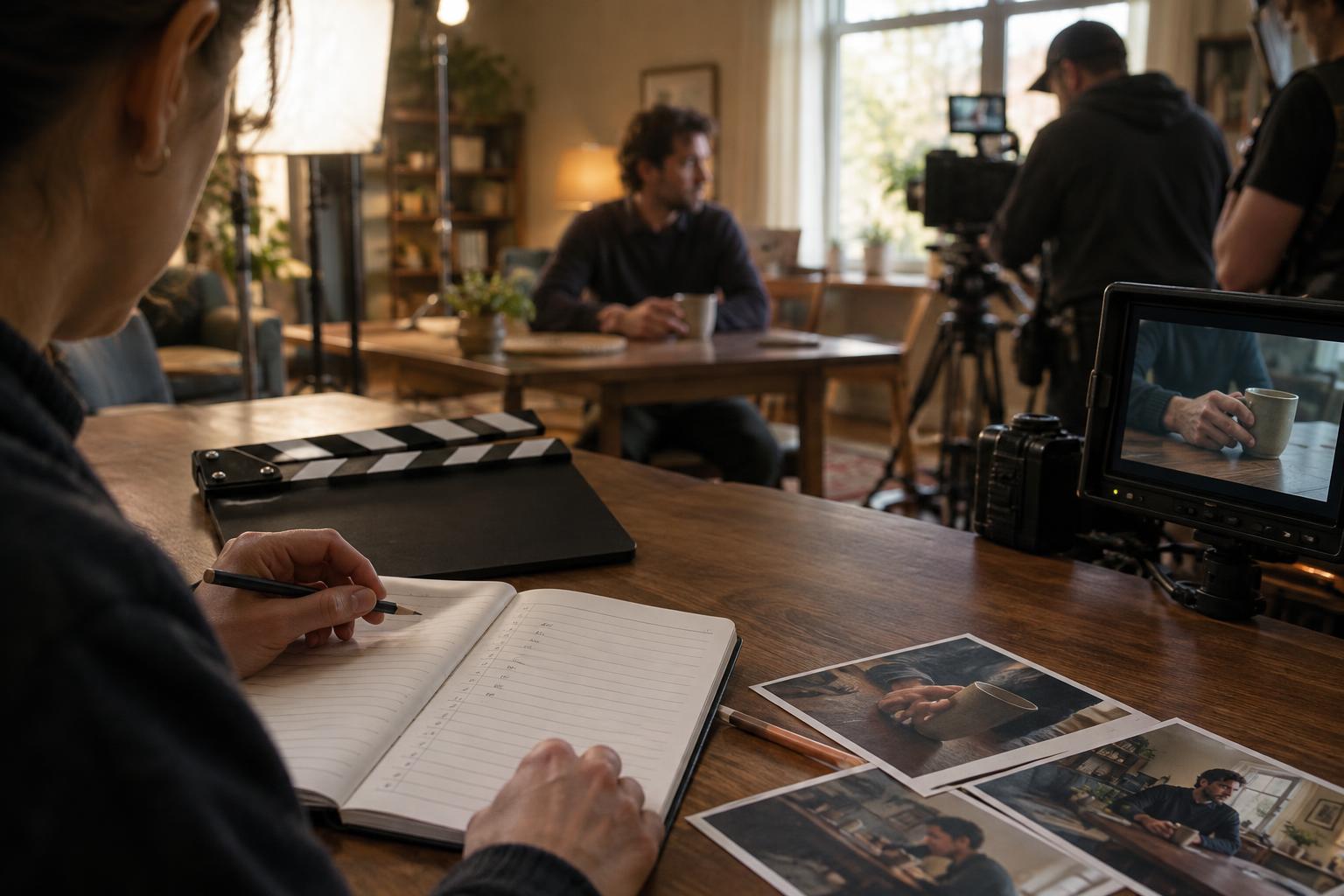
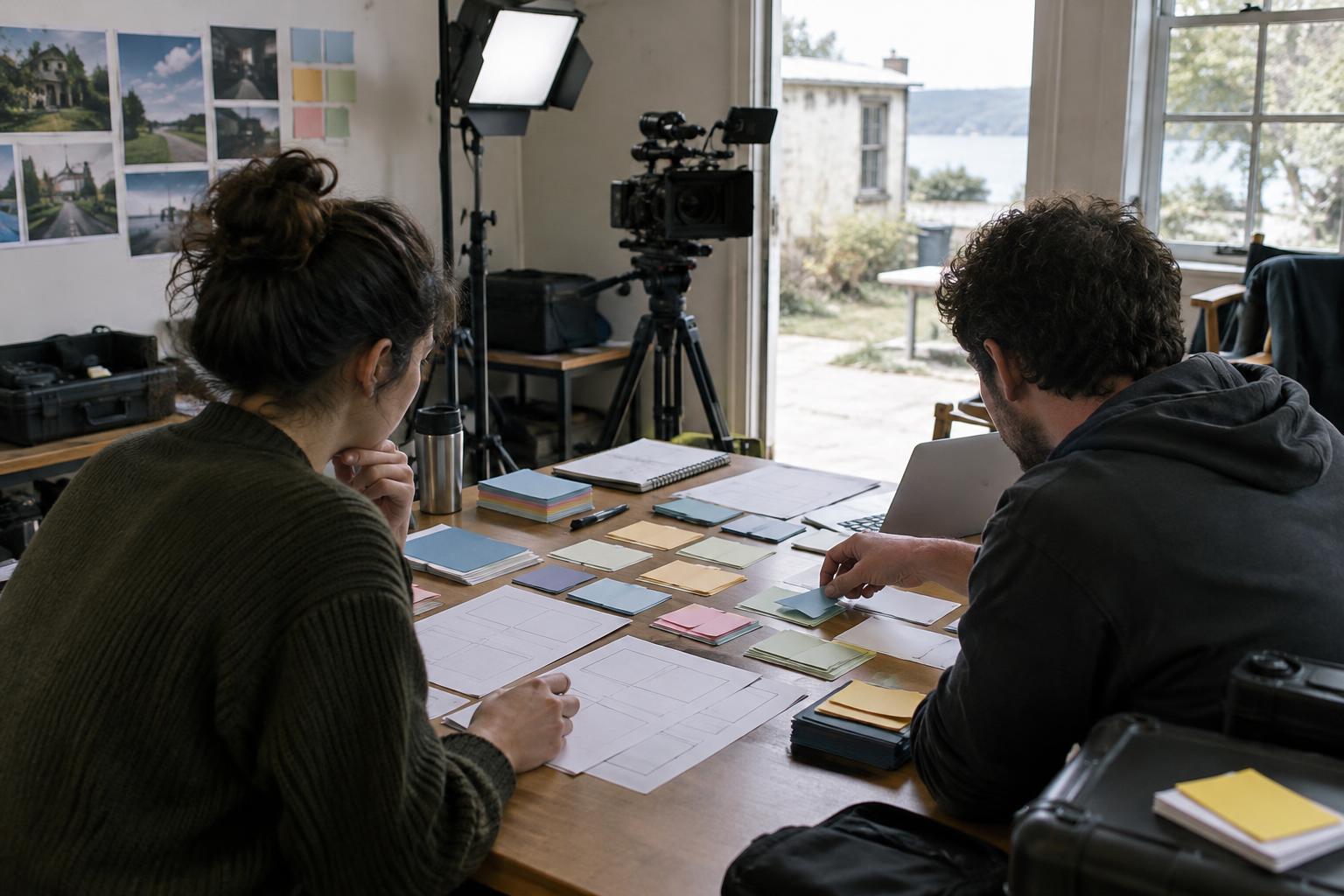
A tight budget does not make every shot equally important. Before arranging a schedule or borrowing a camera, read the script and identify the moments the finished film cannot do without. These might be a decision that changes the story, an action the audience must understand, or a reaction that gives a scene its meaning. Mark those moments as essentials. Then separate useful coverage from shots that would be attractive but are not necessary to tell the story.
This distinction helps when the day runs short. If a scene needs one clear exchange and a character’s response, plan to secure those before attempting an elaborate camera move. Think about the edit as you make these choices: where will the scene begin and end, what information must be visible, and which sounds or images could connect it to the next scene? A modest shot plan built around those answers is more useful than a long list no one can finish.
Build the schedule around real constraints
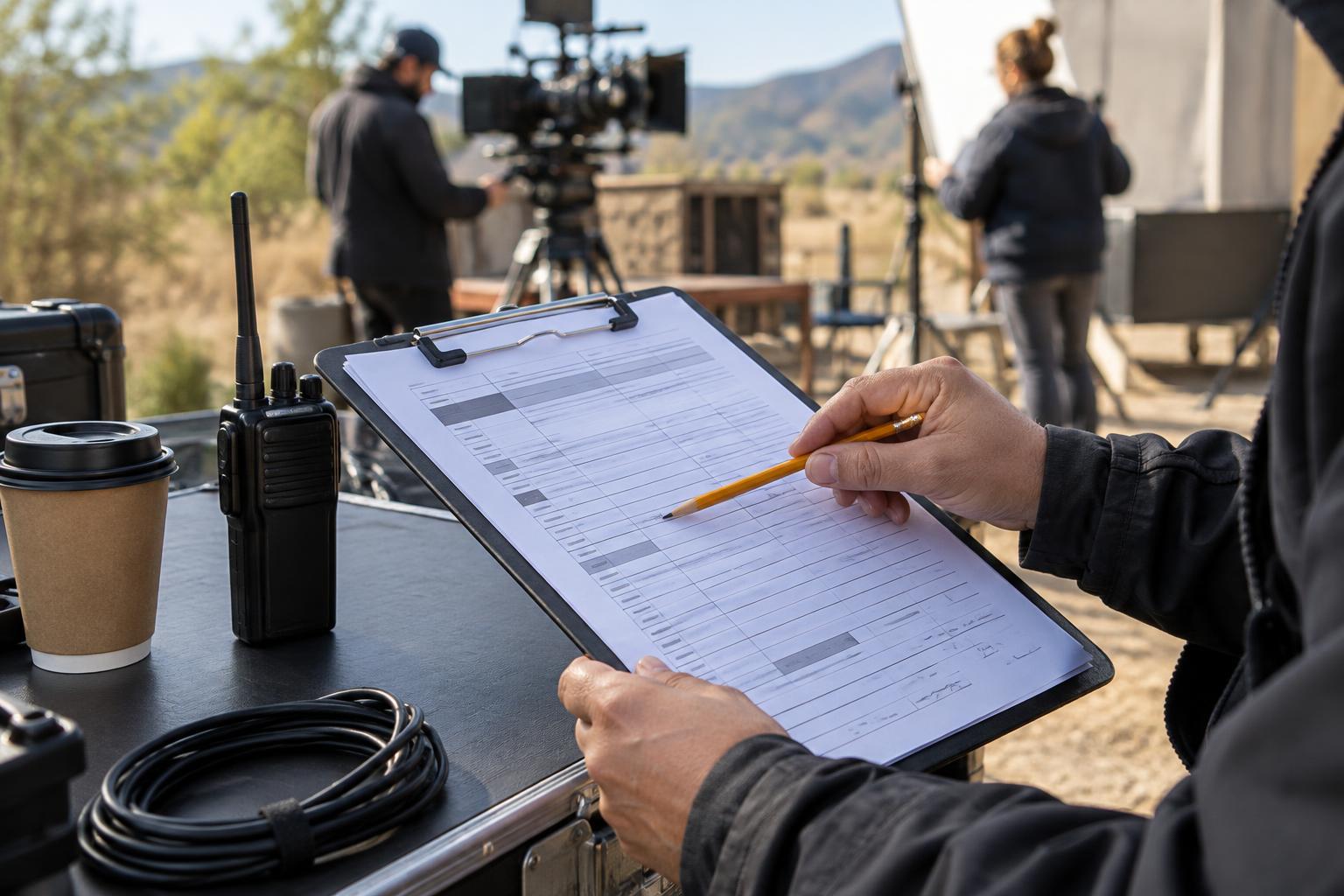
Group scenes by location, cast availability, lighting conditions, and setup needs rather than filming strictly in story order. A location move can consume time even when the next place is nearby: gear must be packed, people must travel, and the new space must be made ready. A schedule should account for those transitions, along with meals, breaks, rehearsal, recording clean sound, and packing up. If the plan only works when nothing slows down, it is too fragile.
For each setup, decide what must happen before the camera rolls. Will furniture move? Does a practical light need adjustment? Is there traffic or a noisy appliance to consider? Share a concise plan with the cast and crew so they know where to be and what the day is trying to achieve. Keep a short list of optional shots that can be dropped without damaging the story, rather than relying on everyone to work faster when time becomes tight.
Give people clear work and room to prepare
On a small shoot, people often cover more than one task. That can work when responsibilities are explicit. Someone should know who is watching continuity, who is checking recorded sound, who is handling media and backups, and who can make the final call when a setup needs to change. Avoid giving one person simultaneous jobs that require attention in different places. A camera operator cannot reliably monitor every performance detail while also managing batteries, slates, and file copies.
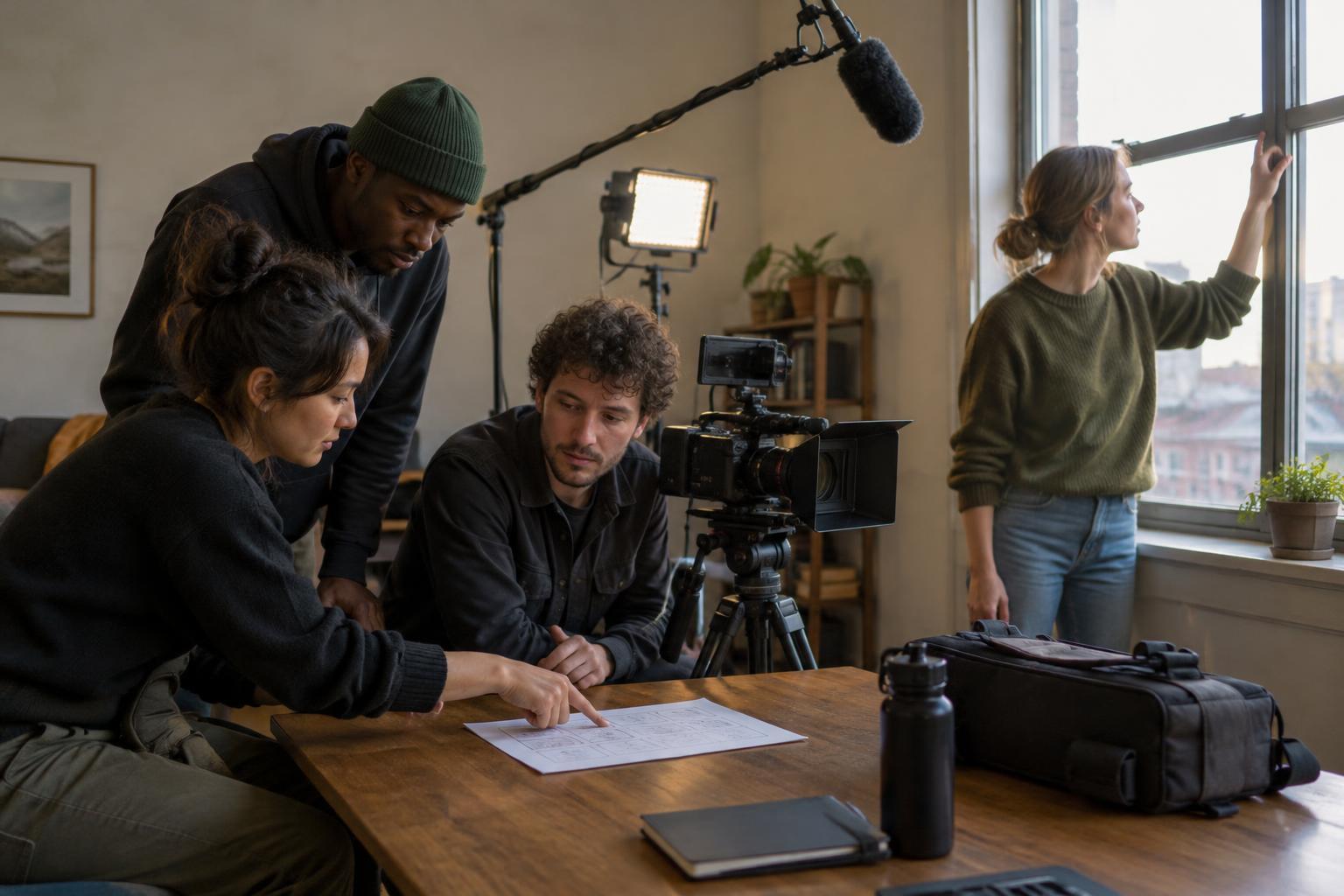
Protect time for performers, too. A brief rehearsal can reveal confusing blocking or dialogue before the crew commits to a lighting setup. Let the people working in the space flag practical problems early, especially unclear movement, unsafe cable runs, or sound that cannot be controlled. Clear communication is a production tool: it reduces repeated takes caused by misunderstandings and makes it easier to adapt without leaving anyone guessing.
Choose equipment for the scene, not the wish list
Equipment earns its place when it solves a specific problem. Start with a camera setup the operator knows, a dependable way to capture intelligible dialogue, enough power and recording media, and a workable plan for lighting the chosen spaces. Test the actual combination before shoot day. A familiar, compact kit that can be set up quickly may serve a short schedule better than more elaborate gear that demands extra time or crew.
Make a packing list by task rather than by department alone: what is needed to record, monitor, power, support, secure, and protect each setup? Include small items that can stop a shoot, such as compatible cables and charged spare batteries. Label media and establish a routine for checking and copying footage. If equipment is borrowed or rented, confirm who knows how to use it and when it must be returned. Do not build an essential shot around an item you have not tested.
Plan for the version of the day that changes
Weather, noise, late arrivals, and stubborn setups can alter a plan. Choose in advance which scenes could move indoors, which shots could be simplified, and which work can wait if time disappears. At the start of each block, confirm the essential result the edit needs. If the schedule slips, the team can then make a deliberate trade-off instead of collecting fragments from every planned angle.
Finish the day with the same care used to begin it. Check that recorded files are accounted for, make copies according to the production’s backup plan, and note any missing lines, shots, or sound. A low-budget shoot rarely has unlimited chances to return to a location. Prioritizing time, people, and equipment is ultimately about giving the finished film a complete, usable set of material—not about fitting the most setups into a call sheet.