Listen to the recording, not just the scene
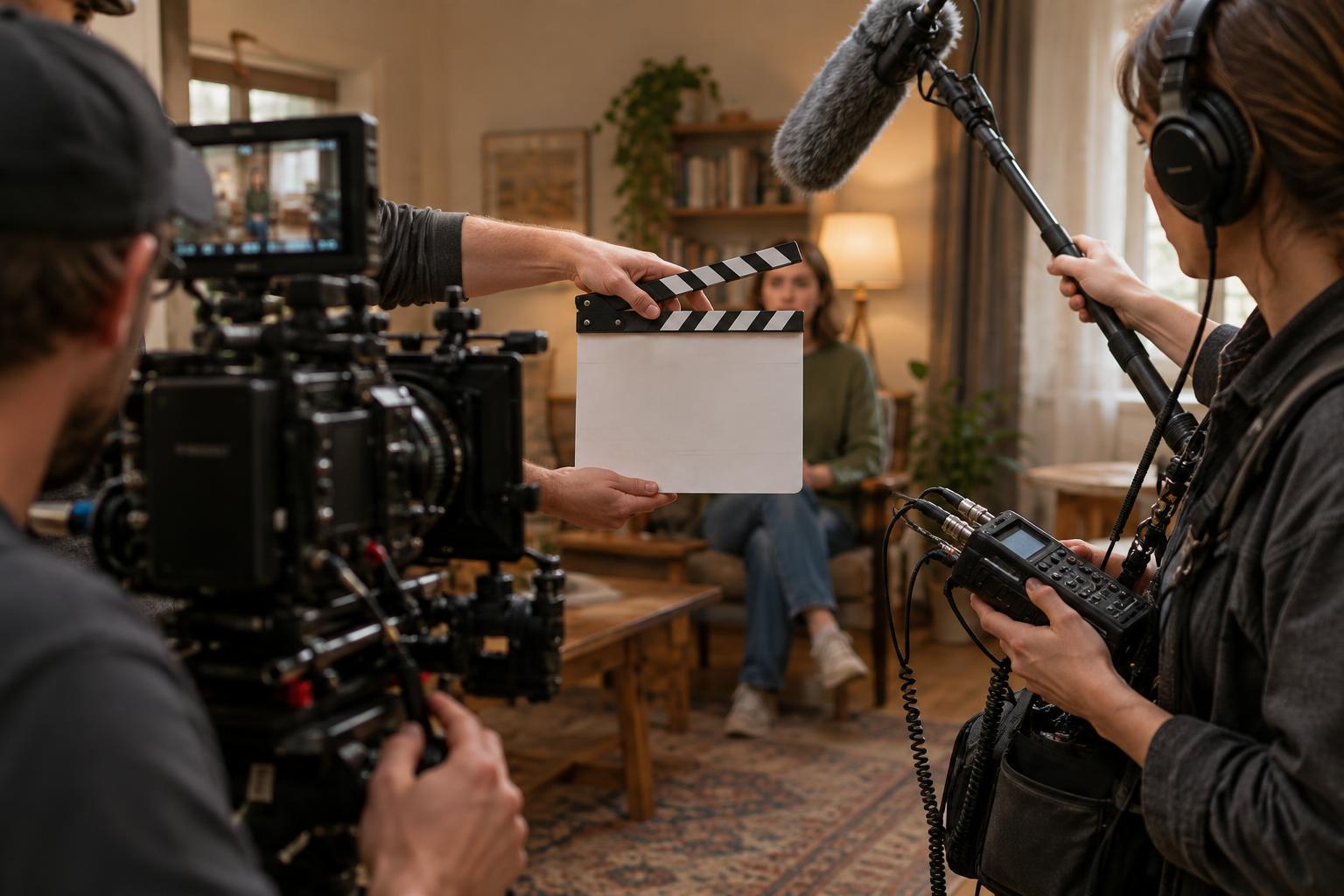
On location, your ears hear the whole space: the actor, the crew, traffic outside and reflections from the walls. Headphones let you hear a narrower version of events—the signal reaching the recorder. That difference is the point of monitoring. A performance may sound clear from where you stand while the microphone picks up a humming appliance or loses a quiet line when the actor turns away.
Before a take, confirm that you are listening to the intended microphone or mix. If the recorder has multiple tracks, check which one your headphones are monitoring and whether a useful backup is being recorded. Keep the headphone level comfortable and consistent. Turning it up may make a weak recording seem easier to hear, but it will not improve the sound being captured.
Follow every word of the dialogue
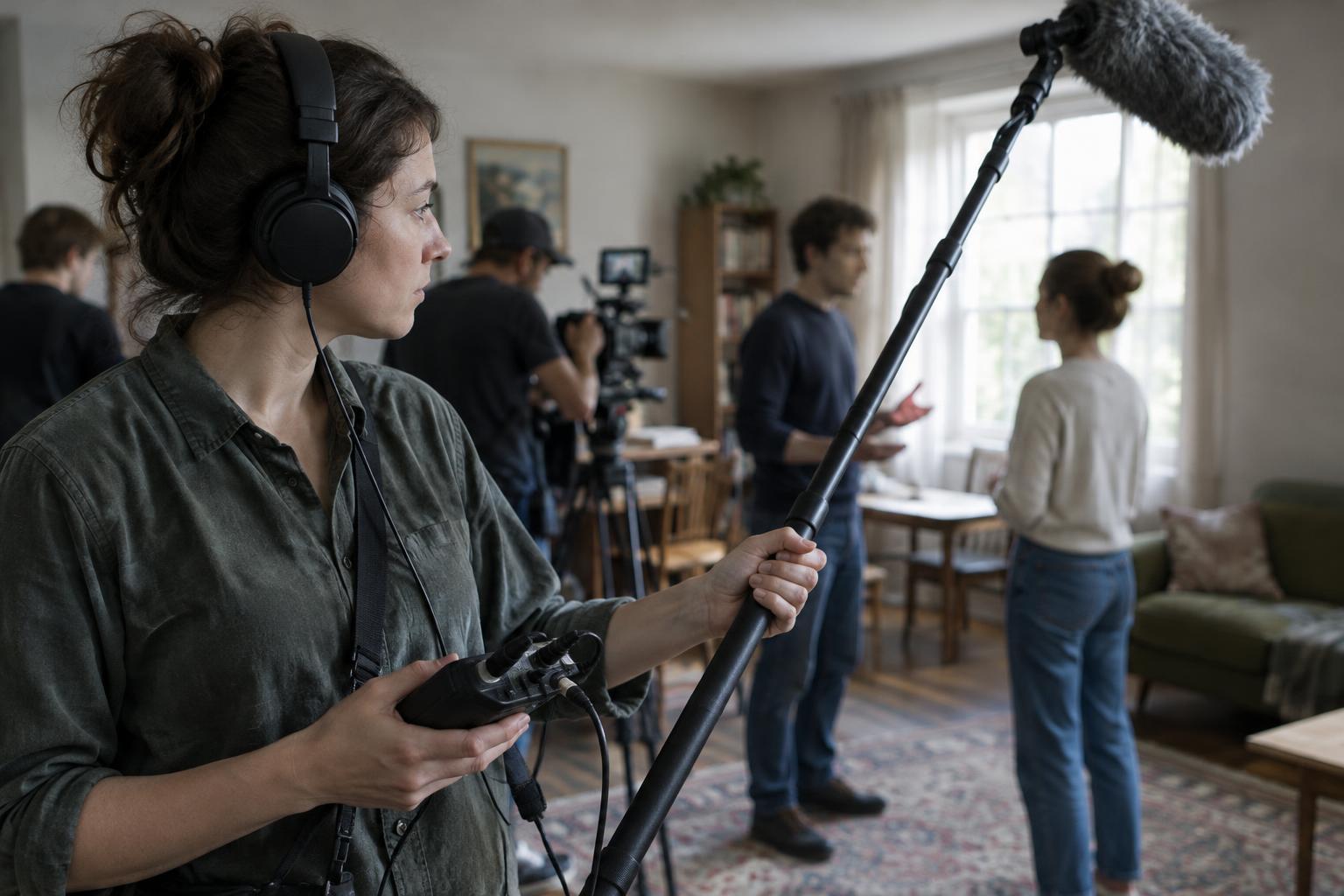
Start with the simplest question: can you understand each line without watching the actors? Listen especially to the beginnings and ends of sentences, soft replies and words spoken while someone turns, moves or looks down. A microphone that sounds good during rehearsal may become too distant when blocking changes. If the dialogue grows thin or the room becomes more prominent, check the microphone’s position before the next take.
Pay attention to sound that covers consonants: clothing rubbing against a lavalier, a hand brushing a boom, footsteps near the microphone or a vehicle passing at the wrong moment. Not every background sound ruins a take, but a noise that masks an important word deserves attention. Make a brief note of the line and the problem so the team can decide whether to adjust, wait or record another take.
Catch distortion and unwanted movement
Loud speech, laughter or a sudden shout can overload a recording even when the previous lines sounded fine. Listen for a harsh, crackling edge on peaks, and watch the recorder’s meters as a second check. Meters are useful, but they do not tell you everything about how a sound feels. If a voice distorts, identify where it is happening: at the microphone, in a wireless link or at the recorder. Simply lowering the headphone volume will not fix the recorded problem.
Also listen for changes that follow the microphone rather than the performance. Boom handling can produce low thumps; a shifting lavalier can create irregular rustles; an exposed microphone may catch bursts of wind. These sounds can be intermittent, so stay attentive during pauses as well as speech. A short pause between takes is often enough to secure a cable, improve wind protection or reconsider microphone placement.
Notice the space around the voices
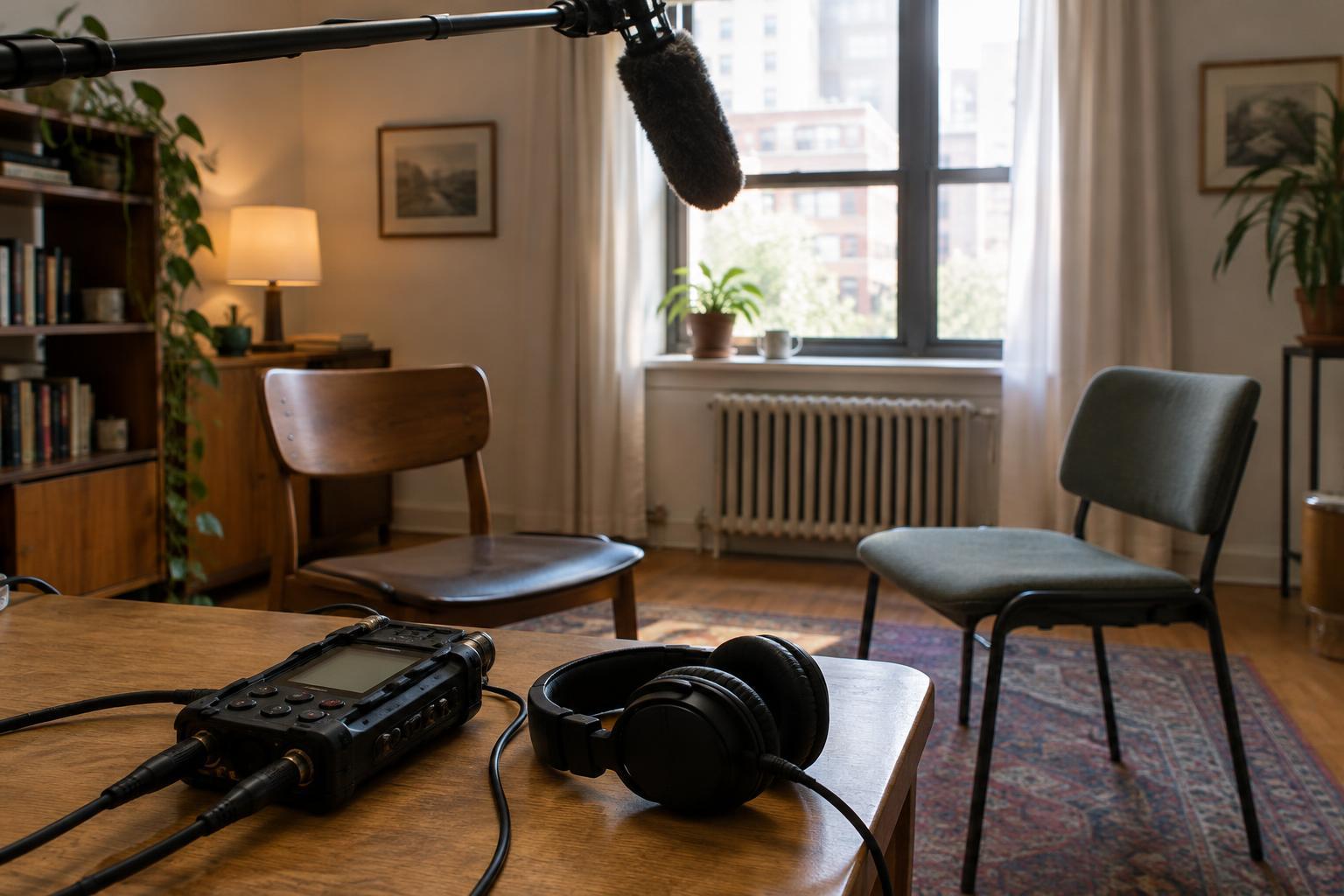
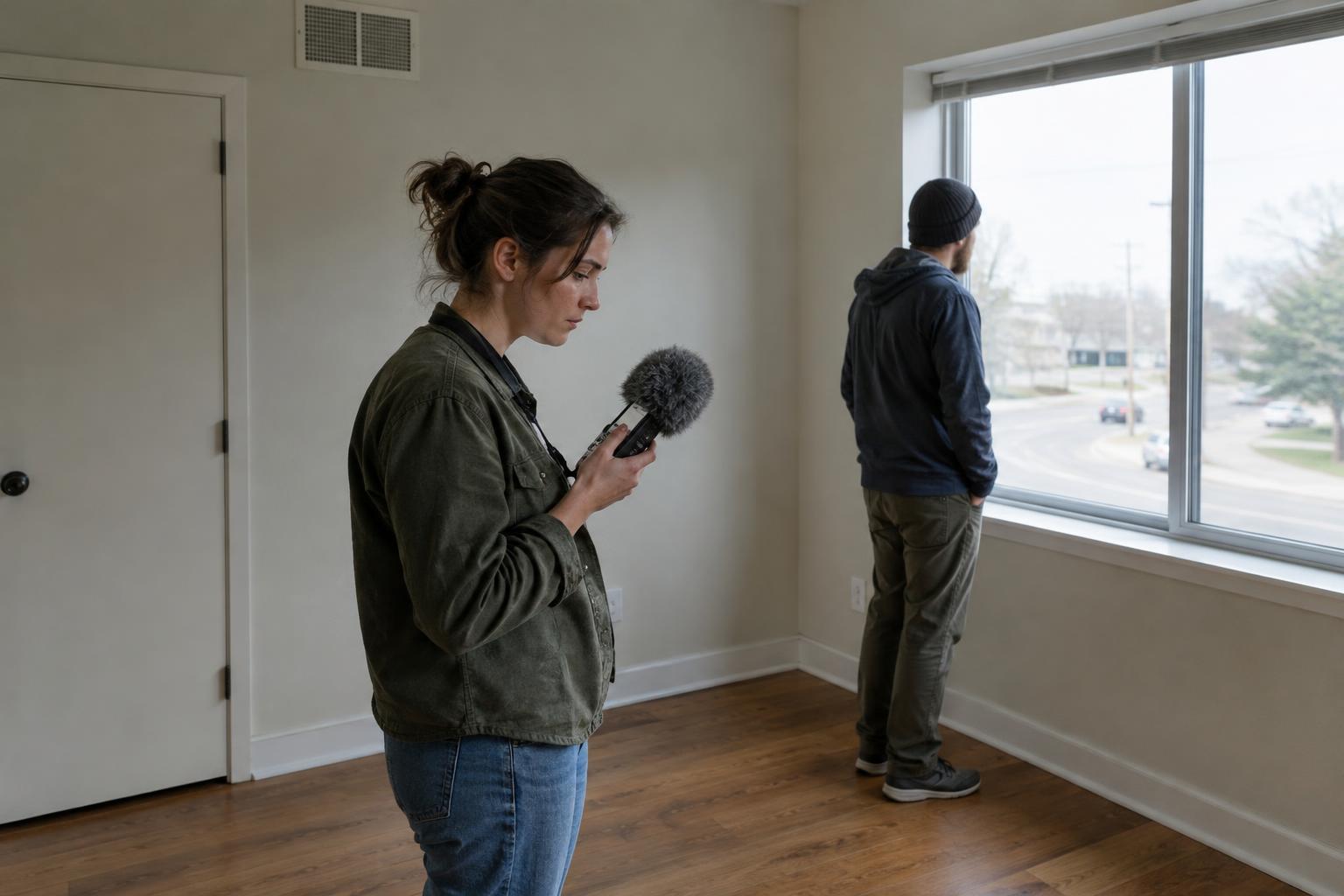
A location has a sonic character. An air system, refrigerator, distant road or echo may be quiet enough to ignore in person but obvious through headphones. Listen to whether that background stays steady or changes during the take. A constant low hum presents a different editing challenge from a door that slams halfway through a line. When it is practical, removing or reducing a noise at the location is preferable to assuming it can be repaired later.
Listen across takes, too. If one line is recorded close and dry while the matching response sounds distant and reverberant, the cut between them may draw attention. Consistent microphone distance and orientation help the scene sound like one space. Record room tone when possible: a stretch of the location’s natural sound without dialogue or deliberate movement. It gives the editor material for smoothing gaps, though it cannot replace a line that was never captured clearly.
Turn listening into a repeatable routine
A useful routine is to check the setup before rolling, follow the words during the take and review any doubtful moment immediately afterward. If time allows, play back the recorded file rather than relying only on what you heard live. That confirms both that the sound was captured and that you monitored the right signal. Keep notes specific: “rustle on the second line” is more useful than “audio problem.”
Headphones are a diagnostic tool, not a guarantee of perfect sound. Their isolation, fit and volume can affect what you notice, and set noise can still distract you. Take a moment in a quieter spot when a judgment is difficult. Most importantly, communicate problems while another take is still possible. The goal is not to make every location silent; it is to bring home dialogue and atmosphere that serve the scene without forcing the edit to hide avoidable mistakes.