Start with the path, not the focus ring
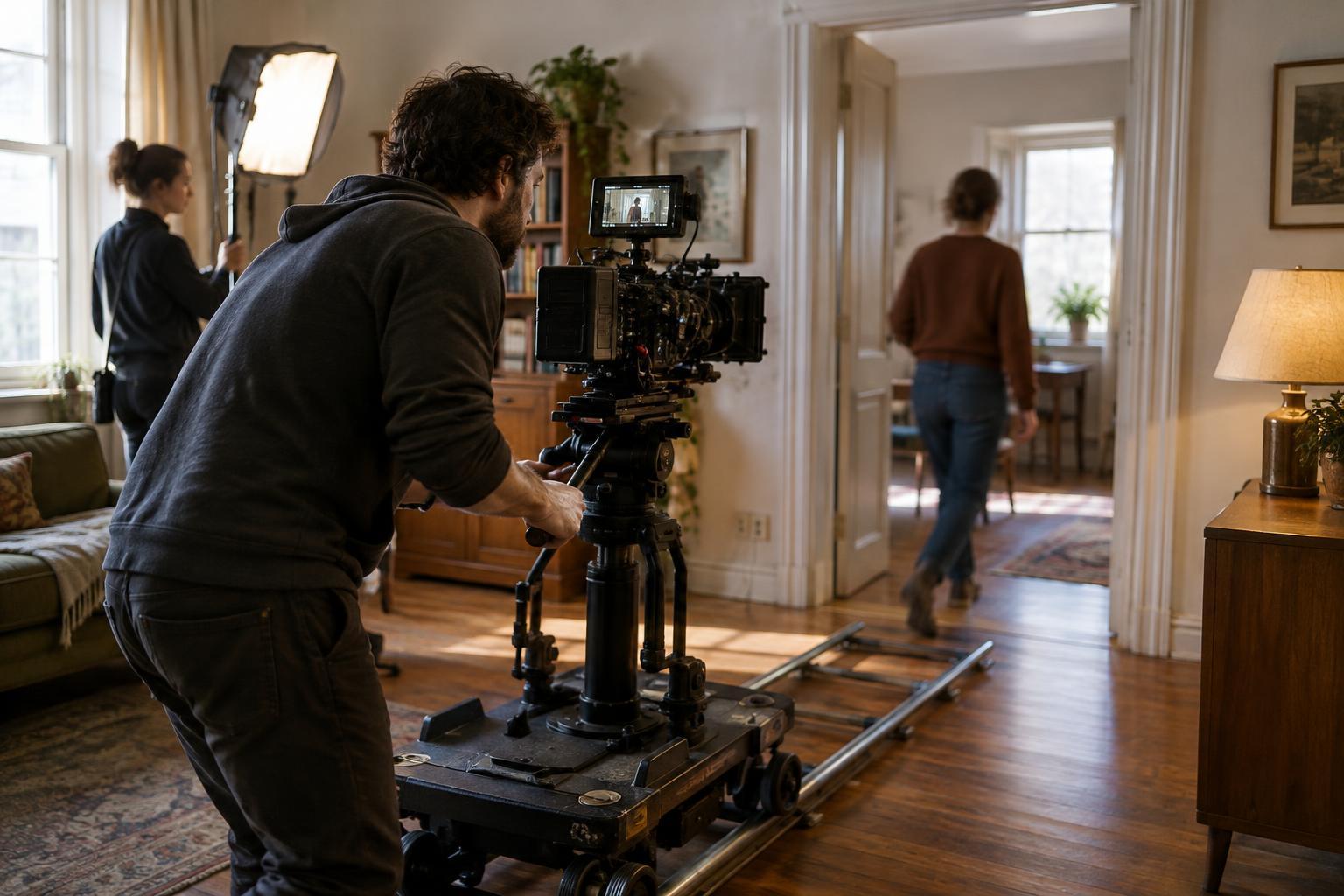
Manual focus is easiest to plan when the subject’s movement is described as a path through the shot. Before setting marks, identify where the subject starts, where they change direction or speed, and where the shot ends. Note whether the camera also moves. A performer walking toward a locked-off camera presents a different challenge from one walking beside a tracking camera: in the second shot, the distance between lens and performer may barely change.
Choose what needs to be sharp at each point. In a close-up, that may be the nearer eye; in a wider shot, keeping the whole person acceptably sharp may be enough. This decision belongs alongside framing and blocking, because a focus pull guides attention. If a subject crosses in front of another person, decide whether focus should follow the moving subject or stay behind. A deliberate choice will read more clearly than a late correction.
Set marks that correspond to real positions
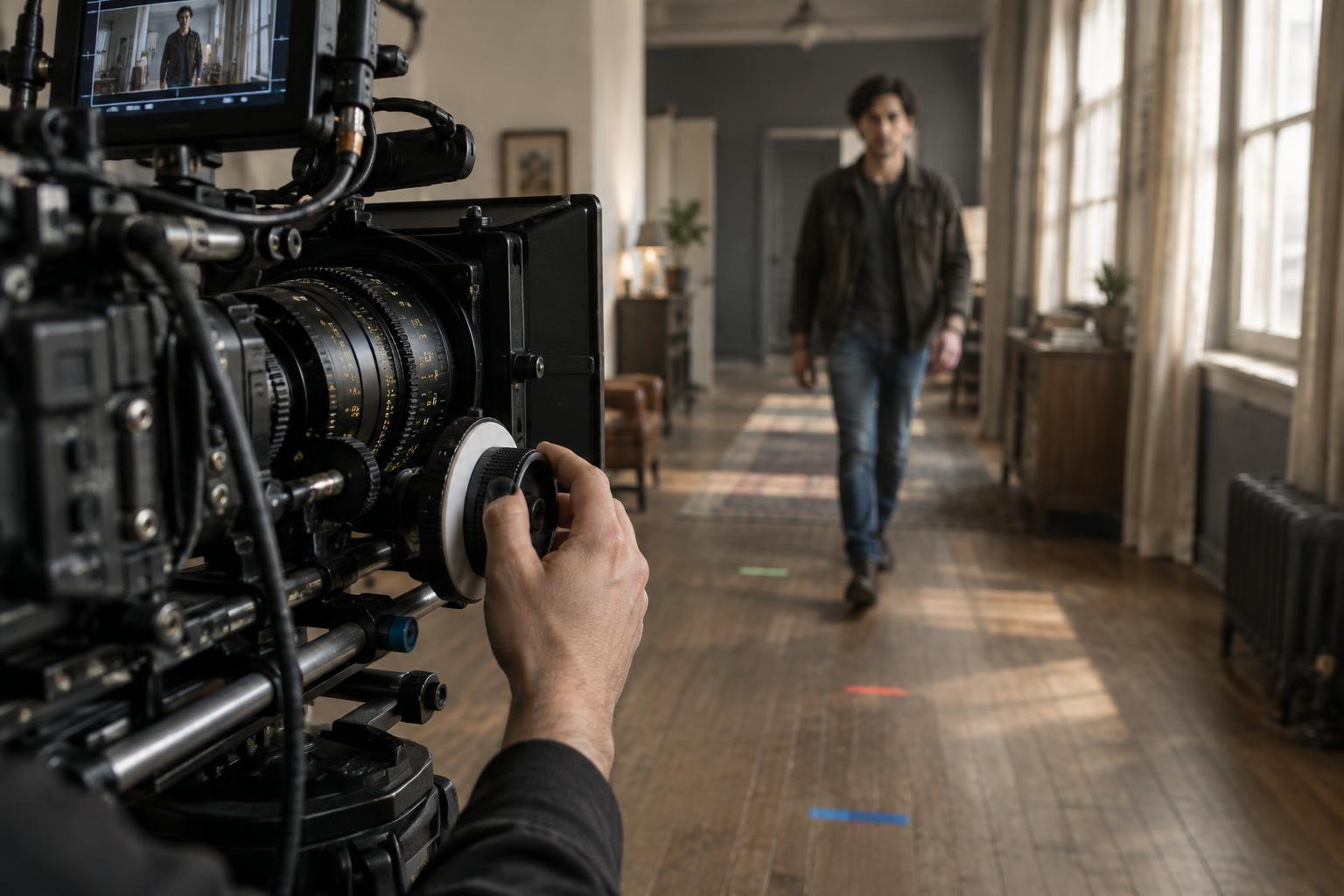
A focus mark pairs a subject position with a lens setting. During a setup, place the subject at the start of the move, focus carefully, and mark that position on the floor if the location allows it. Then repeat at the important points of the action. Temporary tape, a recognizable seam, or a piece of scenery can give the performer a reference. Keep floor marks outside the frame and obtain permission before attaching anything to a location.
Transfer the matching focus positions to the lens or follow-focus marking surface. Label them in a way that distinguishes one beat from another, such as “door,” “table,” and “stop,” rather than relying only on a cluster of lines. Distance measurements can provide a starting point, but check focus through the camera, especially when working close to the subject. Marks are guides to a repeatable move, not a guarantee that every take will follow the same path.
Use rehearsal to learn the rhythm
A useful rehearsal answers more than where the subject will stop. Watch when they accelerate, pause, turn their head, or lean away from their floor mark. Practice moving focus smoothly between the lens marks while following those changes. If the camera moves, rehearse with the operator at the intended speed. A mark reached at the wrong moment will not help when the distance is changing throughout the take.
Agree on simple cues with the performer and crew when possible. An action such as opening a door may be easier to anticipate than an exact count of seconds. Leave room for natural variation: a performer should not have to stare at the floor to serve the focus plan. If the move is too difficult to repeat, the team may be able to adjust blocking, camera distance, framing, or aperture. These are creative choices as well as technical compromises.
Pull focus without chasing every wobble
During a take, look for the subject’s movement rather than waiting for the image to become visibly soft. By the time blur is obvious on a monitor, a fast subject may already be beyond the planned setting. Use the rehearsed path and cues to anticipate the change, then make small corrections as needed. A clean pull often feels like one continuous motion, even if the focus puller makes subtle adjustments along the way.
Use a reliable monitor if one is available, and check that its viewing settings make softness visible rather than flattering the image. Magnification or focus-assist tools can help when setting marks, but an enlarged view may be awkward during a fast take because it hides the wider action. Review the shot at normal framing, too. The goal is not merely to hit a technical mark; it is to keep the intended subject readable through the moments that matter.
Build in tolerance and review the result
A wide aperture, long focal length, or close subject distance can make small distance changes more noticeable. If the shot allows it, a smaller aperture or a little more space between camera and subject can give the focus pull more tolerance. Changing those choices will also affect the image, so coordinate with the cinematographer rather than treating depth of field as a separate problem.
After a take, review the start, transitions, and ending instead of judging only one still frame. Notice whether softness happens at the same point each time. A repeated miss suggests the mark or timing needs revision; an unpredictable miss may call for more room in the blocking or a different focus strategy. Good manual focus work combines preparation with observation. The marks give you a route, rehearsals teach you its pace, and each take tells you where the route needs to bend.