Start with the story’s central pressure
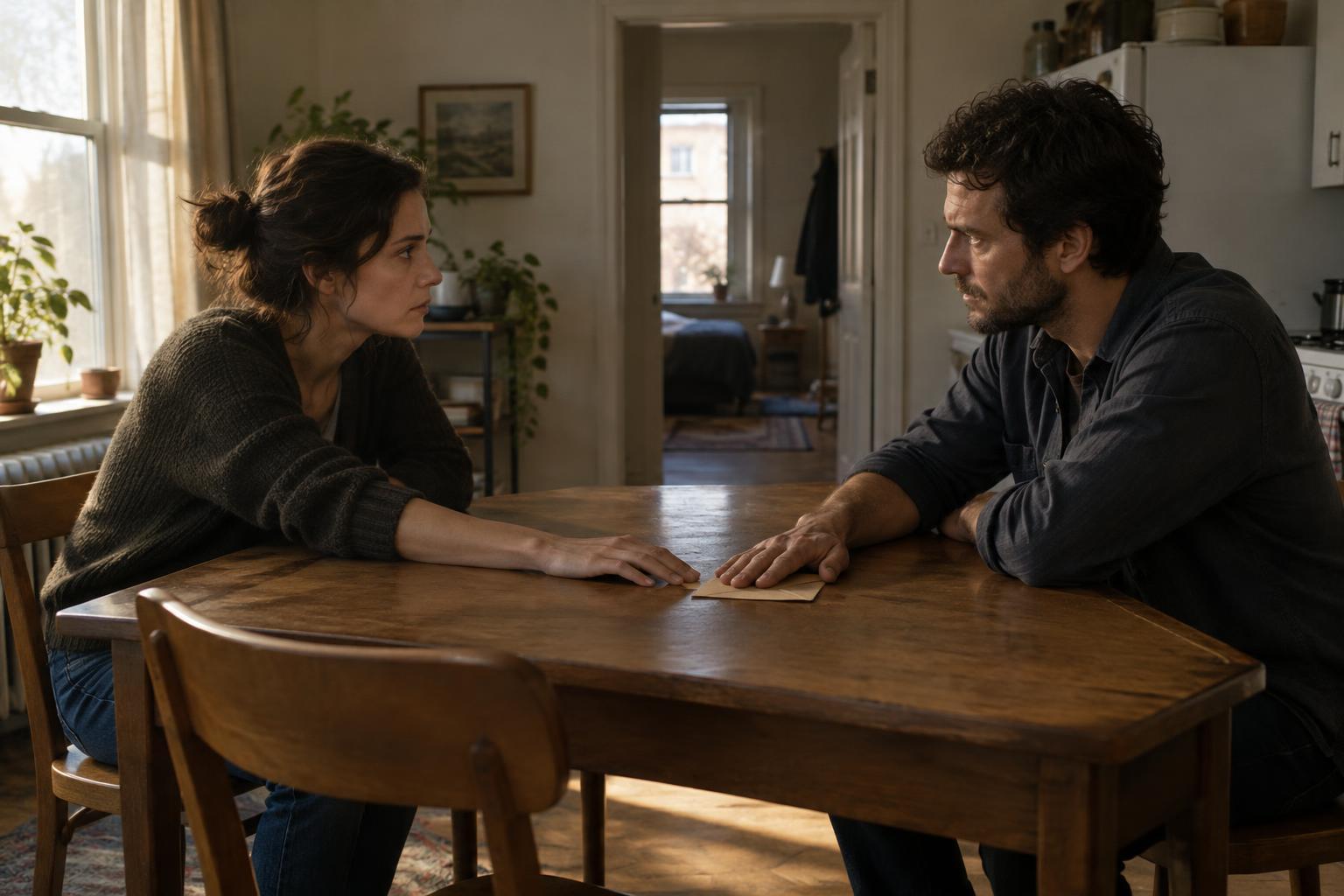
An outline helps you decide what the movie is doing before you spend pages making it happen. It need not settle every line of dialogue or camera detail. Its first job is to identify a character, something they want, and a situation that makes getting it difficult. Write a brief statement of the premise, then ask what forces the character to act now rather than later. If you cannot answer that question, the outline may reveal a story problem worth solving before you draft.
Give the main character an external objective an audience can recognize: finding someone, keeping a secret, winning a position, escaping a place. Then note what pursuing it might cost them. A quiet family drama and a supernatural thriller may move at different speeds, but both benefit from a gap between what the character intends and what their actions cause. That gap gives the story room to develop.
Mark the major changes, not just the major events
Before listing scenes, sketch the broad movement of the story. What establishes the character’s ordinary circumstances? What disrupts them? Which decision commits them to a course they cannot easily abandon? Where does their approach stop working, and what choice brings the central conflict to a head? These questions are more useful than filling predetermined page numbers. They let you test whether each turning point changes the character’s options.
Write each major beat in a sentence or two, including its consequence. “The witness disappears” names an event; “The witness disappears, forcing the detective to trust the person she suspects” also points toward the next stretch of story. If two beats leave the character in essentially the same position, consider combining them or making one more consequential. An outline should describe a chain of pressure and response, not a collection of incidents.
Build scenes around choices and consequences
Once the broad shape holds together, make a scene list. For each proposed scene, note where it happens, who drives it, what that person wants, what resists them, and what changes by the end. Keep these notes short enough to scan. A scene might reveal information, deepen a relationship, create a setback, or force a decision; it will often do more than one. If nothing changes, ask whether the scene belongs in the draft or whether its useful material can move elsewhere.
Pay attention to what makes a scene playable on screen. “She realizes she cannot trust him” is an internal conclusion. The outline becomes more helpful when it suggests an action through which that shift is visible: she withholds a key, tests his account, or chooses another partner. You do not need to prescribe every gesture. You do need enough concrete behavior to imagine the conflict unfolding without relying on an explanatory speech.
Check the rhythm between big moments
Outlines can look convincing when they contain a strong opening, midpoint, and ending, yet still go slack between them. Read your scene list straight through and track how the stakes, relationships, or information develop. After an intense confrontation, a quieter scene can be valuable if it changes how someone understands the conflict. Quieter does not have to mean static. Likewise, repeated chases or arguments will feel similar if they leave everyone facing the same problem.
Genre can guide the kind of pressure you test for. In a mystery, ask whether each discovery sharpens or complicates the central question. In a horror story, consider whether the character’s attempts to feel safe expose a new vulnerability. In a comedy, look for choices that create fresh complications rather than merely repeating a joke. These are checks, not rigid formulas: use them to find places where the story loses momentum.
Leave yourself room to discover the film
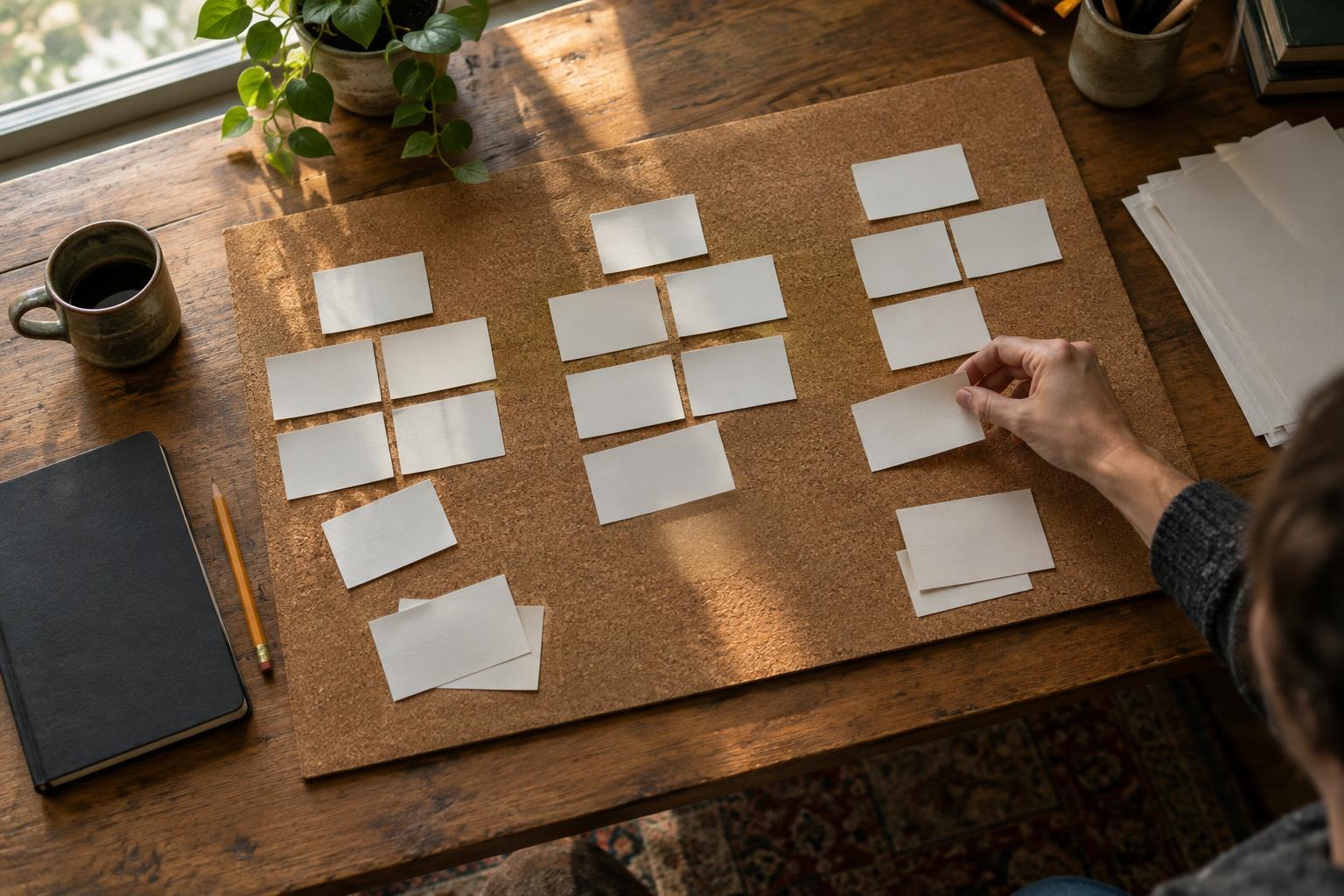
Choose an outline format you will actually revise. A one-page beat sheet may be enough to test the story’s shape; a longer scene-by-scene document can help when timing, locations, or multiple character threads are hard to track. You can also use index cards or a simple numbered list. The format matters less than whether you can move a scene, see its consequences, and notice what is missing.
Before drafting, give the outline one practical pass. Check that the main character makes meaningful choices, that important developments have causes, and that the ending grows from what came before. Mark uncertain scenes as questions rather than inventing certainty. Then begin the screenplay. A useful outline provides direction while leaving space for a stronger action, image, or exchange to emerge in the writing. When that happens, update the map instead of defending it.