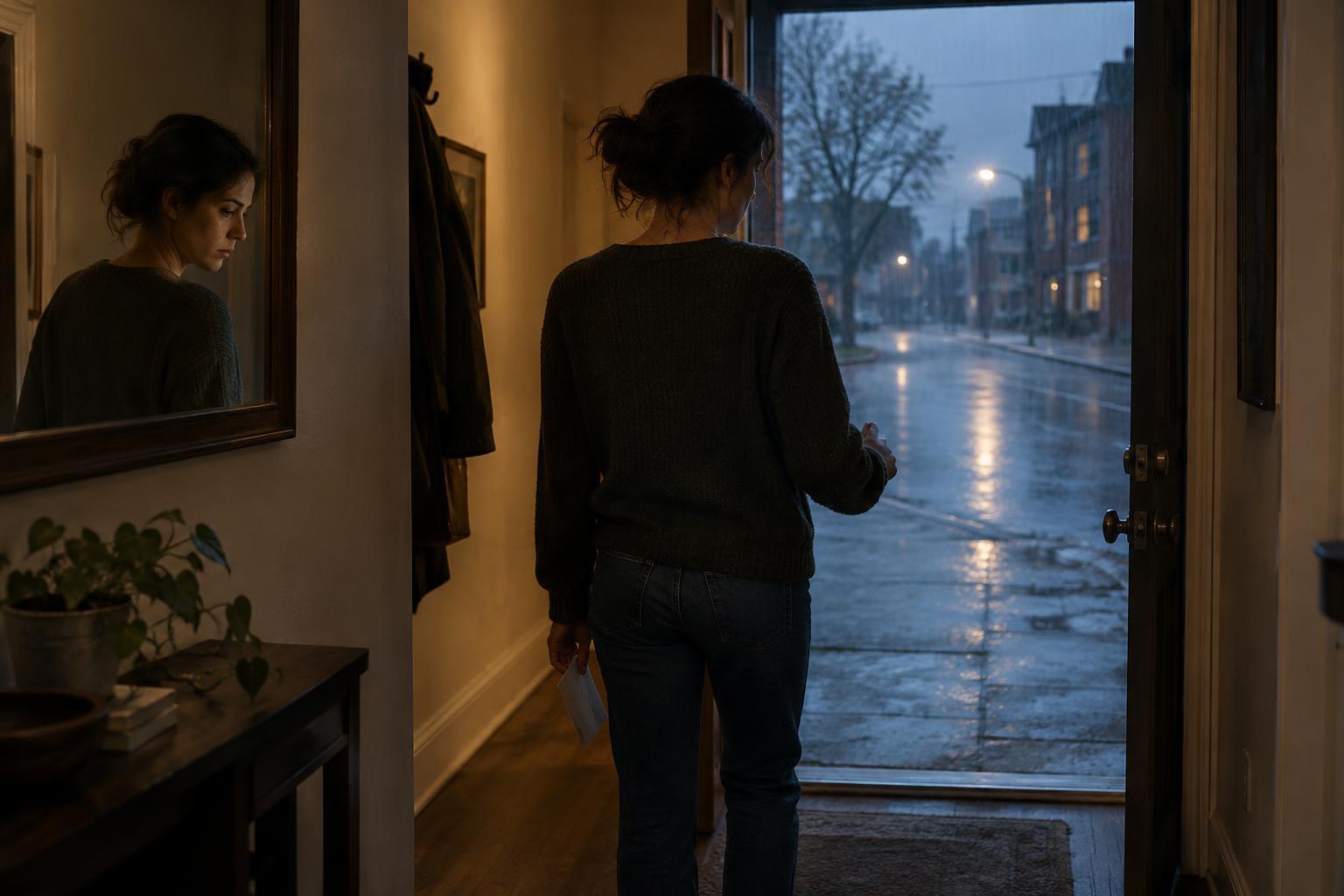
Start with a goal the audience can recognize
A protagonist’s goal is the outcome they are actively trying to achieve. It should be specific enough that an audience can tell whether the character is getting closer or farther away. “Find the missing sound recording before the premiere” gives a writer more to work with than “save the project.” The clearer version suggests places to search, people to question, setbacks to face, and a point at which success or failure becomes visible.
A goal does not need to be noble or permanent. It can change as the protagonist learns more, and a character may pursue smaller goals from scene to scene. What matters is that their actions have a readable direction. When revising a draft, ask what the protagonist wants right now, what they plan to do next, and what stands in the way. If those answers are hard to find, the audience may struggle to understand why one scene leads to another.
Give the character a need beneath the goal
A need is something the protagonist lacks in how they understand themselves, other people, or the world. It is often less obvious to the character than the goal. A filmmaker searching for a lost recording might need to trust a collaborator instead of insisting on solving every problem alone. Recovering the recording could make the film possible; learning to share responsibility could change how the protagonist lives and works after the premiere.
The need should grow out of the story rather than sit beside it as a lesson to be announced. Look for moments when pursuing the goal exposes a cost in the protagonist’s usual approach. Perhaps they reject useful help, conceal a mistake, or overlook someone who knows where the recording went. These choices allow the audience to understand the need before the protagonist can name it. A story can also leave a need unmet, provided that choice has meaningful consequences.
Make the flaw a pattern, not a label
A flaw is a recurring habit, belief, or way of coping that causes trouble. “Arrogant” may be a starting note for a writer, but it does not yet describe what the character does. “Dismisses other people’s ideas before hearing them out” points toward behavior a scene can show. It also gives other characters something concrete to respond to.
The strongest flaws often serve a purpose for the protagonist. Someone who refuses help may believe that relying on others invites disappointment. That belief might have helped them finish difficult work in the past, which makes it harder to abandon. Avoid making every obstacle the character’s fault: accidents, competing interests, and limited resources still matter. The flaw becomes dramatically useful when it shapes the character’s response to those obstacles and sometimes makes a difficult situation worse.
Connect all three through difficult choices
Goal, need, and flaw work best as a connected system. The goal gives the character a reason to act. The flaw influences how they act. The need suggests a different approach they resist. In the missing-recording story, the protagonist might have a promising lead but need a collaborator’s access to follow it. If they are determined to stay in control, they may waste valuable time trying another route. Now the internal conflict affects the external plot.
Raise pressure by offering choices that test the pattern, not merely by adding bigger obstacles. Could the protagonist admit they erased a backup? Will they credit the person who finds a clue? A turning point becomes more satisfying when a new decision has a cost: trusting the collaborator may risk an argument, a delay, or a loss of control. The protagonist’s change then feels earned through action rather than delivered in a speech.
Use a scene test when revising
Choose a major scene and write three brief answers: What does the protagonist want from this scene? What familiar behavior do they fall back on? What alternative would bring them closer to their need? You do not have to put those answers in the screenplay. They are a diagnostic tool. If the scene has no immediate objective, it may feel static. If the flaw never affects a decision, it may exist only in a character description.
Then examine the ending. The protagonist does not have to get the goal or overcome the flaw completely. But the outcome should reflect the choices they made along the way. They might recover the recording by accepting help, or lose it because they could not. In either case, the outer result and inner journey speak to each other. That connection makes a protagonist’s arc easier to follow without making the character predictable.