Decide what the screening needs to tell you
A rough cut lets you see how the film works beyond the editing timeline. It does not need polished color, a final mix or finished effects before someone can respond to its story. But viewers do need enough context to understand what they are watching. Replace missing shots with clear placeholders where possible, make dialogue audible and flag temporary elements that might otherwise be mistaken for creative choices.
Before sharing the cut, write down two or three questions you genuinely want answered. Perhaps you need to know whether the protagonist’s choice is clear, whether a transition feels abrupt or where attention starts to drift. This gives you a way to evaluate the feedback later. Avoid telling viewers what you hope they will feel; that can prompt them to confirm your intention rather than describe their experience.
Choose viewers for different kinds of insight
A small, varied group is often more useful than a large room that turns every reaction into a debate. Someone who knows the script can spot changes to the original plan, but may unconsciously fill gaps with information absent from the cut. Someone unfamiliar with the project can show you what the film communicates on its own. A fellow editor may notice a fixable rhythm problem; a genre-minded viewer may reveal whether an intended reveal feels surprising or merely confusing.
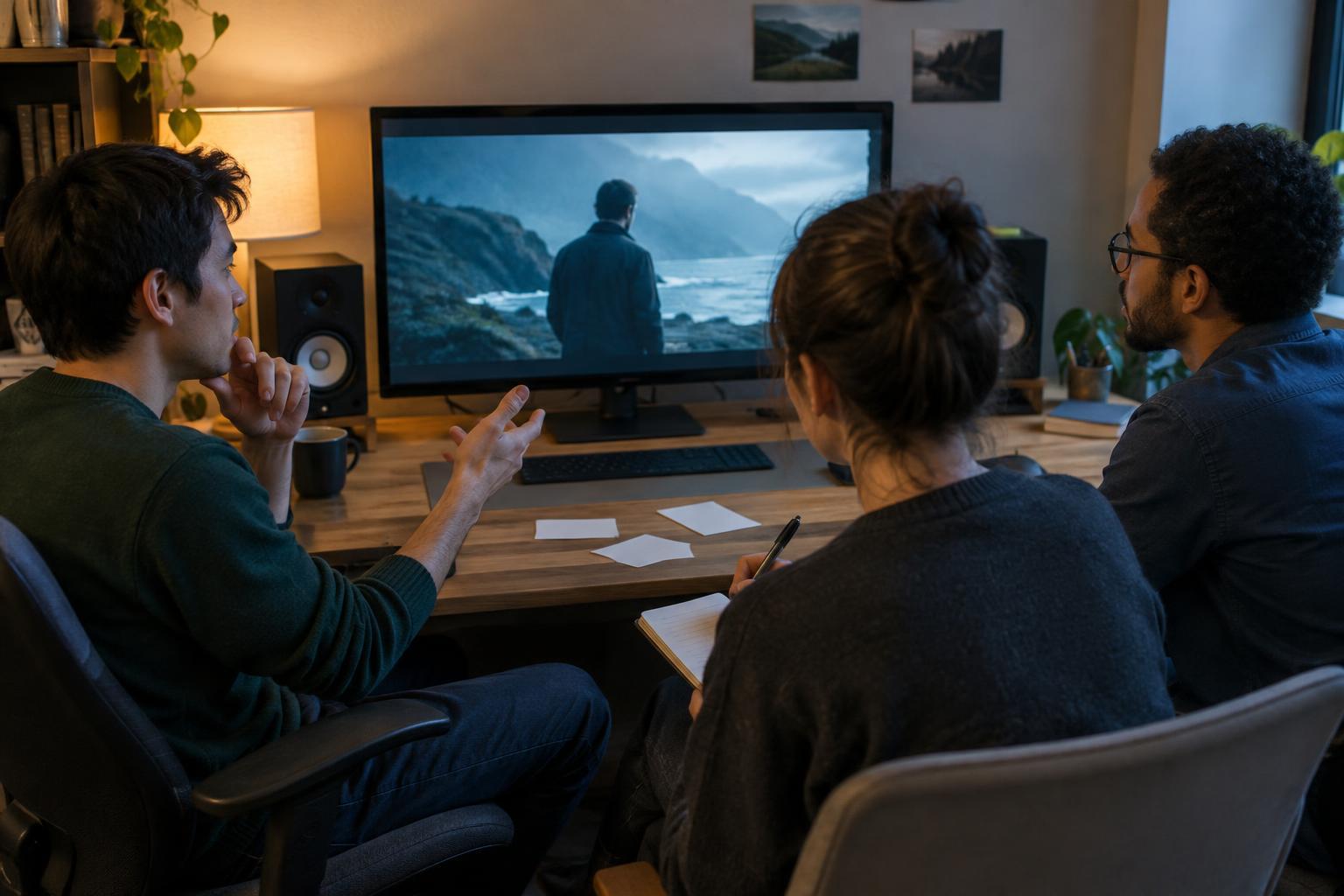
Tell each person what stage the film is at and what sort of response would help. Ask them to watch without pausing if you want to learn how the sequence plays in one sitting. Give them a simple way to note moments afterward, using scene descriptions or timecodes. If you are screening with a group, collect individual notes before discussion so one confident voice does not set the room’s opinion.
Ask about the experience before asking for fixes
Begin with open questions: What did you think the character wanted? Where did you feel most engaged? When were you uncertain about what was happening? What did you expect at the end of this scene? Questions like these reveal what viewers understood and felt, rather than asking them to act as substitute editors. A viewer may say, “Cut the opening,” when the underlying problem is that the opening does not yet give them a reason to care.
Listen without defending the cut. You can ask a follow-up question to locate a reaction, but explaining your intent in the moment will not change what appeared on screen. Separate observations from proposed solutions in your notes. “I lost track of who had the key” describes an experience you can investigate. “Add a voice-over explaining the key” is one possible remedy, not an instruction you have to follow.
Sort the notes against the film’s goals
After the screening, let the notes settle before opening the timeline. Group them by issue: comprehension, character motivation, pacing, tone, sound or technical distraction. Look for repeated experiences, especially when viewers describe them in different words. A single note can also matter if it points to a concrete gap you can verify. On the other hand, several viewers asking for a different kind of film may be responding honestly without identifying a change that serves your project.
Prioritize notes by asking what problem each change would solve and what it might cost. Shortening a pause could improve momentum but remove the moment in which a character’s decision lands. Moving a scene might clarify information but weaken a later reveal. Keep a record of decisions, including notes you choose not to use, so that you can distinguish a deliberate choice from an issue you simply forgot to revisit.
Test revisions without chasing every reaction
Make a duplicate sequence before substantial changes, then revise in passes. One pass might address story clarity; another might focus on pacing within scenes. Working this way makes cause and effect easier to judge than changing dialogue, structure and music all at once. If a note suggests a costly fix, first try the smallest edit that could address the underlying problem: a reaction shot, a reordered line or a few extra frames of context may be enough.
Watch the new cut without stopping, preferably after a break from the timeline. Ask whether the revision improves the whole film, not just the moment named in a note. You can show a targeted sequence to a fresh viewer if you need to check clarity, but repeated screenings of the same group may become less informative as they learn the story. Feedback is most valuable when it helps you see the cut more accurately. The final decision still belongs to the film you are making.