What makes a shadow hard or soft?
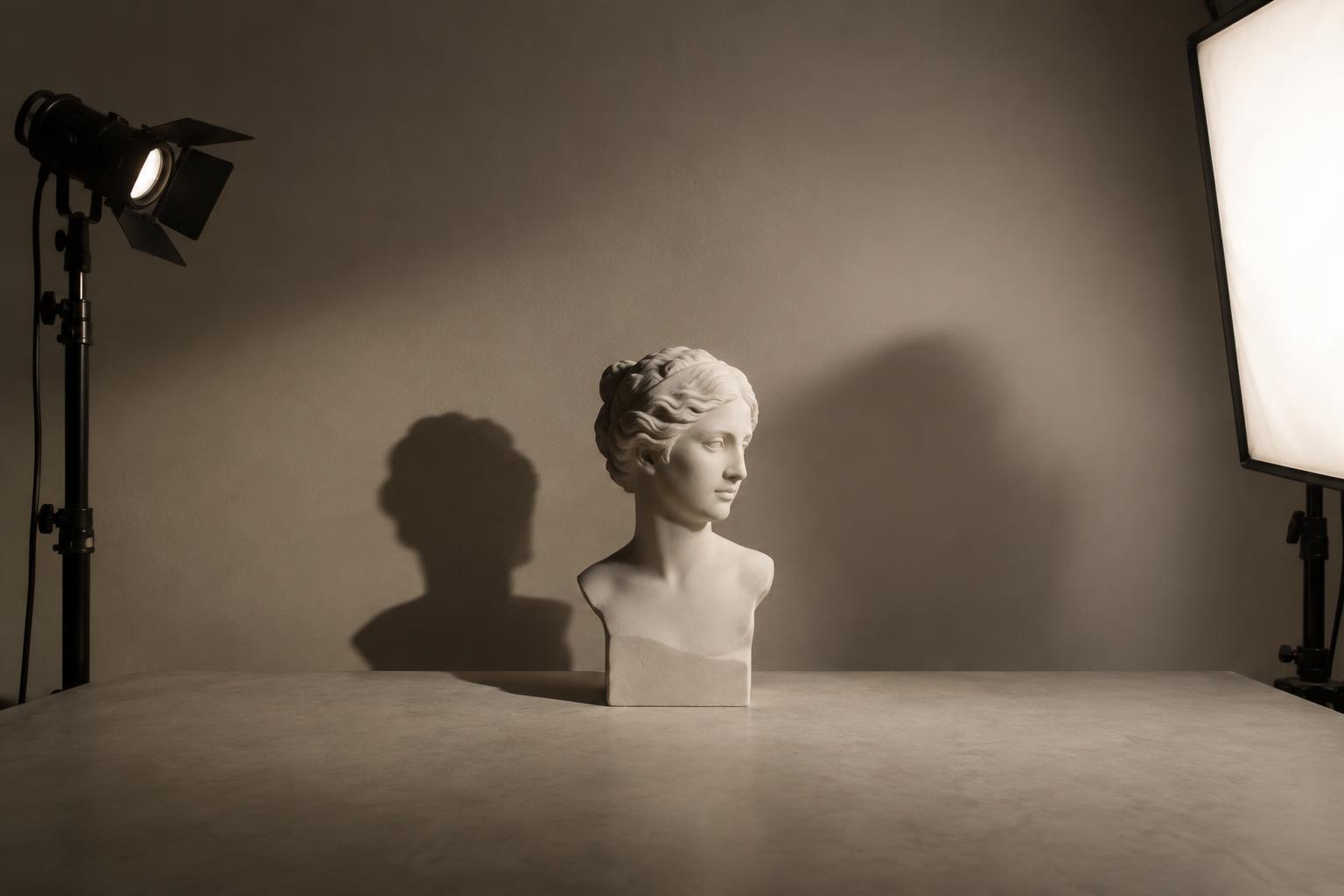
Place a hand between a lamp and a wall, then look at the hand’s shadow. A hard source produces a relatively crisp edge: the transition from lit wall to dark wall is narrow. A soft source produces a broader, more gradual transition. On a face, that difference appears along the edge of a nose shadow, beneath the chin, and wherever the light wraps from a lit plane toward a darker one.
The key is the source’s apparent size as seen from the subject, not simply the size printed on a piece of equipment. A small bare bulb across a room occupies a narrow angle in the subject’s view, so its rays arrive from nearly the same direction. A large luminous panel nearby sends light from many directions. Those overlapping paths fill in parts of a shadow that would otherwise remain dark, creating a wider, softer edge.
Source size and distance work together
Moving a source closer makes it appear larger to the subject and generally softens its shadows. Moving the same source farther away makes it appear smaller and generally sharpens them. This is why a modest softbox placed close to an actor can look softer than a much larger window viewed from far across a room. It is also why describing a fixture as a “soft light” tells you less than knowing where it sits and what surface is actually glowing.
Distance changes more than softness. A close light often creates a noticeable brightness difference between the near and far sides of a subject or set. A farther light tends to illuminate a wider area more evenly, though it may require more output or a different exposure. When repositioning a lamp to change shadow quality, check both the shadow edge and the brightness across the frame. Adjusting one can alter the other.
Diffusion and bounce create larger emitting surfaces
Diffusion can soften light when the illuminated material becomes a broader source from the subject’s point of view. Put diffusion in front of a lamp, then compare the shadow it casts before and after. If the diffusion sits close to the lamp and covers only a small area, the change may be modest. A larger sheet placed so the lamp fills it can create a much broader glowing surface. Keep the lamp’s heat and the material’s safe operating limits in mind when setting up.
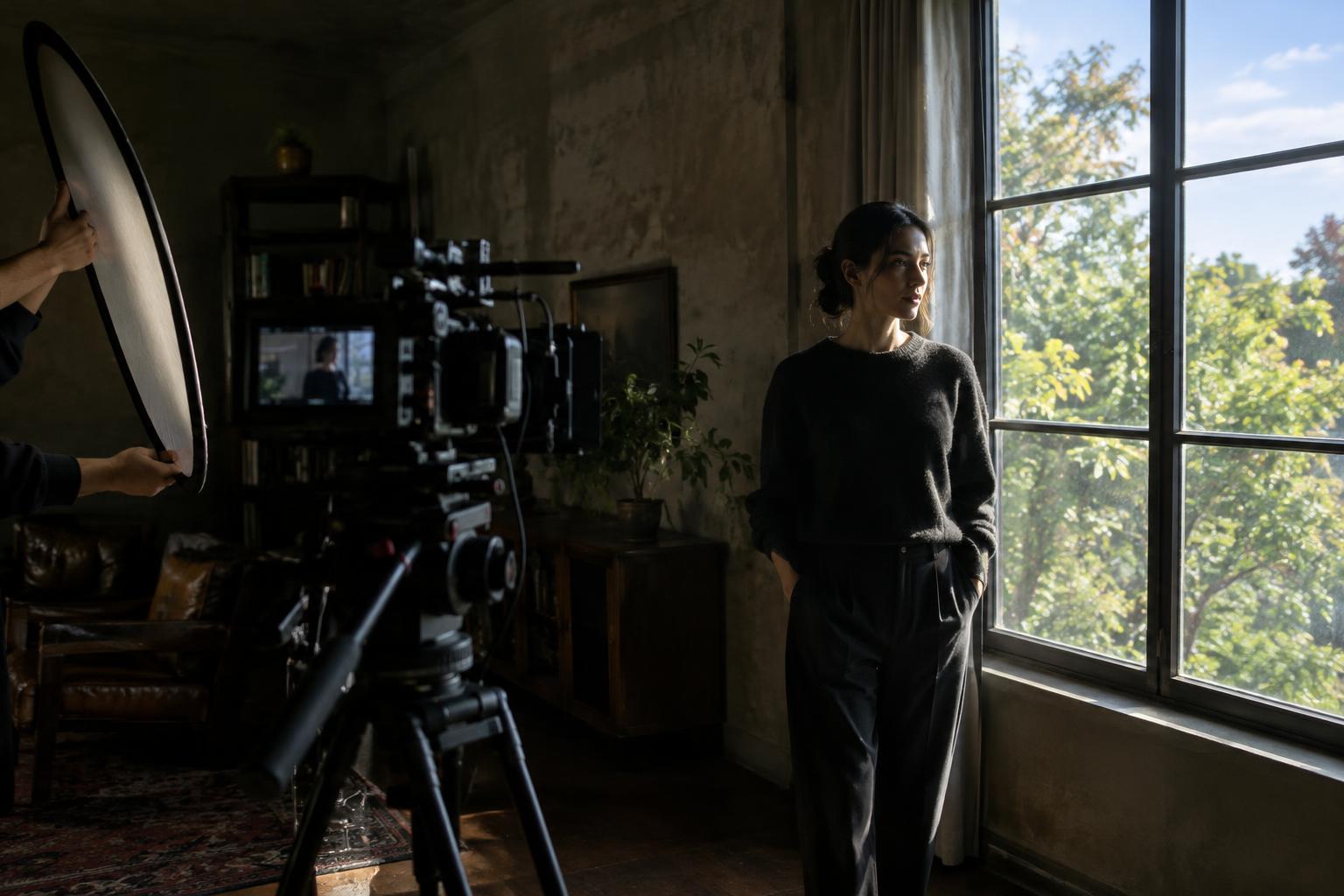
Bounce works on a similar principle. Instead of aiming a lamp directly at a face, aim it at a white wall, ceiling, or reflector and let that lit surface become the source. A broad bounce can produce gentle shadow transitions, but it may also scatter light onto the background and reduce separation. Moving the bounce surface, changing its size, or blocking unwanted spill with a flag helps keep the softness while restoring control.
Softness is not the same as brightness or contrast
A shadow can have a soft edge and still fall into deep darkness. Conversely, a hard-edged shadow can look faint if other light fills it. Softness describes the width of the transition at the edge; contrast describes the difference between the lit and shaded areas. On set, these are separate decisions. Change the apparent size of the key light to shape the edge, then add or subtract fill to adjust how dark the shadow remains.
This distinction helps when lighting faces. A close, broad source can make the transition across a cheek gradual without making every part of the face equally bright. If the unlit side feels too dark, add a little bounce or another controlled fill. If the image feels flat, remove that fill or use a dark surface near the subject to reduce reflected light. Watch the background as well: an appealing face light can lose its effect if it washes over everything behind the actor.
Choose the edge that supports the scene
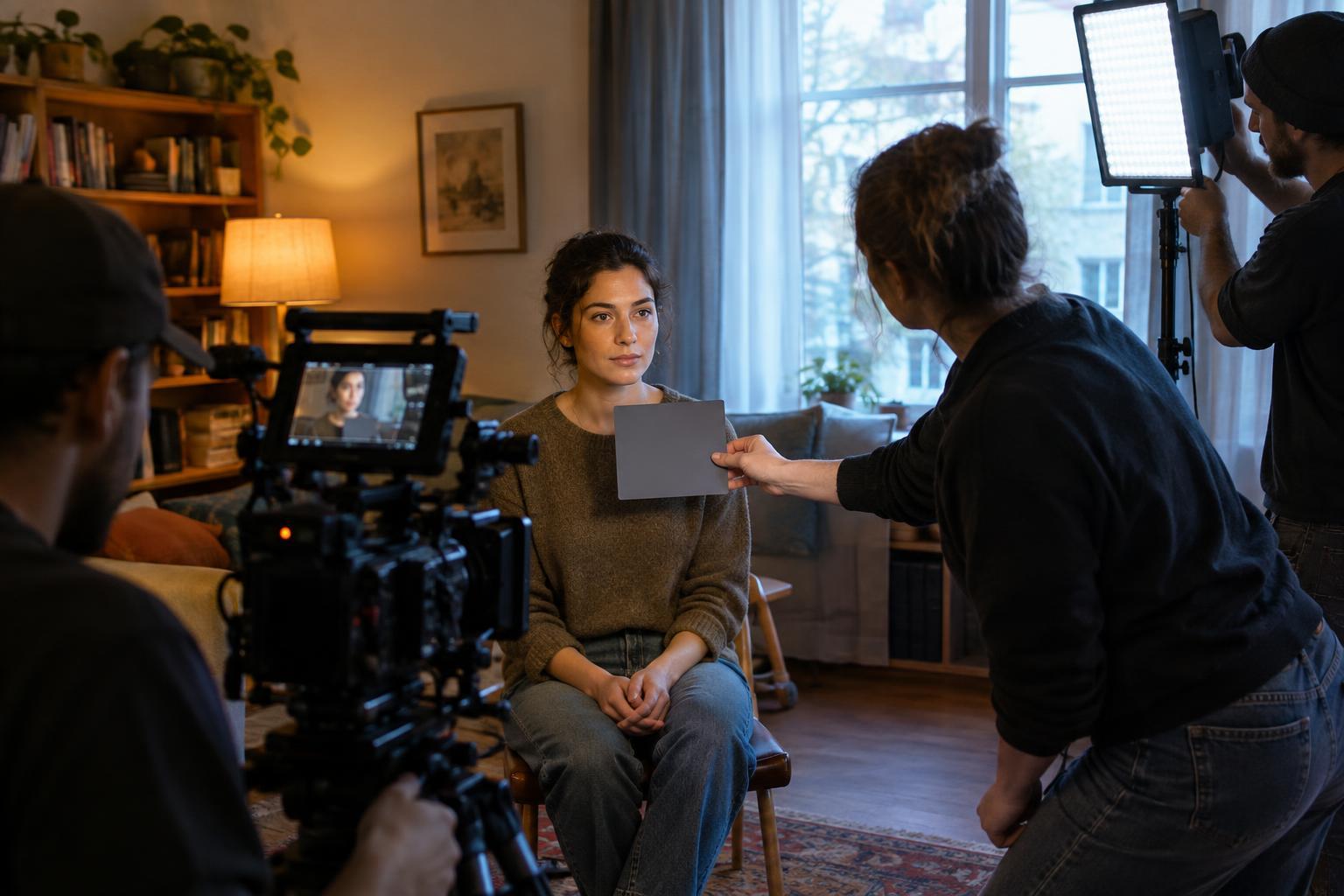
Neither hard nor soft light is automatically more cinematic. Hard light can emphasize texture, project a defined window pattern, or give a subject a clear outline. Soft light can make a close-up feel gentle and allow an actor to move through a wider range of flattering angles. Mixed approaches are useful: a soft key may shape a face while a harder beam places a distinct shape on the wall. The choice depends on what the audience should notice.
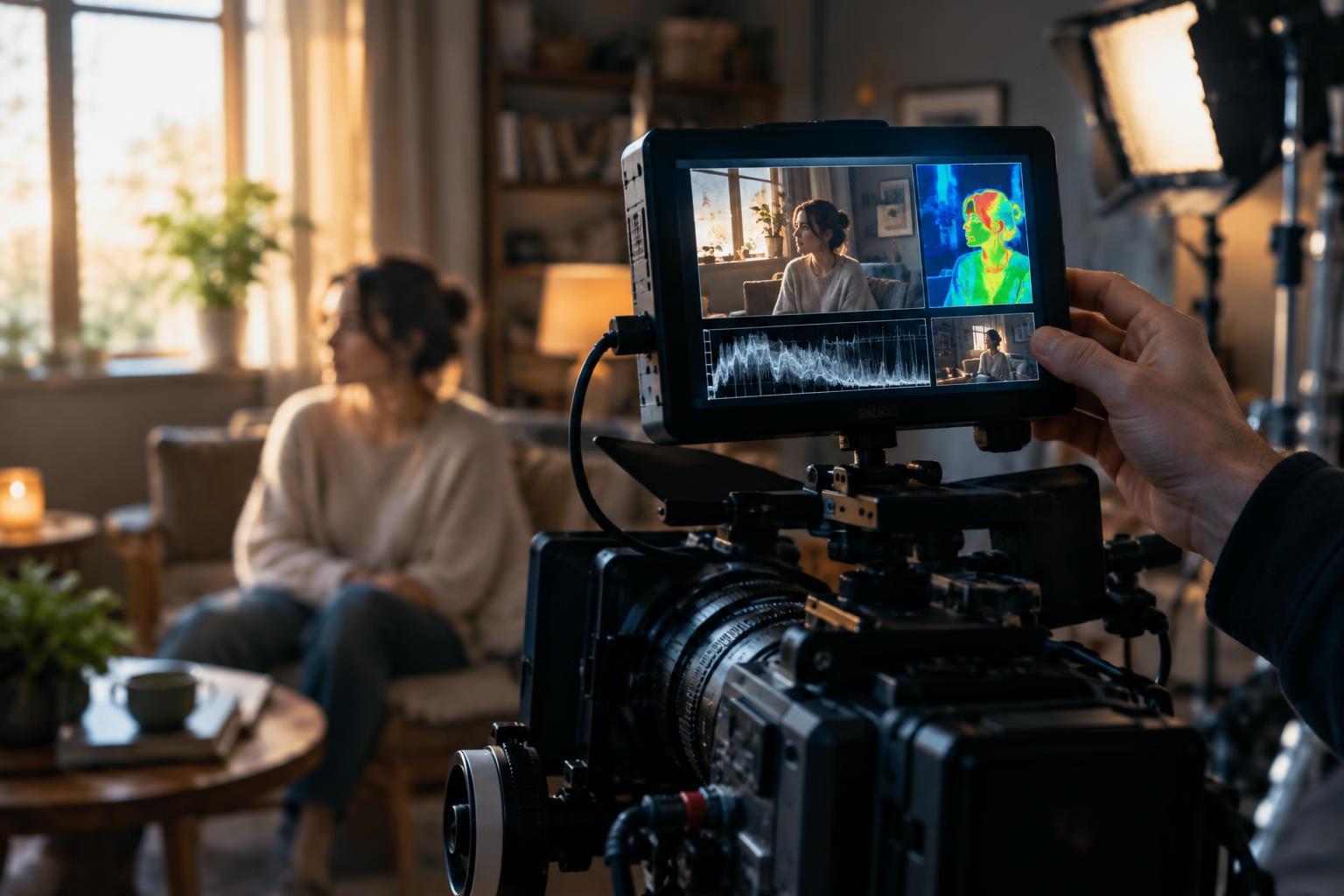
For a simple test, keep your camera and subject still and light the same setup three ways: with a bare source, with that source diffused, and with it bounced. Try to keep the face at a comparable exposure so brightness does not distract from the comparison. Study the nose and chin shadows, the texture of skin or fabric, and the light on the background. That exercise makes source size visible—and gives you a practical way to choose shadow quality before a scene begins.