What temp music can do for an edit
Temp music is a placeholder track used while a film is being edited. It can help a team imagine the emotional direction of a scene before original music is ready or a final track is chosen. It may also reveal whether a sequence needs a steady pulse, a gradual build, or no score at all. The danger is that a familiar or powerful piece of music can make almost any collection of images feel more convincing than it really is.
Treat the track as a question, not an answer. Instead of asking, “Does this music make the scene exciting?” ask what the scene communicates before the music starts. Can viewers understand the characters’ choices? Does the timing give an important reaction room to land? Music can strengthen those elements, but it cannot reliably replace them.
Build the scene before cutting to the beat
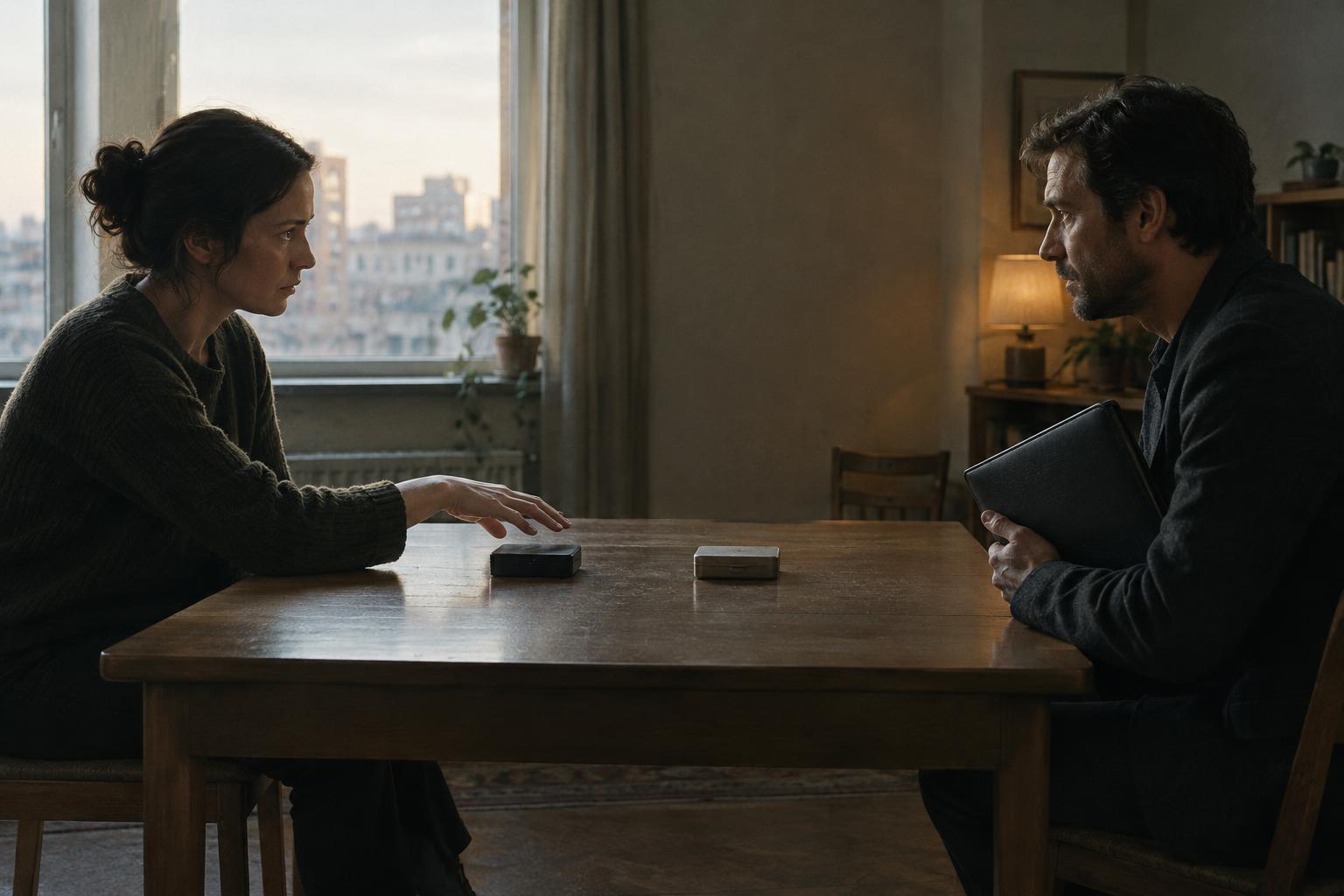
Start with a version that works through picture, dialogue, and the sounds already implied by the scene. In a conversation, pay attention to pauses, interruptions, and shifts in attention. In an action sequence, make sure viewers can follow the goal, the obstacle, and the result of each significant move. This gives you a baseline against which to judge what the temp track adds.
When you introduce music, resist placing every cut on a beat. A cut may be more effective just before a musical accent, or the shot may need to continue past one. Let the action and performance determine most edit points; then see where the track supports them. If the music’s structure demands a cut before a character’s expression has registered, the scene and the track may be pulling in different directions.
Test what the music is actually changing
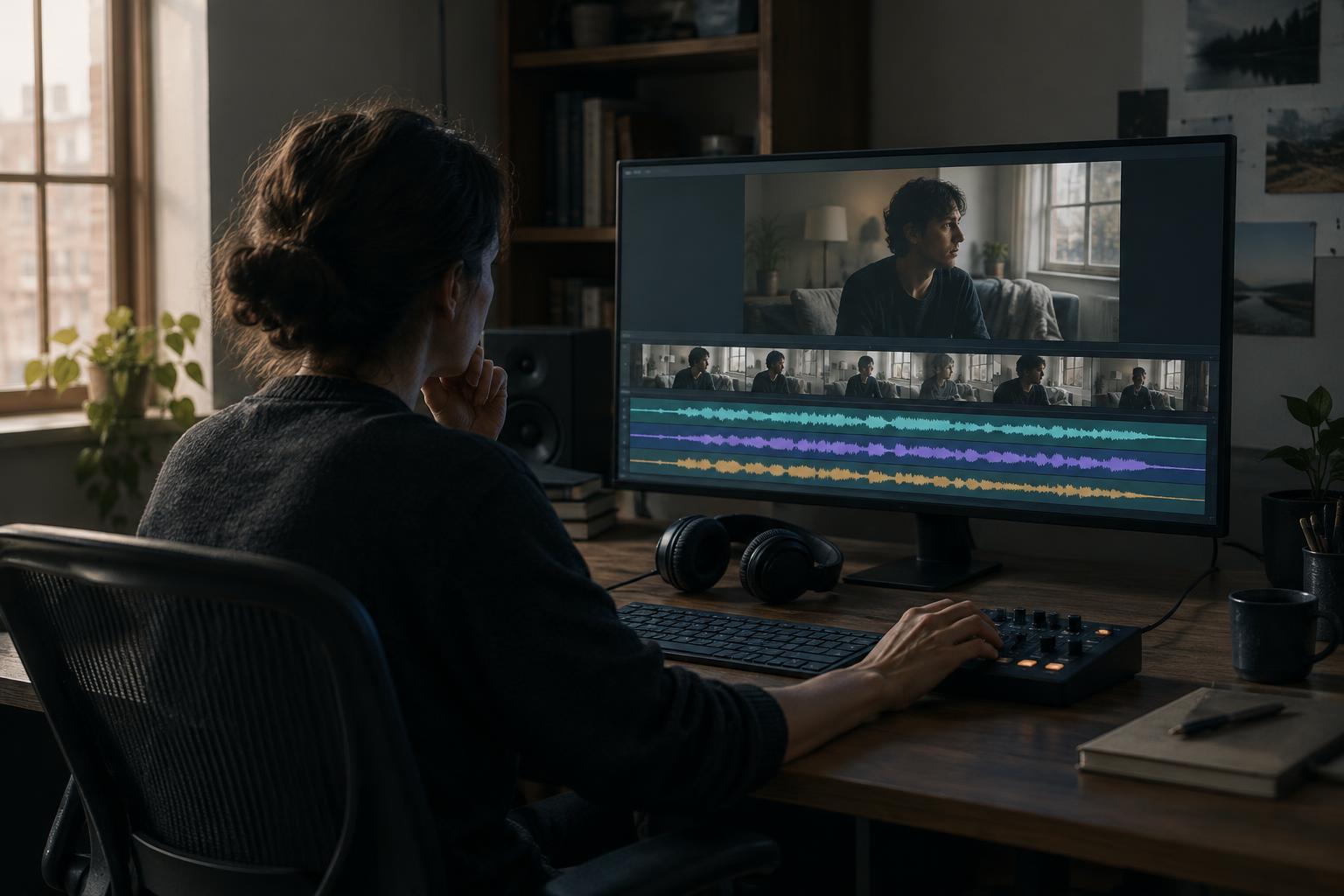
Watch the sequence once with music and once without it, preferably after a short break. Note specific differences rather than deciding which version you simply like more. Does the track clarify tension, or does it announce an emotion the actors already convey? Does it help a transition between locations, or mask a confusing change in space or time?
Try lowering the music substantially before removing it altogether. A track that works only when it dominates dialogue and effects may not be serving the scene. You can also test a contrasting piece with a different tempo or texture. The purpose is not to search endlessly for a perfect placeholder; it is to discover which qualities the edit needs and which qualities belong to one particular recording.
For example, a quiet scene might seem suspenseful with a driving pulse underneath it. Without that pulse, you may find that the character’s hesitation is the more interesting source of tension. The edit could then hold longer on a decision, rather than speeding up to follow the music.
Leave space for the finished soundtrack
A temporary track is only one part of the listening experience. Dialogue, footsteps, room ambience, and purposeful silence can all shape pacing. When music fills every gap, it becomes harder to hear what those elements could contribute. Try a pass that uses basic sound cues and no score; it may show you where music would have the most impact precisely because it has not been playing throughout.
If the final music will be composed or selected later, communicate what the scene needs in practical terms: where energy should rise, which moment should remain restrained, and where an ending needs room to breathe. Describing the dramatic function is more flexible than asking someone to reproduce a temp track. Keep any placeholder clearly identified in the project so it is not mistaken for a finished soundtrack, and confirm that any music in a released film can be used for that purpose.
Make the final check without the placeholder
Before treating a sequence as settled, review it once more with the temp music muted. You do not need a fully finished sound mix to ask whether the story remains legible and the scene’s key moments still have weight. If removing the track exposes a weak transition or an unclear decision, address that issue in the edit rather than immediately reaching for louder music.
Temp music is most useful when it helps you hear possibilities without closing them off. Keep the performance and story at the center, test your assumptions by changing the soundtrack, and preserve enough flexibility for the film’s eventual sound to find its own shape.