Two ways to give an image a sound
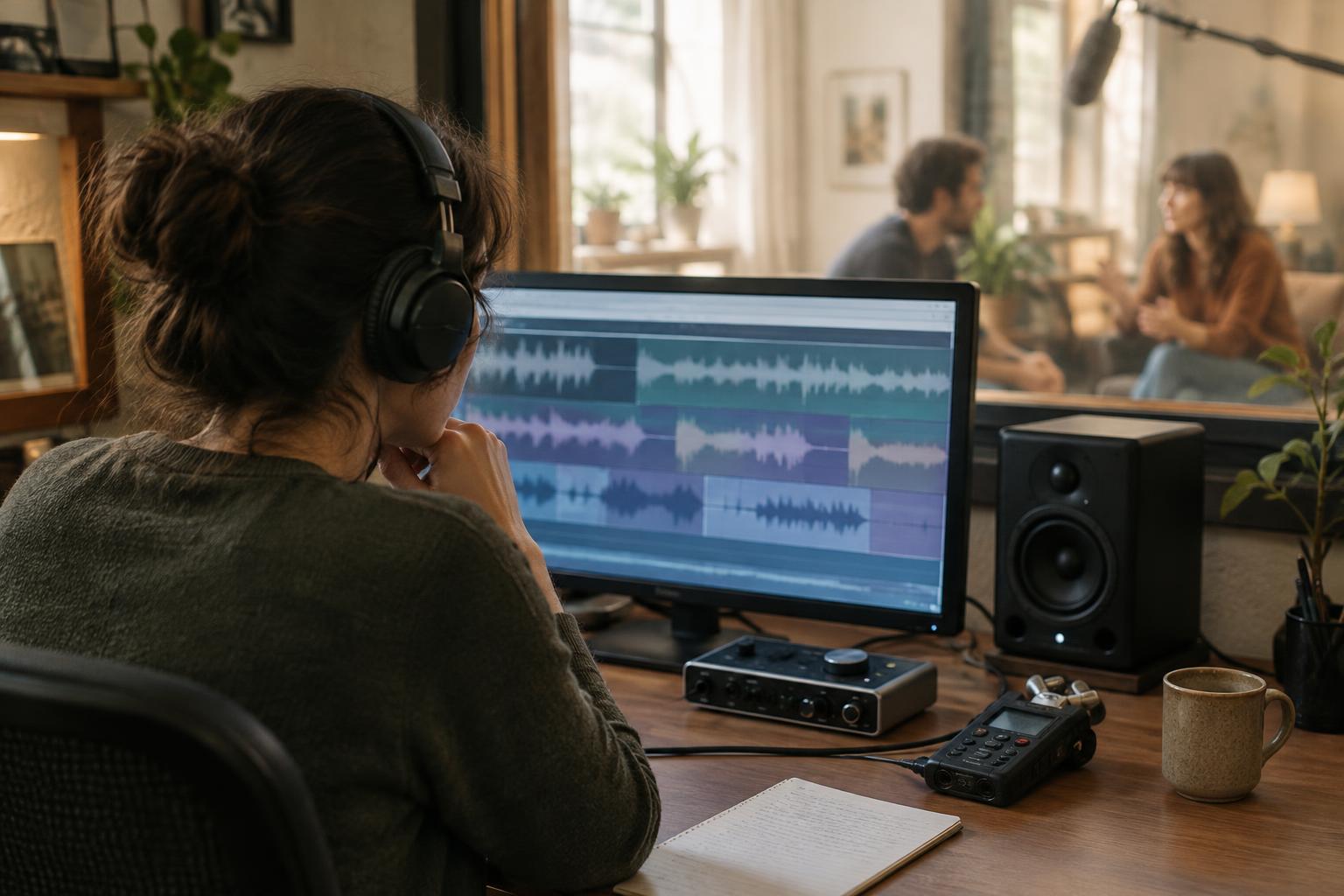
A hand sets a glass on a table. The camera shows the action, but the production recording barely catches it beneath dialogue and room noise. An editor could search a sound library for a glass tap or record the action again. Both approaches can work. The useful question is not which method is more authentic, but which sound helps the audience understand this particular moment.
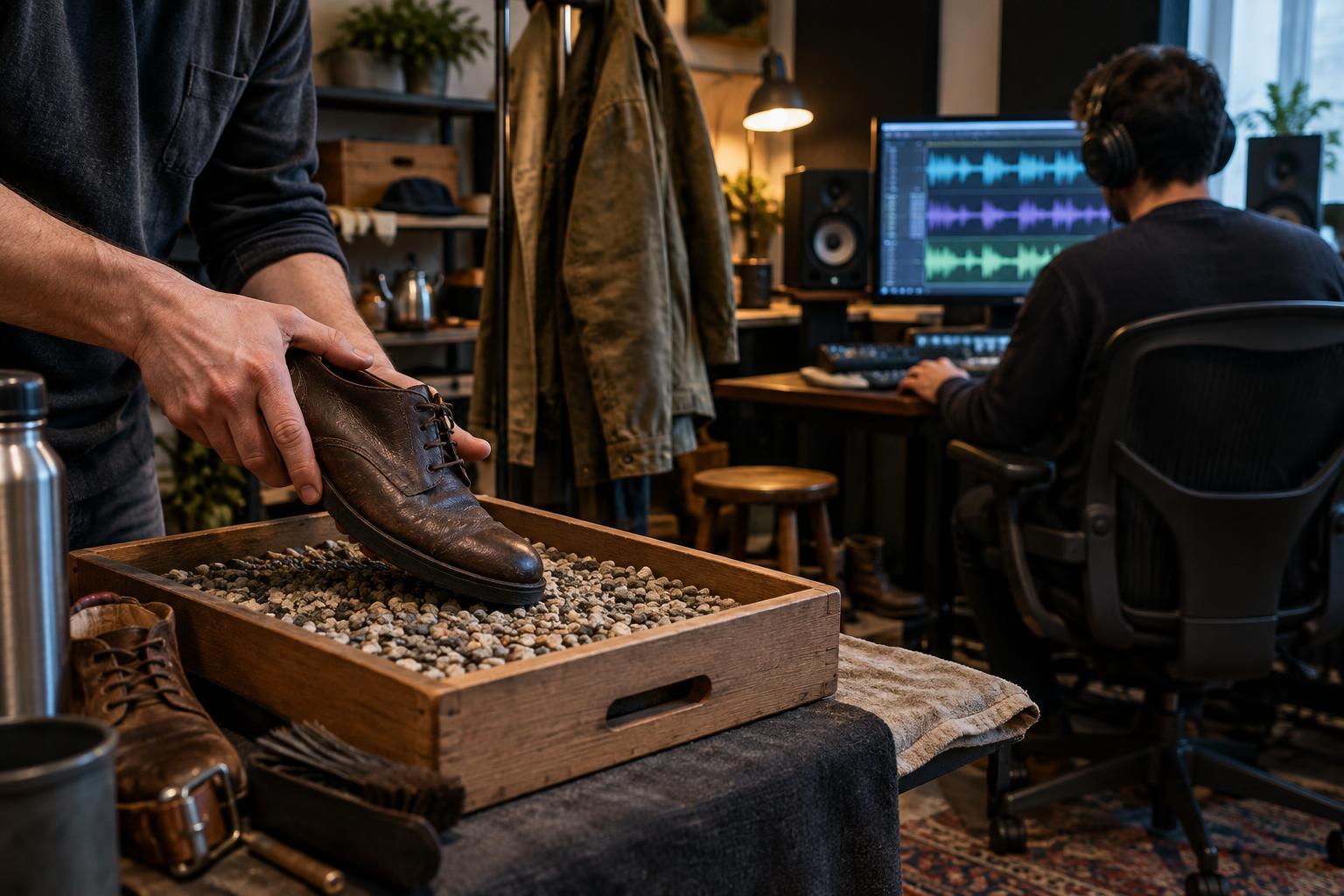
Foley is the performance and recording of sounds to accompany picture: footsteps, fabric movement, handled objects and other small actions. A sound library is a collection of previously recorded effects that an editor can select and place. Library recordings may be realistic, stylized or designed for layering. The distinction describes how a sound is obtained, not how good it is. Either source can feel convincing when its timing, texture and position fit the scene.
When Foley earns its place
Choose Foley when a sound must follow a performance closely. A character who hesitates, drags one foot and then hurries away needs more than a repeating sequence of generic steps. Performing those movements while watching the scene makes it easier to match changes in pace and weight. Foley is also useful for an object with a distinctive rhythm, such as a nervous hand repeatedly turning a key, or for quiet clothing sounds that help a close-up feel inhabited.
Recording to picture gives you control over the surface, prop and intensity. You can try several shoes or materials until the result supports the character, even if the recording setup differs from what appears on screen. That flexibility has a cost: Foley needs a reasonably quiet space, a microphone, suitable props, repeated takes and time to edit. It may be a poor use of that effort for a distant action that will sit low in a busy mix. The goal is not to recreate every visible movement; it is to give important movements the detail they need.
When a library is the better starting point
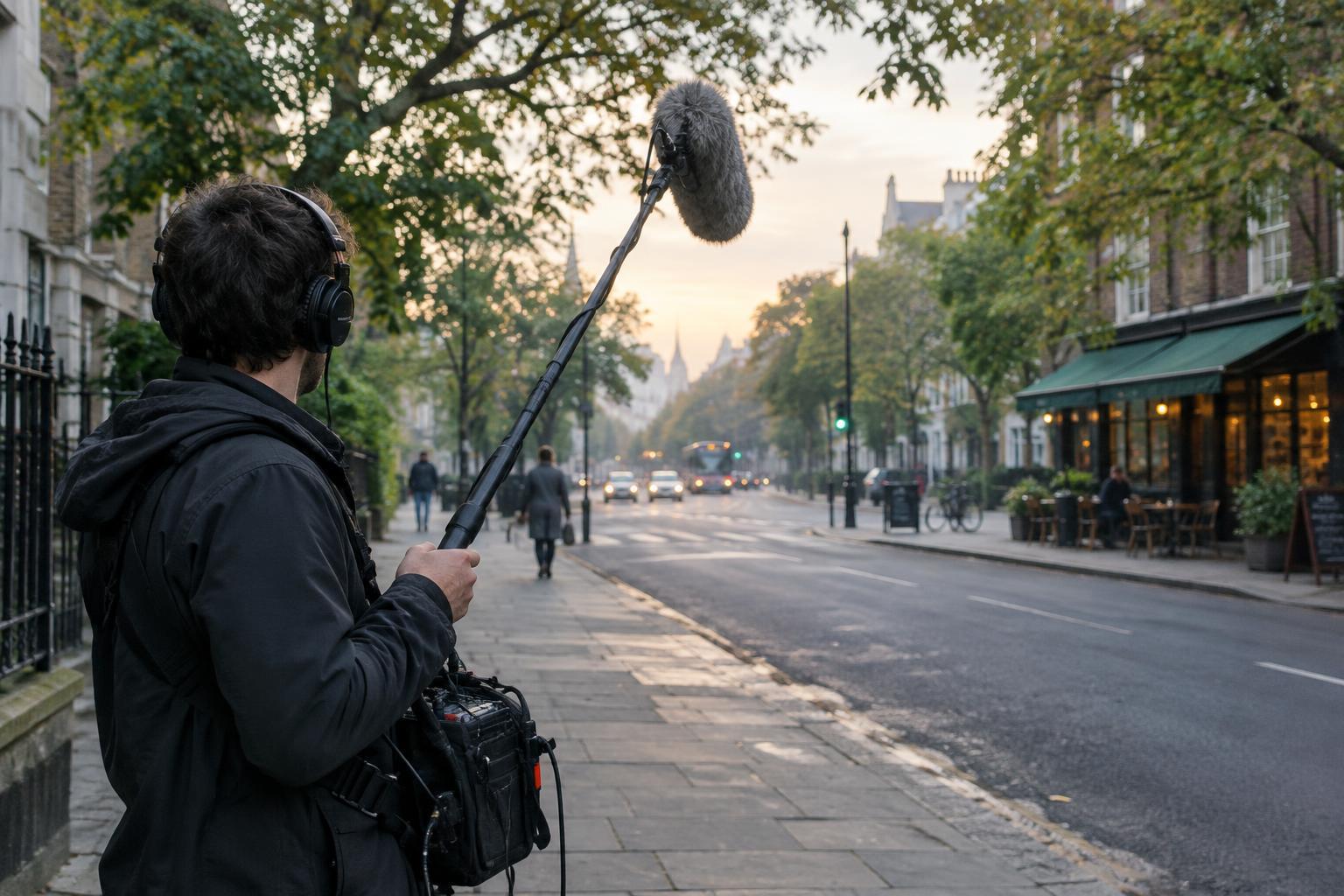
Libraries are especially helpful for effects that are difficult to capture on demand: a large crowd, heavy machinery or a vehicle passing at speed. They also let an editor audition different interpretations before committing to a sound. For a brief background action, a well-chosen library effect may be quicker and clearer than arranging a recording session. A single recording can sometimes supply useful texture even when only a small part of it fits the shot.
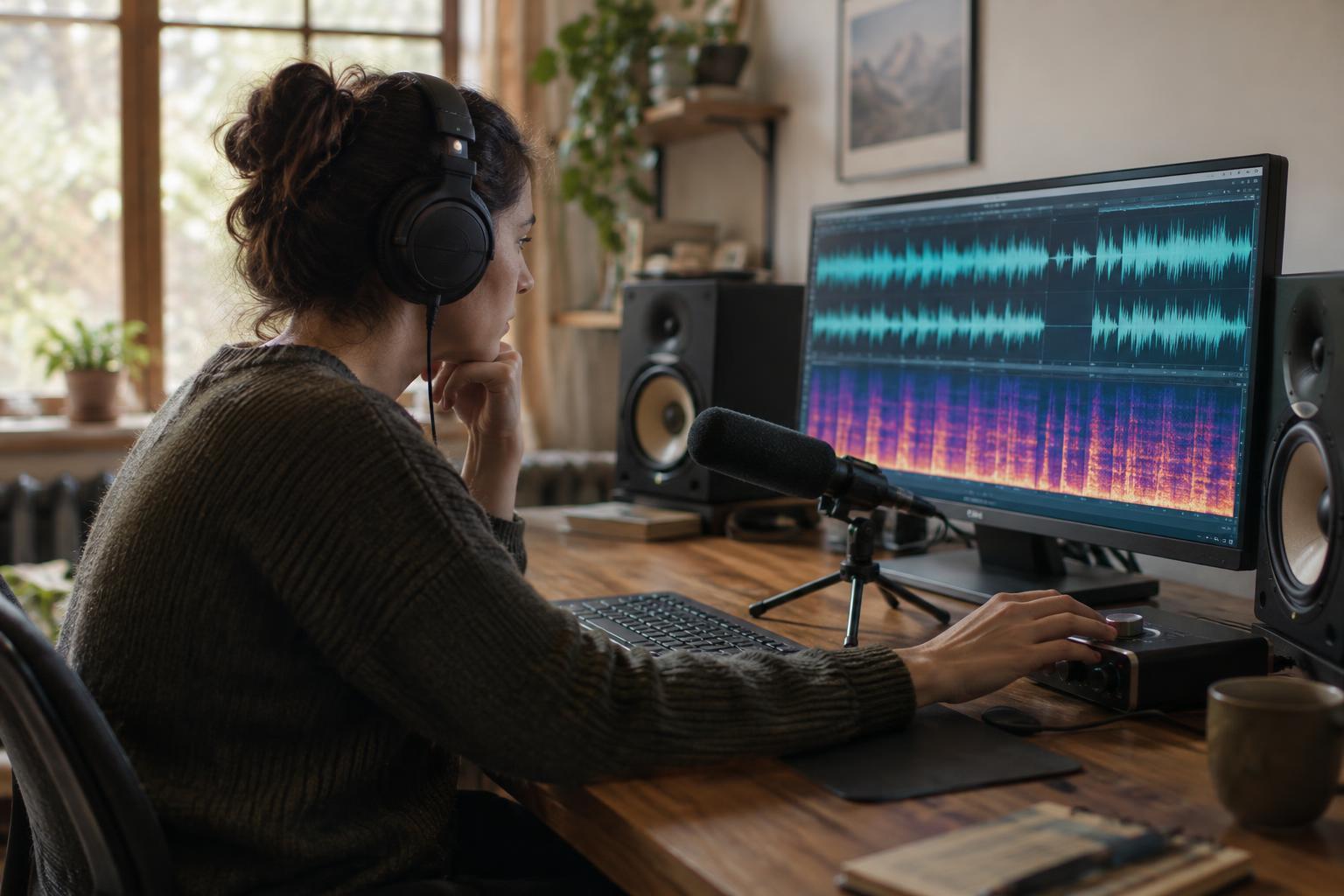
The challenge is specificity. A door effect may have the wrong room echo, a footstep may suggest a heavier shoe, or a convincing sound may already contain background noise that clashes with the scene. Trim and place effects against picture rather than dropping them in at their original length. Listen for the beginning of the action, its decay and the space around it. Before using any library file, check its license for the intended project and keep track of where it came from; availability in a folder does not, by itself, establish permission to use it.
Match the sound to the shot
Whether you record or search, start by deciding what the audience should notice. In a wide shot, a faint cluster of footsteps might be enough. In a close-up of a hand opening a box, the catch, lid and contents may each deserve attention. Perspective matters as much as the object: a sharp, dry tap can feel too close for an action across a room, while a distant, muffled sound may weaken an intimate shot.
Work with the production audio rather than automatically replacing it. A usable original sound may carry the room’s character and the actor’s timing; an added effect can simply reinforce what is missing. Check each candidate at the scene’s normal playback level, alongside dialogue and music if they are present. An effect that sounds impressive in isolation can become distracting in context. Leave space for the mix to direct attention, and avoid stacking layers merely because more tracks are available.
Build a practical hybrid workflow
For a short scene, mark the actions that need help and rank them by story importance. Try the production sound first. Search your library for straightforward background effects, then identify the moments that still feel generic, mistimed or emotionally flat. Record Foley for those moments if you have the means. This order keeps a session focused while leaving room for a library sound to solve a problem cleanly.
A hybrid effect can be stronger than either source alone. Foley might provide the exact rhythm of a character handling a bag, while a library recording adds a subtle clasp click that is hard to capture clearly. Align the layers to the visible action and compare the result with each layer muted in turn. If a layer adds no useful information, remove it. The final choice is the one that makes the action feel natural within the scene, not the one with the most elaborate origin.