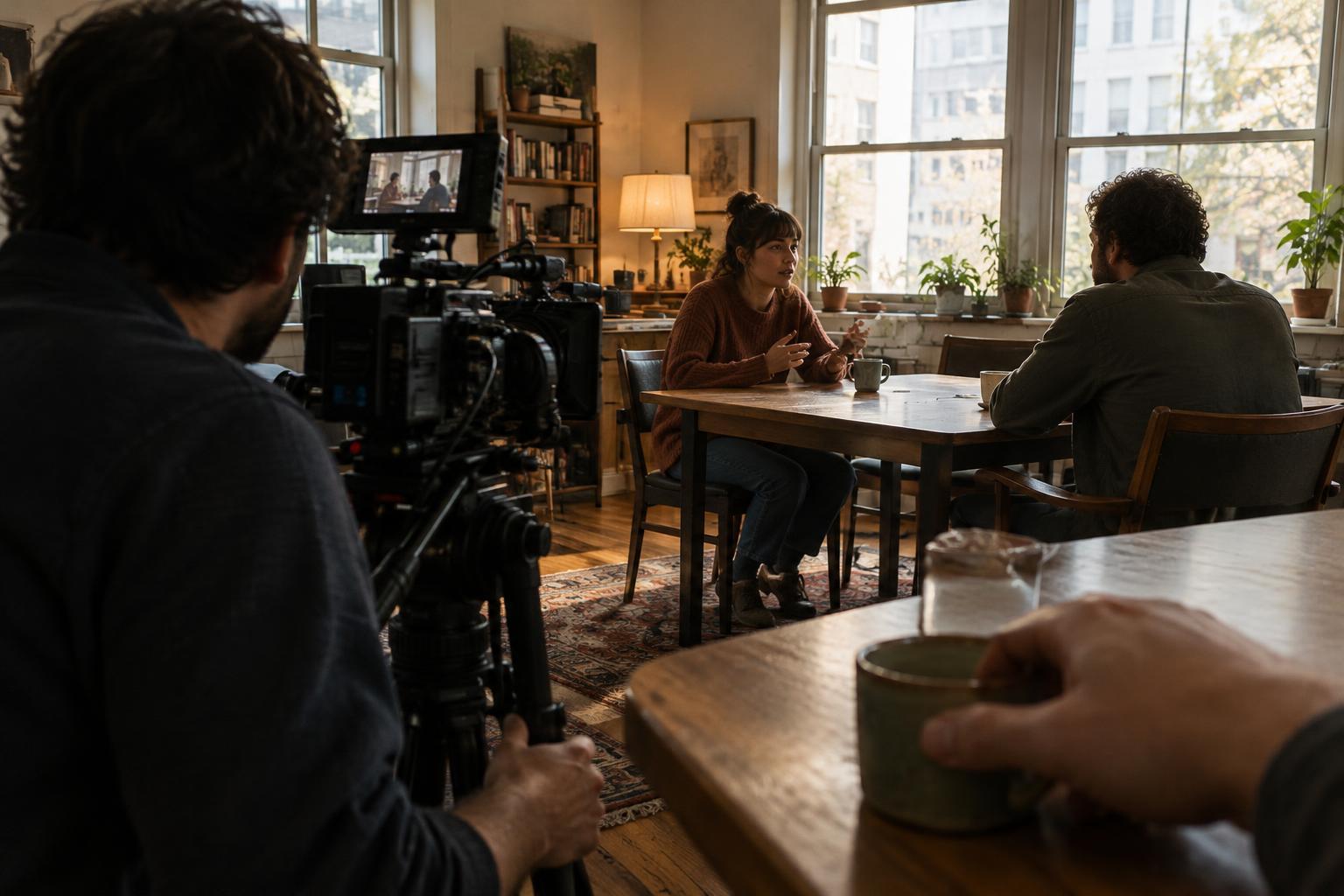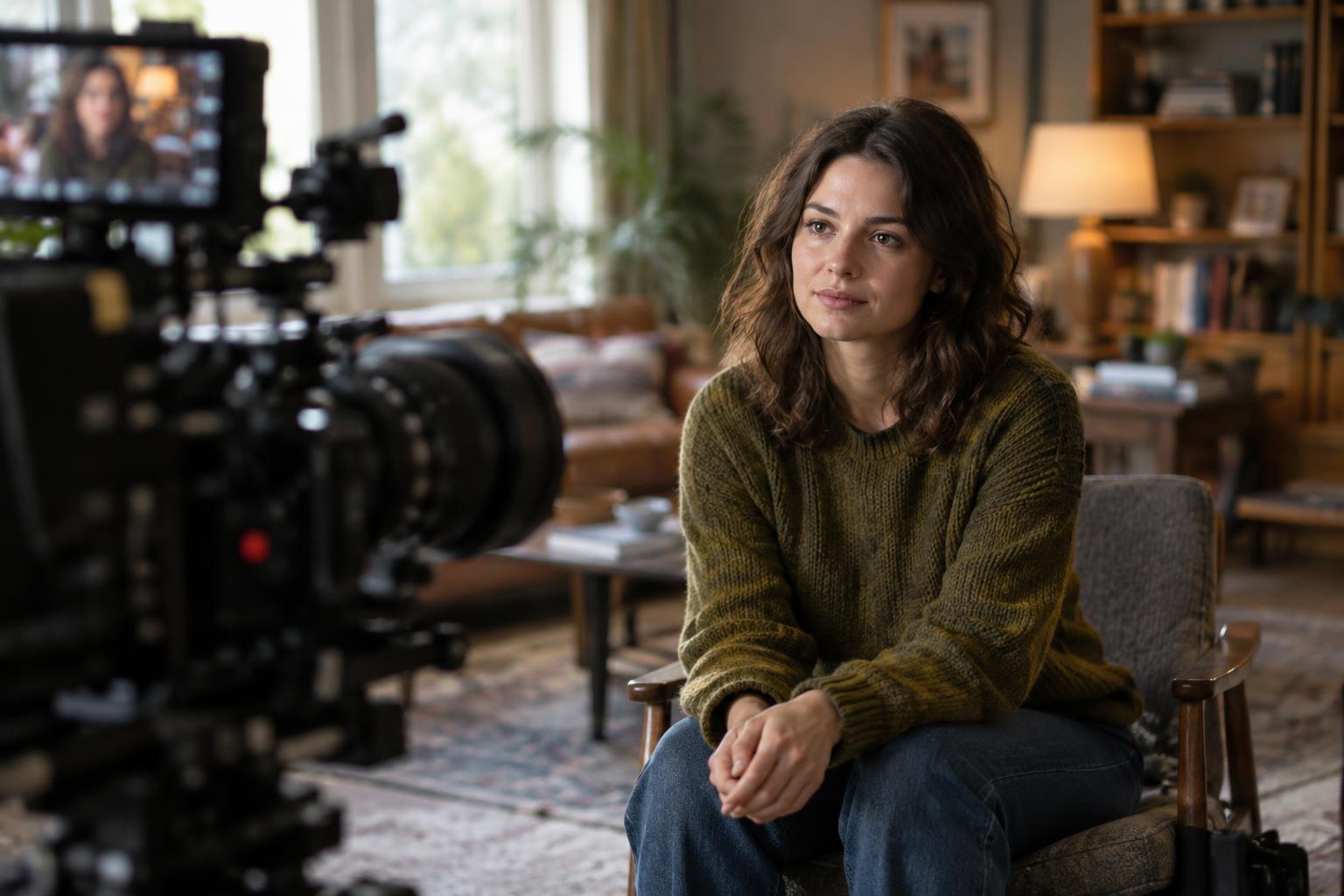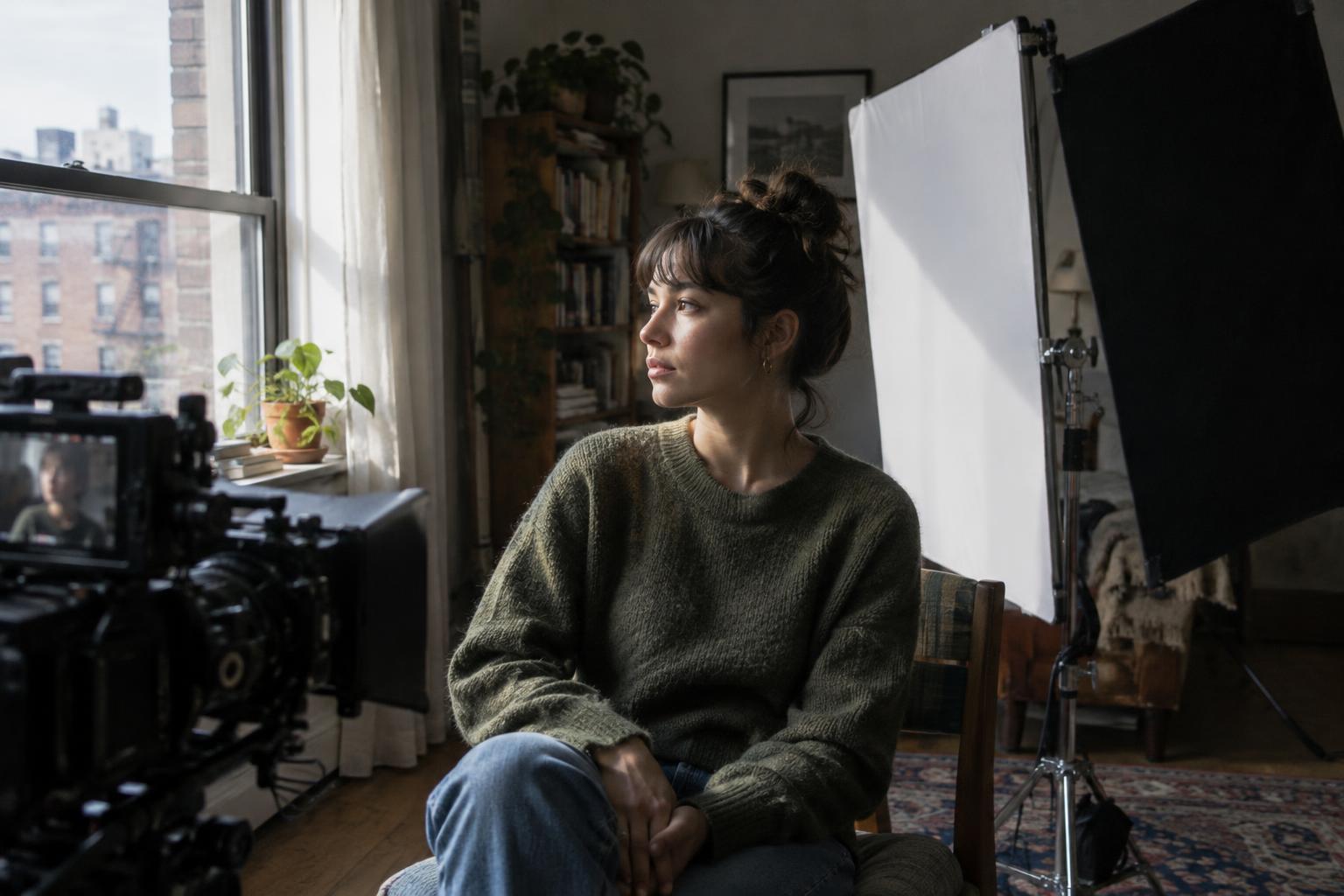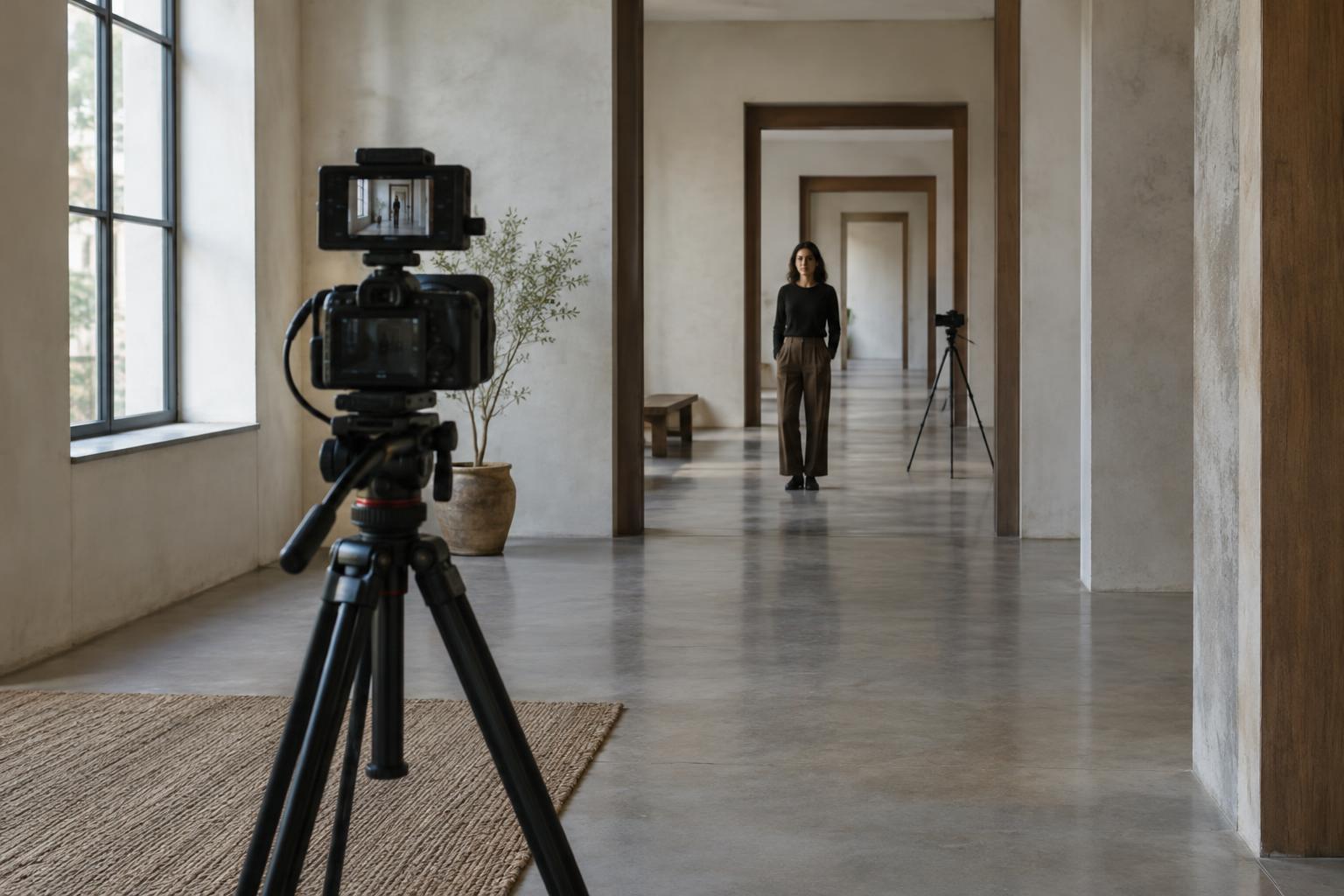
Start with where the camera stands
Perspective describes how objects at different distances appear in relation to one another. A nearby hand may look large beside a face; a distant building may look small behind a person. Those size relationships depend on the camera’s position relative to the scene. If the camera stays in one place, changing focal length changes how much of the scene fits in the frame, but it does not change the basic spatial relationships within it.
Picture an actor standing several steps in front of a doorway. From one camera position, you could shoot a wide image and crop it later, or use a longer lens to frame the actor more tightly. Ignoring differences in image quality and lens behavior, the doorway would have the same apparent size relative to the actor in both tight images. The longer lens has selected a narrower view from the same position; it has not moved the doorway closer.
Why wide and long lenses seem to change space
In practice, filmmakers rarely swap lenses while leaving the camera exactly where it is. To keep a face the same size in frame after switching to a wider lens, they move the camera closer. The nose is then noticeably closer to the camera than the ears, so it can appear more prominent. To keep the same framing with a longer lens, they move farther away. From that position, the distance differences across the face matter less, and facial features appear more even.
The same effect applies beyond portraits. Move close to a person with a wide lens and the background may seem to recede. Move back and frame that person with a long lens, and background objects may appear larger relative to them. This is often called compression. It is a useful visual description, but the change comes from shooting farther away, not from the lens pulling objects together.
Try a simple comparison
Set up a subject with a recognizable background, such as a chair several feet in front of a doorway. First, lock the camera in place and make one image with a wide lens and another with a longer lens. Crop the wide image to match the tighter framing. Compare the size and placement of the doorway relative to the chair. They should be much alike, though sharpness, depth of field and lens rendering may differ.
Next, make two images in which the chair occupies roughly the same amount of the frame: one from nearby with the wide lens, and one from farther away with the long lens. Now compare the doorway. It will appear different relative to the chair because the camera positions are different. This two-part test separates the effect of framing from the effect of perspective far more clearly than comparing two unrelated shots.
Choose distance before choosing the lens
For a new setup, ask what relationship the shot should create. Do you want a foreground object to loom over a character? Do you want visible space between a person and the world behind them? Try a closer camera position. Do you want a more restrained portrait or a background that remains visually substantial behind the subject? Try moving farther away. Once the position feels right, choose a focal length that includes the amount of scene you need.
That order is a guide, not a rule. A narrow room may prevent you from moving back, while a busy location may limit where you can place the camera. Lens choice also affects practical decisions beyond framing: at the same aperture and subject size, different setups can render out-of-focus areas differently, and a longer lens may make handheld movement harder to manage. Work with the space and the needs of the shot rather than treating one focal length as a universal look.
Keep perspective separate from other lens effects
A lens can introduce optical distortion, such as straight lines bowing near the edges of the frame. That is different from perspective: a close-up face can have exaggerated near-to-far proportions even when the lens renders straight lines accurately. Likewise, cropping an image or using a smaller sensor changes the field of view for a given focal length, not the perspective from a fixed camera position.
When evaluating a shot, name the change you actually want. If the background feels too small behind your subject, changing lenses without moving will only change the framing. If a close portrait makes features look too prominent, stepping back can change their proportions; a longer lens can then restore the desired close-up. Think of camera distance as the control for spatial relationships and focal length as the control for how much of that view you show.