The Difference Is More Than the Setting
A castle may suggest fantasy, while a spacecraft may suggest science fiction. Those are useful visual cues, but neither tells the whole story. Both genres ask audiences to enter worlds where something impossible, speculative or unfamiliar is part of everyday life. The more revealing question is how the story treats that difference. Does it invite us to accept an enchanted object as a mystery, or ask us to consider what a new invention might do to society?
Fantasy often builds its possibilities around magic, myth, supernatural forces or rules that cannot be explained through ordinary science. Science fiction commonly begins with a speculative idea about technology, nature or human knowledge, then follows its implications. These are tendencies, not tests a film must pass. A story can put advanced machinery beside an ancient curse and draw dramatic energy from both.
Look at the Story’s Rules
An unusual power does not have to be realistic to feel convincing. It needs to behave consistently enough for viewers to understand the stakes. A fantasy film might establish that a spell demands a sacrifice, while a science-fiction film might establish that a device consumes a scarce resource. In either case, the limitation matters more dramatically than a detailed explanation: it gives characters difficult choices and lets the audience anticipate consequences.
The source of a rule can still shape the genre’s feel. If a character asks who designed a device, how it works and whether it can be repaired, the film leans toward a science-fiction mode of inquiry. If the same character must interpret a legend or bargain with a spirit, it may feel more like fantasy. Some films deliberately frustrate those expectations. What appears to be technology may remain mysterious; what appears to be magic may be treated as a system people study.
Genre Is Also a Promise About Questions
Science fiction often asks “What if?” and explores a possible consequence: What if memories could be edited? Who would control the process, and how might it change a relationship? Fantasy may ask what it means to confront fate, temptation or an old power that resists human control. Either genre can tell intimate stories or stage large conflicts. The distinction is less about scale than about which questions the film chooses to keep in focus.
That is why two films with similar creatures or landscapes can feel entirely different. A strange visitor could prompt an investigation into biology and communication, or become a figure from folklore whose arrival unsettles a family. The design of the visitor matters, but so do the characters’ reactions and the kind of resolution the story offers. An answer reached through experiment feels different from one reached through trust, sacrifice or the interpretation of a myth.
The Boundary Becomes Visible on Screen
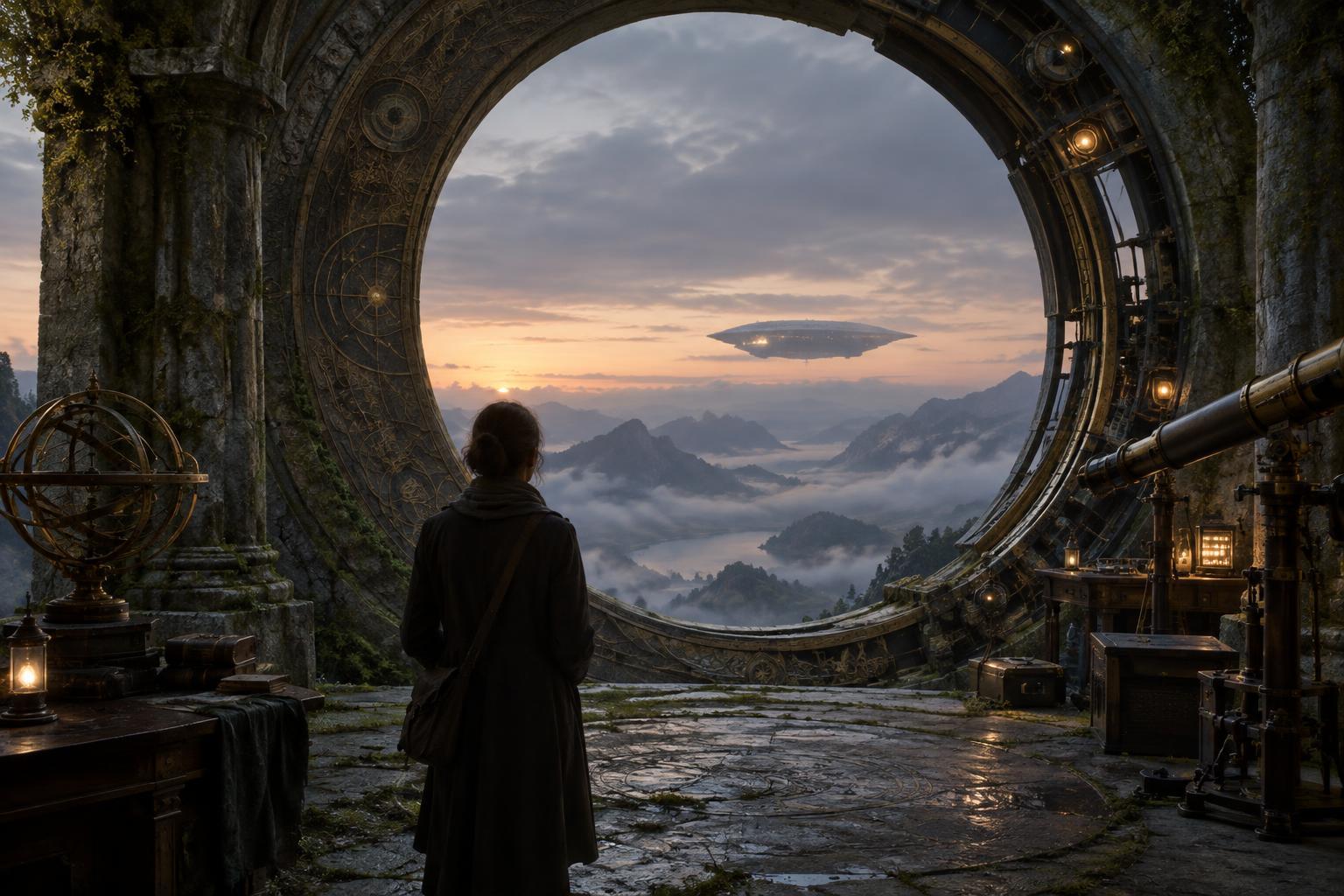
Filmmaking choices can steer an ambiguous premise without settling it. Crisp interfaces, procedural dialogue and a soundtrack built around mechanical rhythms may encourage viewers to read a phenomenon as technological. Candlelight, ritual gestures and sounds without an obvious source may encourage a supernatural reading. These cues are not fixed rules: a filmmaker can use the visual language of a laboratory to make magic feel routine, or present a machine with the awe usually reserved for a mythical artifact.
The reveal of information is just as important. Show a device being assembled, tested and improved, and the audience may expect its workings to matter. Introduce an object through a whispered warning, and viewers may expect its meaning to matter instead. A film can shift between these approaches, especially when different characters understand the same event in different ways. That uncertainty can be a source of suspense rather than a problem to solve.
Use the Label as a Starting Point
For viewers, the most useful genre label is one that opens a conversation. Calling a film fantasy or science fiction can describe its dominant approach, but it need not erase everything else it is doing. When the boundary feels blurry, ask what the characters believe is possible, what evidence changes their minds and which mysteries the film leaves intact. Those questions often reveal more than counting spells or machines.
For filmmakers and writers, the overlap offers room to make deliberate choices. Decide which rules the audience needs to know, which questions should remain unanswered and what emotional response each image or sound should encourage. A story can blend genres freely, but its consequences should remain clear to the characters. Whether the impossible arrives through a portal, a ritual or an experiment, it becomes compelling when it changes what someone wants, fears or must do next.