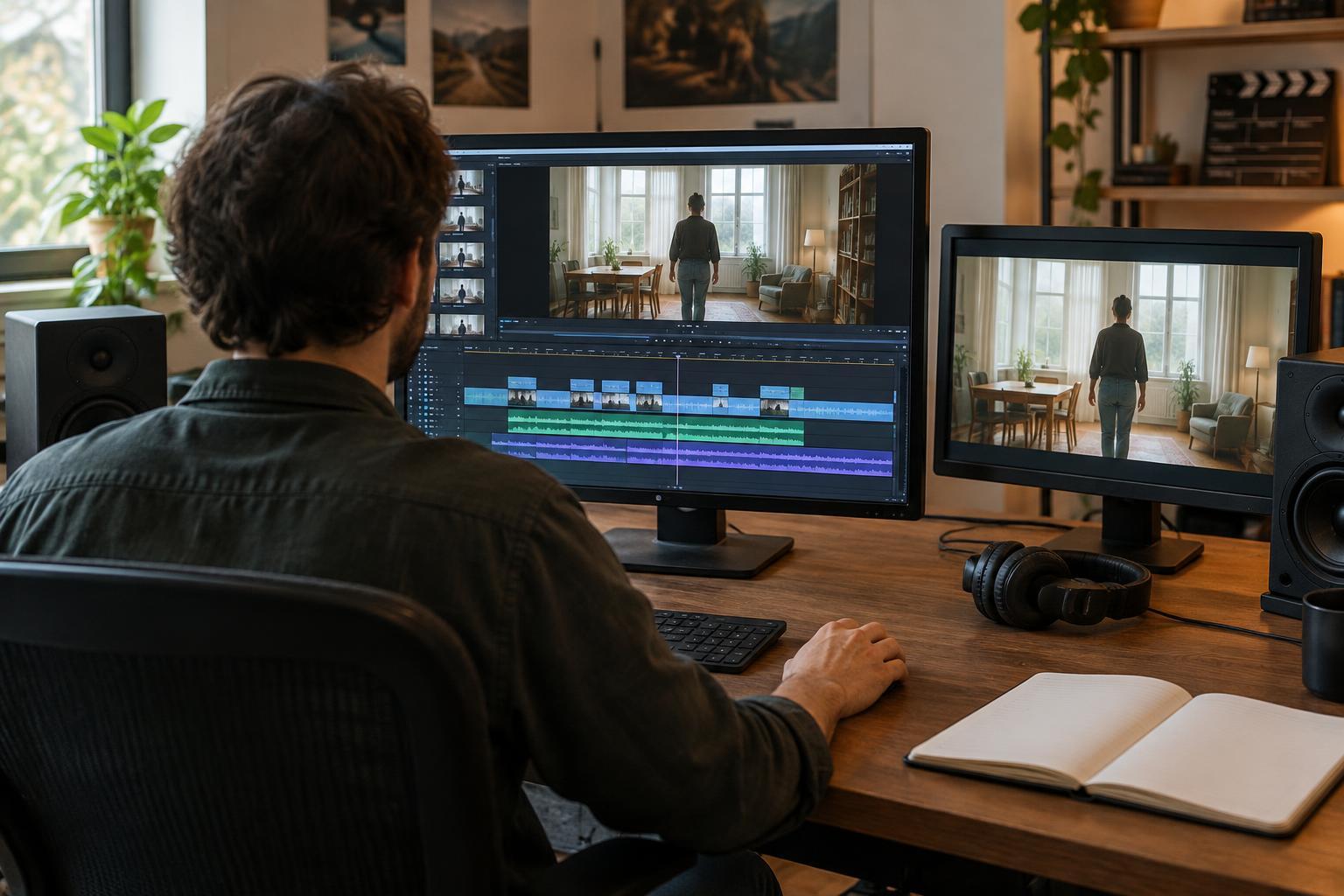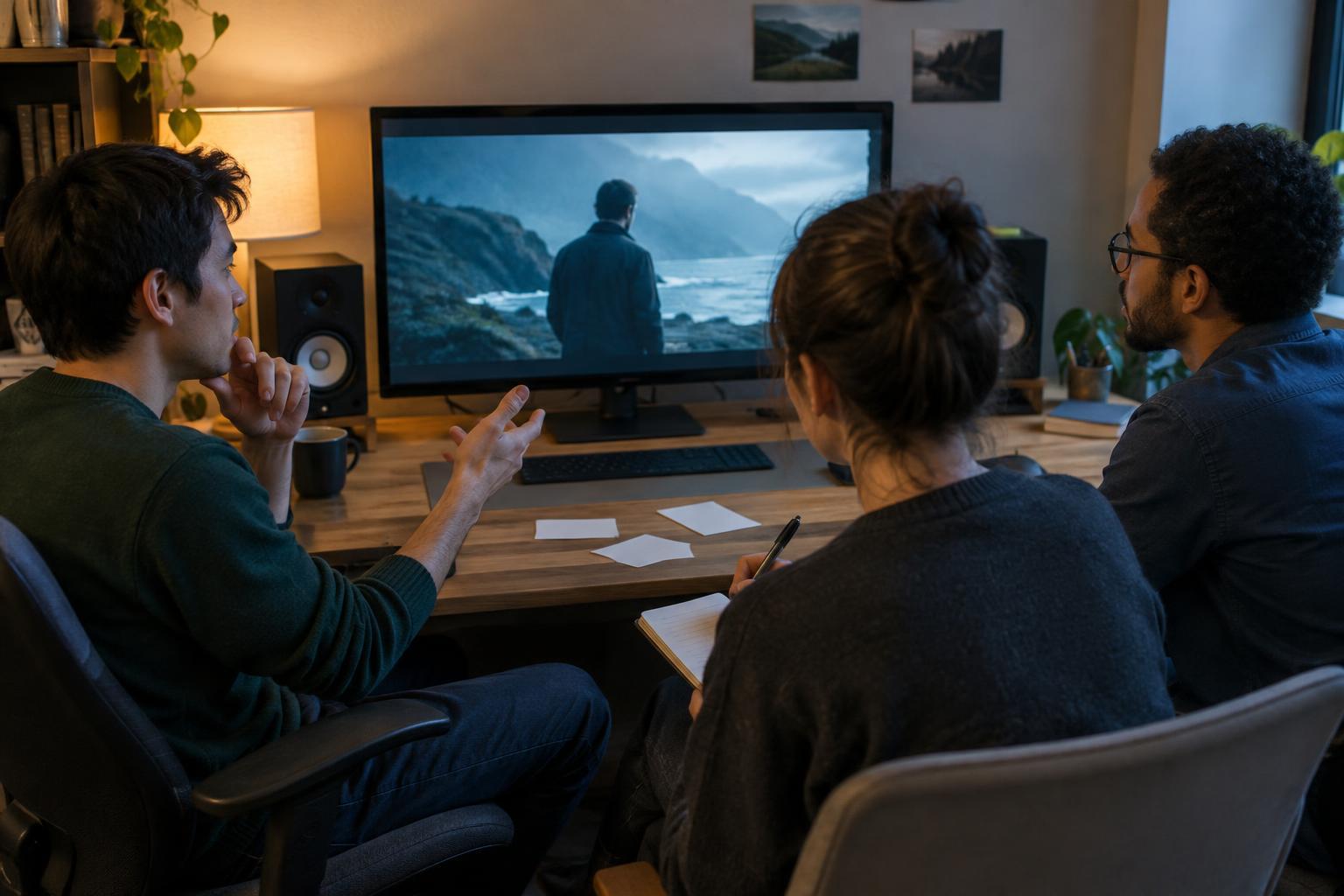
Start with the scene’s point of view
In a dialogue scene, the person speaking does not always carry the most important information. A question might matter because of the answer, but it might matter more because the listener hesitates before giving one. Before making cuts, identify whose experience guides the scene. What does that character want, and what changes for them during the exchange? Those answers give you a stronger starting point than a rule such as “always show the person with the line.”
A useful first pass is to watch the available footage without committing to a cut. Notice where a performer’s expression, posture, or stillness adds something the words cannot. If the speaker reveals a secret, their face may show the effort of saying it. If the listener realizes the secret has consequences, the reaction may be the scene’s turning point. Either choice can work; the question is what the audience needs to understand at that moment.
Give words and reactions different jobs
Showing a speaker can make a line feel direct and personal. It lets the audience see how the words are delivered: with confidence, reluctance, humor, or an attempt to hide fear. Stay on the speaker when that delivery changes the meaning of a sentence, especially if a gesture or pause completes the thought. Cutting away merely because another character will speak next can interrupt a performance before it lands.
Showing the listener makes room for interpretation. A listener may disagree while remaining silent, understand something before the speaker does, or decide not to respond. Holding on that face while the speaker continues off-screen can shift the scene toward the listener’s experience. It can also create tension: the audience waits to see whether the listener will reveal what they are thinking. Use reaction shots selectively, though. If every line receives a close reaction, the scene can begin to feel overexplained.
Let the cut follow a change, not a turn
A conversation has verbal turns, but its dramatic turns rarely fall at exactly the same points. Look for a change in tactic, attention, or power. A character may begin with a polite request, then press harder when it fails. The cut to the listener could come at the moment that pressure becomes clear, even if the speaker is halfway through a sentence. Alternatively, staying on the speaker through the entire line may show how their confidence drains away.
Try building two versions of a short exchange: one that favors the speaker and one that favors the listener. Watch them without stopping to explain your choices. Which version makes the scene’s central change easier to feel? Pay attention to how long a reaction needs to register. Cutting to a listener too late may miss the first flicker of recognition; cutting away too soon may deny the audience time to see what they do with it. A well-placed pause can be more useful than several quick cuts.
Use sound to loosen the link between voice and image
Dialogue does not have to begin and end on the face of the person saying it. Letting a voice continue across a cut allows you to move to a listener at the instant their reaction matters. You can also hear the start of a reply before showing its speaker, giving the preceding image a little more time. These choices should feel motivated by the exchange rather than like tricks to conceal an awkward edit.
Listen closely as you work. A reaction shot may be visually strong but unusable if the dialogue beneath it changes tone or timing between takes. Room sound, breaths, and small pauses help the exchange feel continuous. Avoid trimming every silence simply to increase speed; a moment without words may be where a character decides what to say. If you adjust timing, check that the resulting response still feels human and that an important reaction has not been separated from what caused it.
Work with the coverage you have
Not every scene offers matching close-ups, clean reactions, and perfect continuity. A wider two-shot can preserve the relationship between characters when cutting back and forth feels too busy. It can also show physical distance, shared space, or a shift in who approaches whom. If a close-up contains the strongest performance, consider holding it longer rather than forcing a pattern of alternating angles.
Watch for details that make a cut distracting: a hand jumping position, a character turning twice, or an eyeline that no longer connects. Some small mismatches may pass unnoticed when the emotional movement is clear; others pull attention away from the story. Choose the clearest performance and the most coherent sequence you can make from the material. The aim is not to show every line from an ideal angle. It is to guide the audience through what each person says, hears, and finally understands.