Two ways of making a promise
A fiction film generally asks viewers to enter an invented situation. Its people and events may be inspired by life, but the film does not normally ask us to treat every scene as a record of something that happened. A documentary makes a different claim: it presents people, places or events as part of the world beyond the film. That claim gives its details a particular weight, even when the filmmaker uses highly expressive techniques.
Neither label tells us how realistic a film will look. Fiction can use handheld camerawork and natural light; documentary can use carefully composed frames and music. The useful distinction is the relationship each film proposes between what appears on screen and an outside reality. That relationship shapes how viewers interpret a character’s words, an edit and even a moment of silence.
Finding a story versus constructing one
In fiction, a writer can design events to test a character. A missed train, a difficult conversation or a sudden discovery can arrive at the moment that best serves the story. The filmmaker can rehearse, repeat and revise those moments. This control makes it possible to build clear setups and payoffs, though clarity alone does not make a story convincing.
Documentary filmmakers often begin with questions, people or situations rather than a complete sequence of events. They may plan interviews and scenes, but cannot assume life will supply a neat turning point. Structure frequently emerges as they review what they have recorded: a change in someone’s perspective, a recurring conflict or a question that remains unresolved. The resulting story is still constructed. Selection, order and duration guide the viewer, even if the events themselves were not written for the camera.
Characters, participants and perspective
A fictional character is shaped through writing, performance and direction. What that character knows, hides or desires can be adjusted to create tension. A documentary participant is a person whose life extends beyond the film. The camera captures only a portion of that life, so the filmmaker’s choices can strongly influence how the person is understood. One revealing exchange may be compelling without being a fair summary of someone’s whole experience.
Both forms need a point of view. Fiction may keep us close to one character, then change perspective to challenge our assumptions. Documentary may rely on interviews, observation, narration or archival material to bring different accounts together. When accounts disagree, the disagreement can be more illuminating than a forced answer. Viewers can ask whose perspective is present, whose is missing and what access the film actually had.
What images, edits and sound imply
A cut in fiction can connect shots made at different times and places while preserving the illusion of one continuous encounter. Viewers usually accept that construction as part of the form. A similar cut in documentary can imply that two recorded moments directly followed one another. If timing or context matters to the film’s claim, that implication deserves care. An interview answer, for example, may mean something different when separated from the question that prompted it.
Sound also guides interpretation. Music can make a scene feel threatening or tender in either form, while narration can supply information the images cannot show. In documentary, these choices may seem to endorse an interpretation of real people or events. In fiction, they more often help establish the story’s intended experience. Neither use is automatically misleading; the important question is whether style clarifies what the film knows or suggests certainty it has not earned.
Where the boundary becomes useful
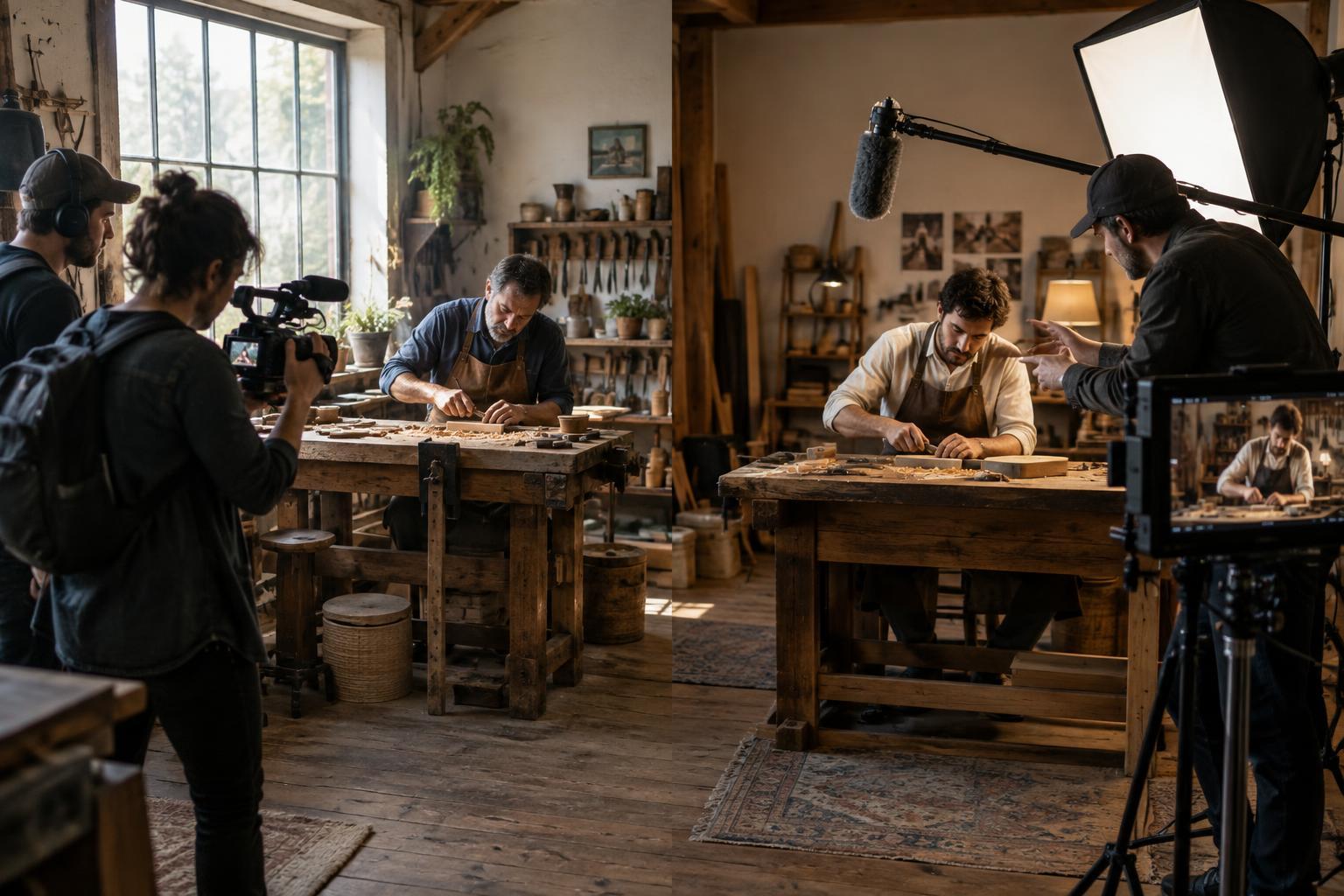
Some films deliberately combine conventions. A documentary might include a clearly identified reconstruction; a fictional story might incorporate unscripted encounters. These choices do not erase the distinction. Instead, they make it helpful to ask what each scene asks us to believe. Is it evidence of an event, an interpretation of one or an imagined possibility?
For filmmakers, that question can guide practical decisions before editing begins. Decide what the audience needs to understand about a scene’s origin, especially when staging or reconstruction is involved. For viewers, it offers a way past the simple question of whether a film looks real. Documentary and fiction both shape experience into stories. They differ most in what they ask us to trust about the world outside the frame.