Start With the Conversation, Not the Noise
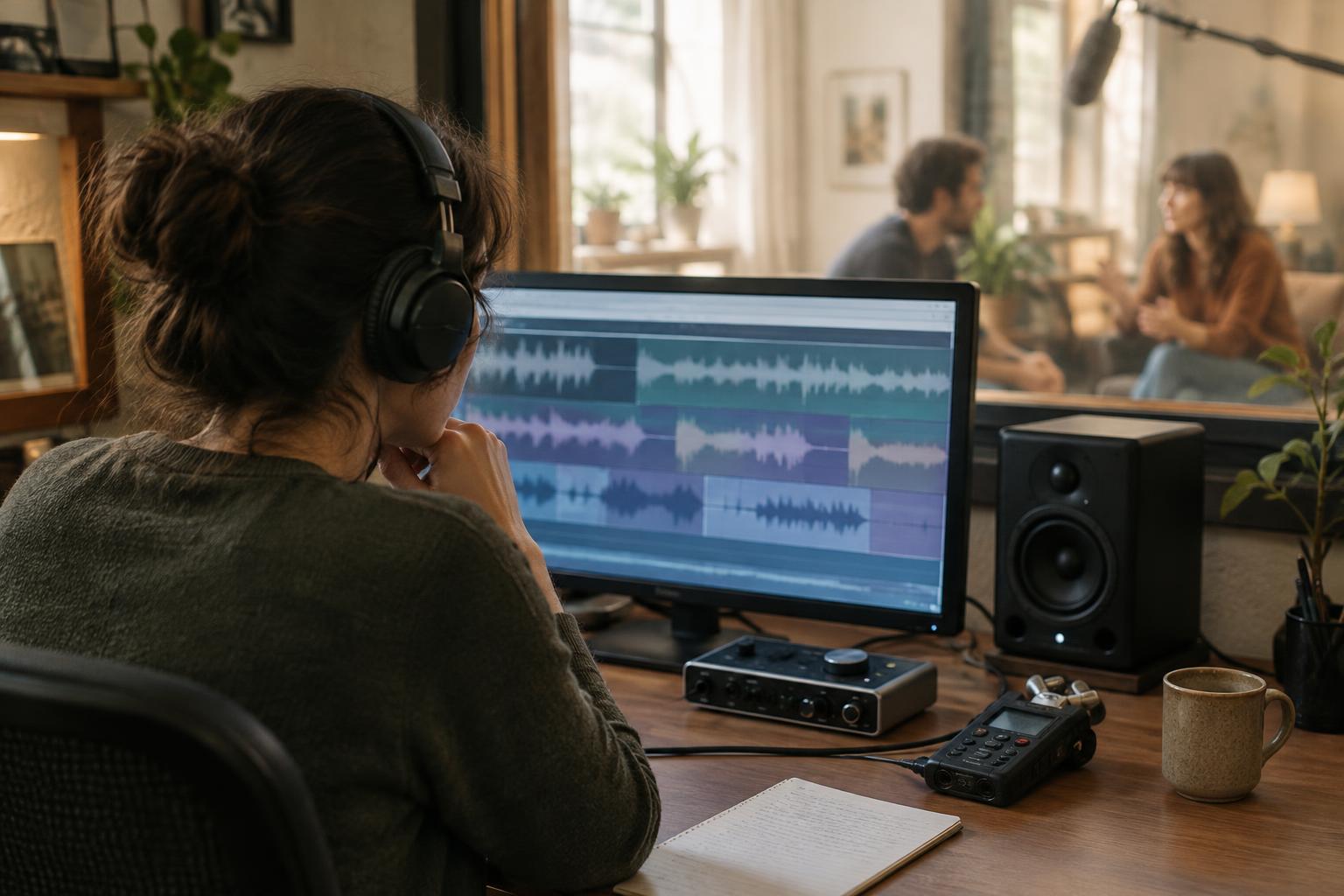
Dialogue editing begins with a simple question: can the audience follow the conversation without being pulled out of the scene? A faint background sound may be harmless, while a small click in the middle of a quiet confession may be impossible to ignore. Before making detailed repairs, listen through the scene at a comfortable level. Note unclear words, abrupt changes in background sound, distracting noises, and moments where the performance feels interrupted.
If you have multiple takes or microphone tracks, choose for performance and intelligibility first. A technically cleaner line is not always the best line if its delivery changes the emotion or pace of the exchange. Keep an untouched copy of the original audio available so you can compare your edits against it. Work on the dialogue in the order it is heard; this makes it easier to judge whether each change supports the scene.
Make Cuts That Follow Speech
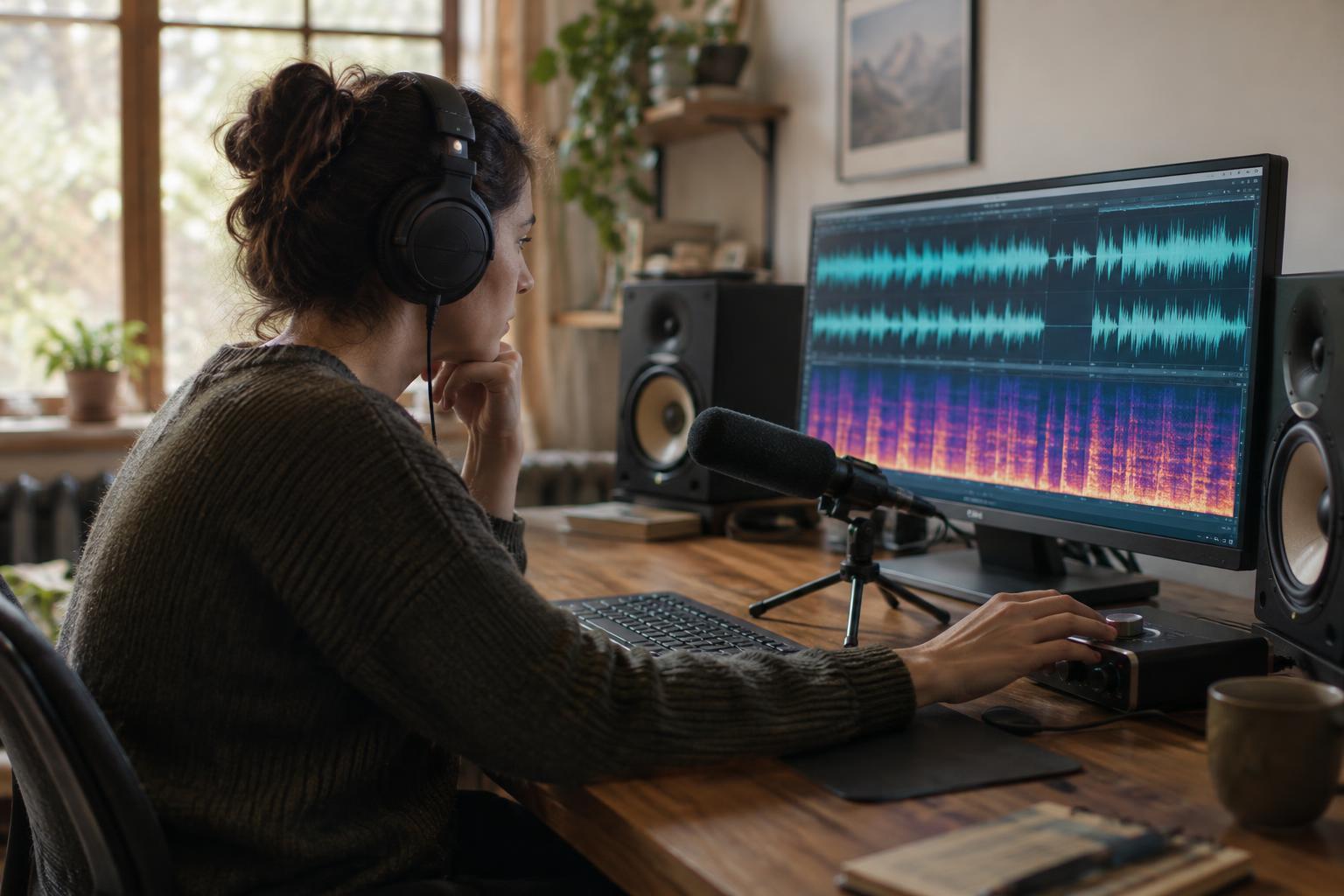
Words are not isolated blocks. Consonants can begin softly before a visible waveform peak, and vowel sounds may trail into the next breath. When replacing a word or joining parts of different takes, leave enough sound around the edit to preserve those edges. Place cuts in pauses or quieter transitions where possible, rather than through a strong syllable.
Short crossfades can smooth many joins, but their length matters. A fade that is too short may click; one that is too long can overlap two different breaths, background sounds, or syllables. Listen to each edit rather than relying on its appearance on the timeline. If a join still sounds odd, try moving the cut or choosing a larger piece of the take. Matching the sound on both sides is often more convincing than applying a complicated fix to an awkward splice.
Treat Breaths and Pauses as Part of the Performance
It is tempting to remove every breath, lip sound, and hesitation. Doing so can make speech feel rushed or strangely effortless. Breaths help establish phrasing, effort, and emotion; pauses give a listener time to understand a thought. Preserve the ones that make the delivery believable, especially before difficult lines or changes in tone.
Some sounds do need attention. A sharp mouth click may be reduced with a small repair, and an unusually loud breath may sit better after a modest level adjustment. If a pause contains a distracting bump, replace only the problem area when possible. Then play the line from before the pause through the next sentence. The goal is not perfect silence between words but a rhythm that still belongs to the speaker.
Keep the Background Consistent
Every recording space has a sound, even when no one speaks. Cutting a noisy pause down to absolute silence can make the background seem to switch off and on. A length of clean room tone from the same setup can help bridge edits and fill gaps. Choose a portion without speech, movement, or obvious one-time noises, and check that it resembles the surrounding audio before using it.
Handle persistent noise gently. Broad noise reduction can improve a troublesome recording, but strong settings may leave speech watery, dull, or uneven. Make small adjustments and compare them with the unprocessed track at a similar listening level. For brief, isolated distractions, a targeted edit may do less harm than processing an entire scene. When a sound overlaps an important word, complete removal may not be possible without damaging the voice; reducing its prominence can be the better choice.
Check the Scene, Not Just the Solo Track
A dialogue edit can sound excellent in isolation and fail once music, ambience, and effects return. Listen both ways. In solo, check for clicks, clipped word endings, unnatural breaths, and sudden shifts in tone. In context, ask whether the words remain clear and whether the background supports a continuous space. Adjust clip levels where lines jump forward or disappear, but avoid flattening every change in vocal intensity; those changes may carry the performance.
Finally, listen without watching the waveform or stopping after every sentence. A continuous pass reveals pacing problems that tiny loops can hide. If an edit draws attention, revisit it. If a little imperfection helps the line feel present and understandable, it may be worth keeping. Good dialogue editing makes the conversation easier to hear while leaving its human shape intact.