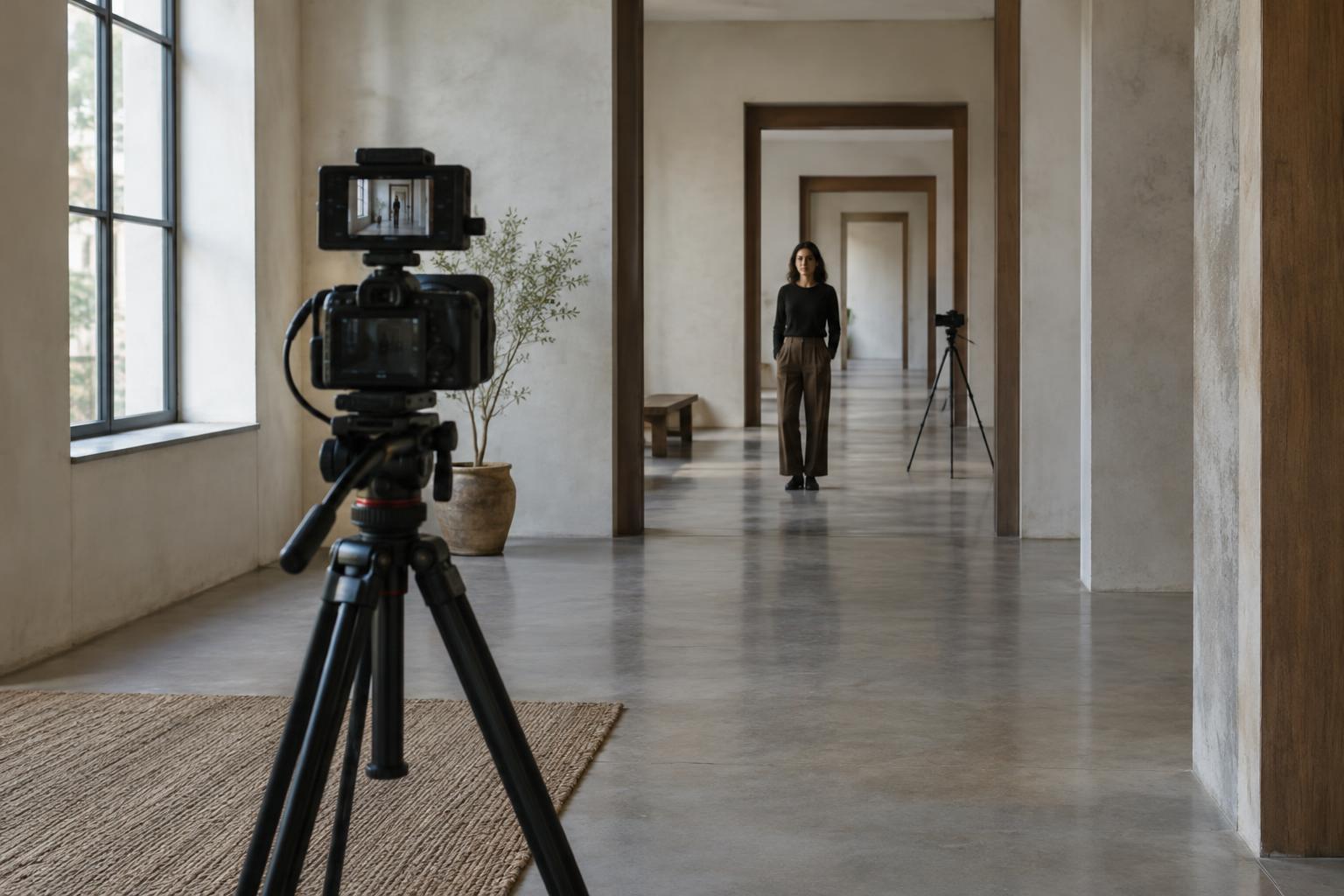
What depth of field actually describes
Depth of field is the range of distances in front of and behind the focus point that appear acceptably sharp in an image. It is not a hard boundary: detail falls out of focus gradually. What looks sharp on a small monitor may look softer when projected or viewed at a larger size. The image format and viewing conditions therefore influence how much blur a viewer notices.
A shallow depth of field can draw attention to a face, hand, or object while letting the surroundings soften. A deeper depth of field can keep a character and their environment legible in the same shot. Neither choice is automatically more cinematic. The useful question is what the audience needs to see, and when.
Aperture: the direct control
Aperture is the opening that admits light through a lens. It is expressed as an f-number: a lower f-number, such as f/2, means a wider opening than a higher one, such as f/8. With focus distance, focal length, and framing held steady, opening the aperture makes depth of field shallower. Closing it down makes more of the scene appear sharp.
A wide aperture also lets in more light, which can help in a dim location. But it leaves less room for focus errors, especially when an actor leans or moves toward the camera. Stopping down gives a focus puller or a solo operator more tolerance, though the exposure may then require more light, a slower shutter, or a higher sensitivity setting. Those alternatives affect the image in different ways, so treat aperture as both a focus decision and an exposure decision.
Distance: where the camera and subject sit
The closer the camera focuses, the shallower the depth of field tends to be. Move in for a close-up of an eye or a small prop, and a slight shift in position may make the intended detail soft. Focus farther away with the same lens and aperture, and a broader range of distances will usually appear sharp. This is one reason a focus mark that works for a wide shot cannot simply be reused for a close-up.
Distance also changes perspective. Moving the camera closer makes nearby features appear more prominent relative to the background; moving it back compresses those size relationships less dramatically than changing lenses alone might suggest. If you change camera position to alter depth of field, check what happens to faces, background objects, and the space between them. The new perspective may help the story—or distract from it.
Focal length: separate the lens from the framing
At the same camera position, focus distance, and f-number, a longer focal length generally produces a shallower depth of field than a shorter one. It also frames a narrower portion of the scene. Compare a wide lens and a longer lens from one fixed camera mark, and both the composition and the apparent amount of background blur will change.
Filmmakers rarely keep the camera fixed when swapping lenses: they often step back with a longer lens to maintain the same subject size. That change in distance increases depth of field and can offset much of the lens’s direct effect. Even when the subject occupies the same portion of the frame, the background may look larger and softer with the longer-lens setup because perspective, background magnification, and framing have changed. Avoid treating focal length as a stand-alone blur dial; compare shots at the framing and camera positions you actually intend to use.
Make focus a storytelling choice
Before choosing settings, identify the detail that must remain clear throughout the shot. A conversation with performers moving at different depths may benefit from a smaller aperture, blocking that keeps them near one focus plane, or a deliberate focus pull. A close-up of someone noticing a clue may benefit from a narrower band of sharpness that guides the eye. If the camera or subject moves, rehearse the full movement rather than judging focus only at the starting mark.
Test the shot at its intended viewing size when possible. Look at the nearest and farthest points that matter, not just the most attractive frame. Lighting, distance, lens choice, and blocking can all solve a focus problem; changing one may be simpler than forcing another. Depth of field works best when it supports what the audience should notice without calling attention to an unintended miss.