Start with the size of the category
A crime film is a film in which illegal acts, their investigation or their consequences drive the story. That description leaves room for many kinds of protagonists: a detective pursuing a suspect, a thief planning a robbery, a witness trying to stay safe or an ordinary person drawn into a bad decision. A crime story might be a puzzle, a suspense tale, a character study or a fast-moving action film. The label tells you what the plot revolves around, but not necessarily whose side you will follow.
A gangster film is more specific. It usually centers on people involved in organized criminal activity and on the relationships that hold their group together—or pull it apart. The group might be a large organization or a small crew, but its members have some continuing connection beyond a single offense. For a quick distinction, ask whether the story is mainly about a crime or about life inside a criminal world. Many gangster films are crime films; not all crime films are gangster films.
Notice who has the most to lose
In a broad crime film, the central question may be “Who did it?”, “Will they get away?” or “Can anyone prevent the next crime?” The person committing the offense need not be the main character. Even when a criminal leads the story, their immediate objective—escaping, stealing or concealing evidence—may matter more than their place in a group.
Gangster films often make membership itself a source of tension. A character may want status, protection, money or a way out, while facing demands from bosses, partners, relatives and rivals. Loyalty can bring rewards but also limit freedom. A promotion, a slight or a broken promise may carry as much dramatic weight as a heist. Watching these films, pay attention to who can give orders, who must ask permission and what happens when someone refuses.
Look beyond the illegal act
Crime films can explore justice, fear, temptation, guilt and the limits of certainty. A mystery may invite viewers to weigh clues; a thriller may keep them focused on whether someone survives. These approaches can overlap, and one film can shift between them. Its crime supplies the pressure that reveals how the characters respond.
Gangster films often add questions about power and belonging. How does someone gain influence? What does it cost to keep it? What happens when personal ties conflict with the rules of the group? The criminal organization can function like a workplace, a substitute family or a miniature political system, though none of those comparisons fits every film. Violence in such a story may be more than a burst of action: it can be a means of enforcing rank, settling debts or exposing how fragile an alliance has become.
Watch how the film builds its world
Setting and filmmaking choices can help you recognize a film’s emphasis, but they are not fixed genre rules. A crime film might move among an investigation site, a suspect’s home and a courtroom, giving viewers information from several sides. A gangster film may repeatedly return to meeting places, businesses and homes where the same people negotiate their roles. Those recurring spaces can make the group feel like a world with its own routines.
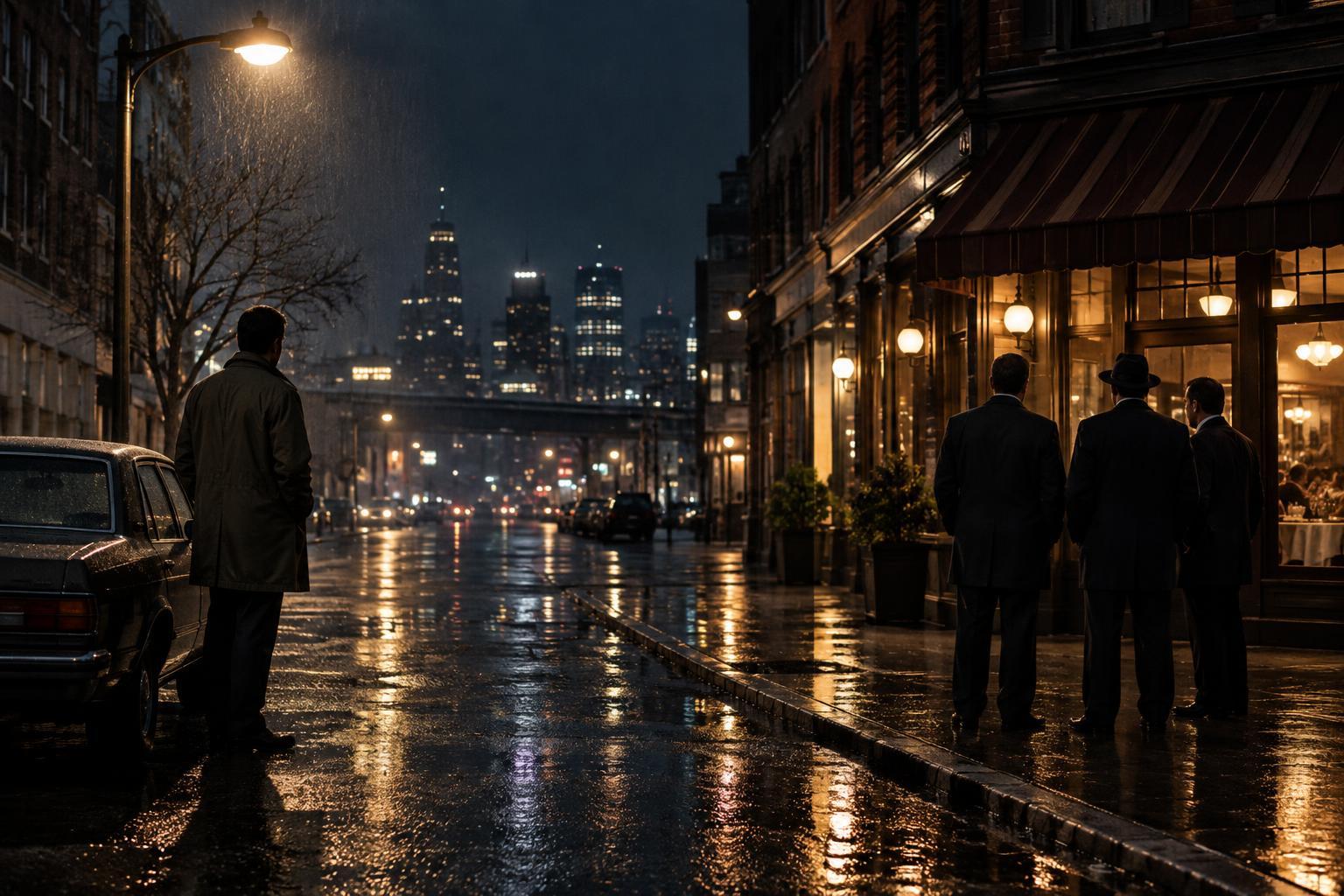
Listen to conversations as well as looking for action. In a gangster story, an apparently casual meal or quiet exchange may carry threats that characters understand without stating them aloud. Framing, lighting, sound and editing can strengthen that unease, but no single visual style belongs exclusively to either category. A dark street does not make a film a gangster film, just as a police character does not prevent it from being one.
Use the labels as guides, not borders
The two categories overlap most clearly when a film follows a criminal crew through both its operations and its internal struggles. A robbery can provide the plot while disputes over leadership provide the heart of the story. Conversely, a film about an organized group may spend much of its running time on an investigator’s pursuit. Viewers could reasonably call either film a crime film, a gangster film or both, depending on what they find most central.
If you are new to the genres, try a simple viewing exercise. After a film, describe its main conflict in one sentence without using either label. Then ask whose decisions shaped that conflict and whether belonging to a criminal group was essential to it. If the story still works mainly as an investigation, escape or single-job narrative, “crime film” may be the more useful description. If its tensions depend on hierarchy, loyalty and the ongoing life of a crew, “gangster film” may tell you more. The point is not to pass a classification test; it is to notice what kind of drama the film has built.