What continuity editing does
Continuity editing connects separate shots so they feel like parts of one unfolding scene. A camera may move to a new position, a performance may be assembled from several takes, and minutes of activity may be compressed into seconds. The viewer should still be able to answer three basic questions: Where is everyone? When is this happening? What caused the action I am seeing?
The goal is not to hide every cut. It is to give viewers reliable points of reference so they can pay attention to the story rather than reconstruct the room. Imagine a character entering a kitchen, noticing a glass near the sink, and reaching for it. A wide shot can establish the layout; a glance can direct attention; a closer shot can show the hand taking the glass. Each image adds information while preserving a clear chain of action.
Establish space with direction and eyelines
Screen direction helps viewers track movement. If someone walks from left to right in a wide shot, a closer shot that preserves that direction will usually feel like a continuation. Reverse the direction without a visible turn or a new point of reference, and the person may seem to be heading back the way they came.
The same principle applies to conversations. An imaginary line between two characters provides a useful guide for camera placement. Keeping the camera on one side of that line generally puts each speaker on a consistent side of the frame and makes their eyelines appear to meet. Crossing the line is possible, but it helps to show the move or include a neutral view that lets the audience reorient.
A wide shot is not required before every exchange. A doorway, window, distinctive background object, or glimpse of both people in one frame may be enough to establish their positions. When reviewing a sequence, watch it without dialogue and ask whether the geography remains understandable.
Make cuts follow action
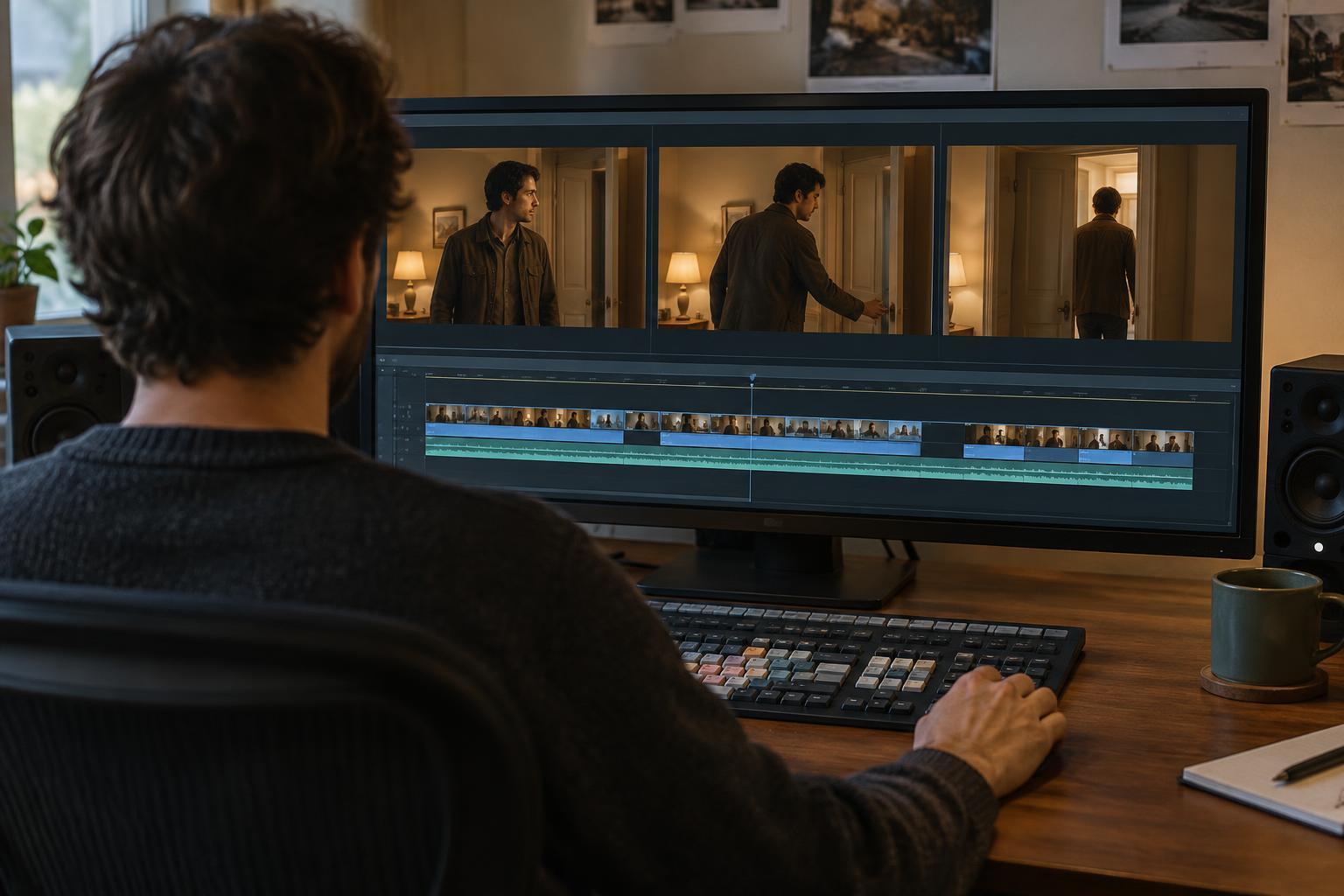
A cut during movement can bridge two camera angles smoothly because the viewer is already following the action. A character starts to sit in a medium shot and finishes sitting in a closer one; the movement links the images. For a clean match, compare the position and speed of the body or object on both sides of the cut. If a hand has nearly reached a door handle in the first shot, it should not be far away from it in the next unless a change in time is intended.
Props and costumes deserve the same attention. A cup that switches hands or a jacket that changes position can distract from an otherwise clear scene. Not every small mismatch needs fixing: a cut may still work if the emotion and action carry the viewer forward. But when a detail matters to the plot, give it particular care. If a character pockets a key, the audience needs a dependable view of that action and its result.
Reaction shots can also support continuity. They connect an event to someone’s response while giving the edit room to move between takes. Use them because the reaction matters, not merely to cover a difficult join.
Clarify time without showing every moment
Continuity does not mean presenting an action in real time. An edit can omit routine steps while preserving the order of cause and effect. Show a character putting a letter in an envelope, then cut to the envelope sliding through a mail slot. Viewers can infer the walk to the mailbox. If the missing interval contains an important decision or obstacle, however, skipping it may leave the scene feeling incomplete.
Sound can make time and space feel continuous across a cut. Room tone, traffic, or a conversation carrying over into the next shot can connect images taken at different distances. A sound that begins before its source appears can also prepare viewers for a change of location. Listen for abrupt shifts in background noise that unintentionally make two shots feel as though they belong to different places.
Break continuity with a clear purpose
A jump cut, sudden change of screen direction, or unexplained gap can be expressive. It might suggest impatience, disorientation, or a memory with missing pieces. Such choices have more impact when the surrounding scene gives viewers enough information to recognize the disruption as intentional.
For a practical edit review, watch the scene once for the story, then again with the sound off, and finally while listening without looking at the picture. Note any moment when you lose track of a person, object, elapsed time, or sound source. Fix the confusion that works against the scene, but keep the questions you want the audience to ask. Effective continuity is not a rigid set of rules; it is a way to control what viewers understand from one cut to the next.