Scout with your ears, not just your eyes
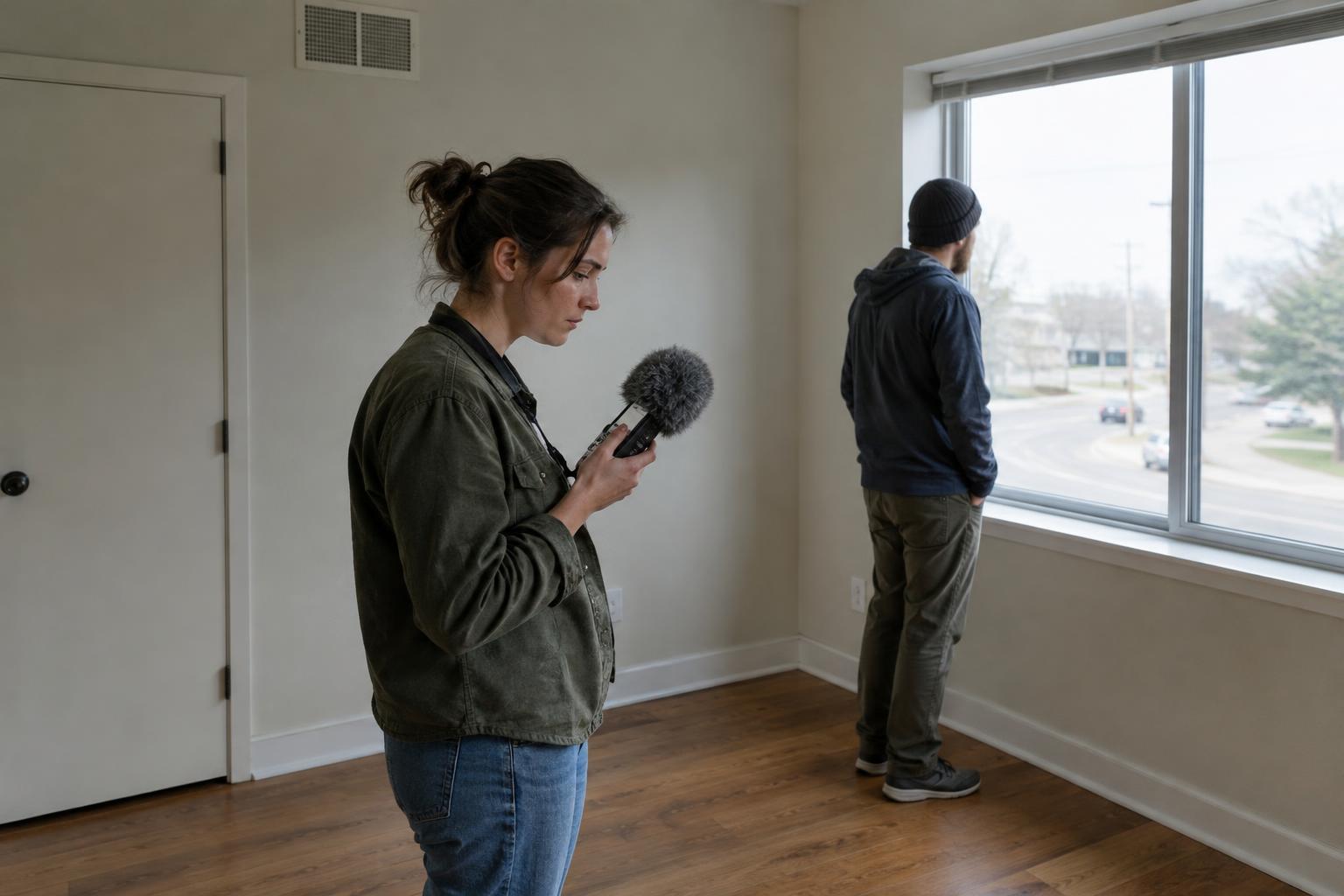
A striking location is not always a workable one. A room may offer the right light and background while a refrigerator cycles on during dialogue, or a nearby road sends bursts of traffic through every take. Before committing to a location, spend a few minutes standing still and listening. Then listen again from the positions where the camera, performers and microphone are likely to be. A noise that seems faint at the doorway may be prominent beside the action.
Pay attention to both constant sound and interruptions. A steady hum may be difficult to remove, but it can at least remain similar between takes. An unpredictable horn, barking dog or slamming door can ruin individual lines and complicate editing. If possible, scout at the time of day you expect to film. A quiet room on a weekend may sound different on a weekday, and a peaceful street may change noticeably during commuting hours.
Check the building and everything inside it
Heating, ventilation and air conditioning deserve an early check. Listen near vents as well as at the center of the room, and find out whether the system switches on automatically. Fans, extractors, refrigerators, freezers, pumps and computers can also create a persistent bed of noise. Some appliances can be paused safely for a take; others cannot or should not be. Identify what controls each sound rather than assuming a switch will be available on the day.
Older floors, loose doors and rattling windows may add noise only when people move or wind picks up. Walk the paths performers will use, open and close doors, and listen in adjoining rooms. A tiled hallway can carry footsteps into a scene, while a thin wall may let conversations or music through. Soft furnishings can reduce reflections within a room, making speech less echoey, but they will not reliably block sound entering from outside. Treat echo and noise intrusion as separate problems.
Listen beyond the property
Traffic is more than a general wash from a main road. Motorcycles, delivery vehicles, buses and reversing alarms can cut across dialogue at irregular intervals. Nearby construction, gardens, loading areas and car parks may have their own schedules. If a location is close to a flight path or railway, listen for how long each pass-by lasts and how often it returns. Windows and doors may soften these sounds without making them disappear.
People can be just as variable as vehicles. Consider neighboring businesses, shared corridors, classrooms, public gathering spots and anyone who may use the space while you film. You may not be able to control them, so ask about normal activity and look for a quieter room or filming period. Outdoor locations add wind, rain, moving leaves and water. Wind protection helps a microphone, but it cannot make wind-driven background noise vanish. Have an indoor alternative or a schedule that can accommodate a pause.
Make a short recording test
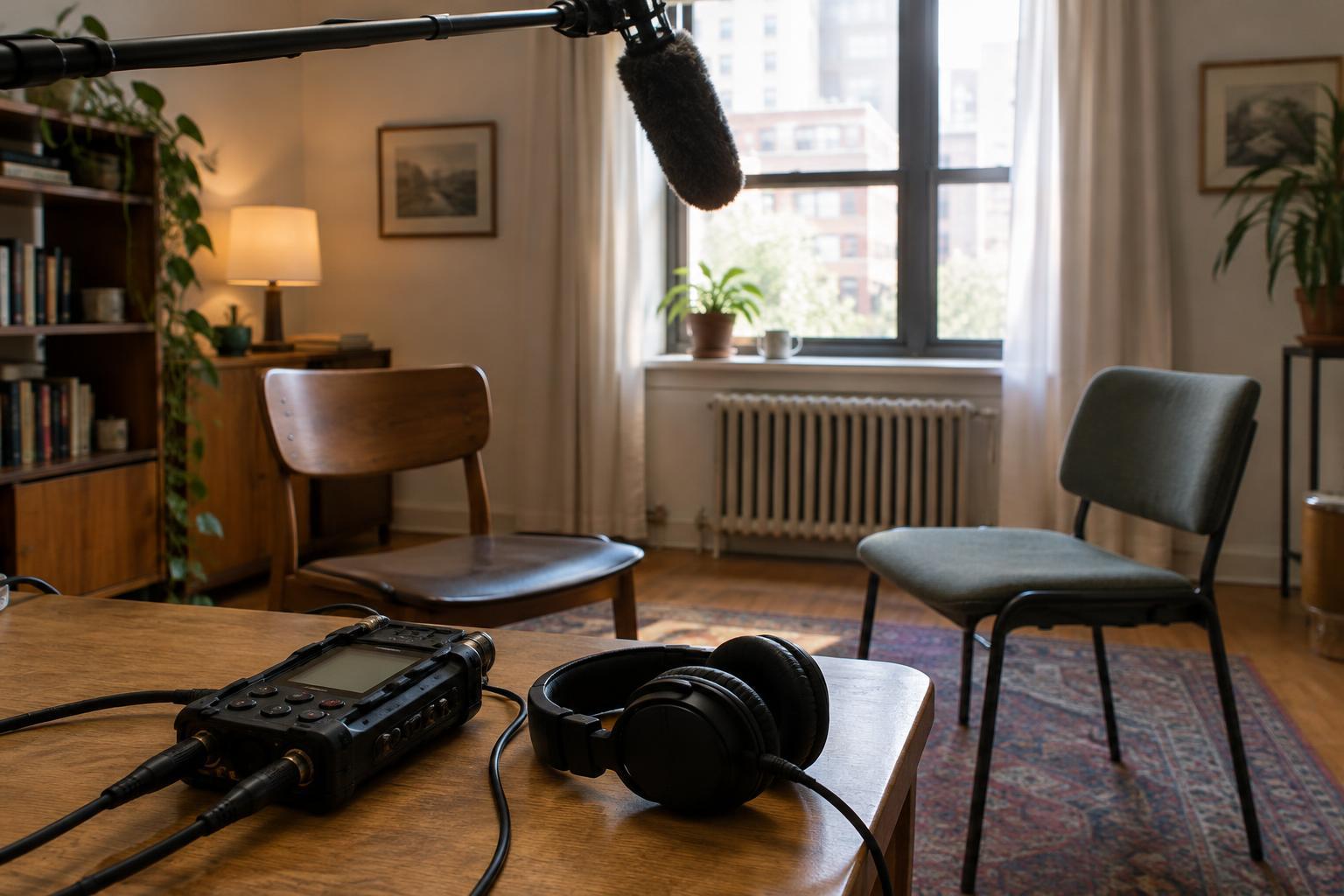
A phone recording can help you remember a location’s sound, but a test with the microphone and recorder you expect to use is more informative. Record a short spoken passage at the planned performer position, using a realistic microphone placement. Then record silence long enough for intermittent sounds to appear. Listen back on headphones rather than judging the room only while you are standing in it. Microphones can reveal hums and distant voices that your attention filters out in person.
Repeat the test with likely changes: a window closed, a fan off where permitted, or the microphone facing a different direction. Note which improvements depend on conditions you can actually reproduce during filming. If you plan to shoot coverage from several angles, consider whether the microphone can stay close for each one. A quiet location helps, but distant microphone placement can still leave dialogue thin and surrounded by room sound.
Choose the location you can manage
When comparing spaces, distinguish between noise you can control, noise you can schedule around and noise you must accept. A refrigerator that can be switched off briefly, with someone assigned to turn it back on, is a different risk from unpredictable work next door. Keep a simple scout note listing the sound, its likely timing and your response. This makes trade-offs easier when a visually attractive option has a difficult soundtrack.
Build sound into the shooting plan. Allow time to close doors, silence approved equipment and wait out interruptions without rushing performers. Capture room tone under the same conditions as the dialogue so the editor has a consistent background for transitions. If a location remains noisy despite reasonable adjustments, consider another space or a scene approach that does not rely on clean on-location dialogue. The best choice is not necessarily silent; it is the location whose sound you can anticipate and manage.