Start with the reason to move
Camera movement changes what an audience sees and when they see it. A move might follow someone through a doorway, reveal an object just outside the frame, or shift attention from a speaker to a listener. Before choosing a technique, ask what the viewer should learn or feel during the shot. If the answer is unclear, a steady frame may be the stronger choice.
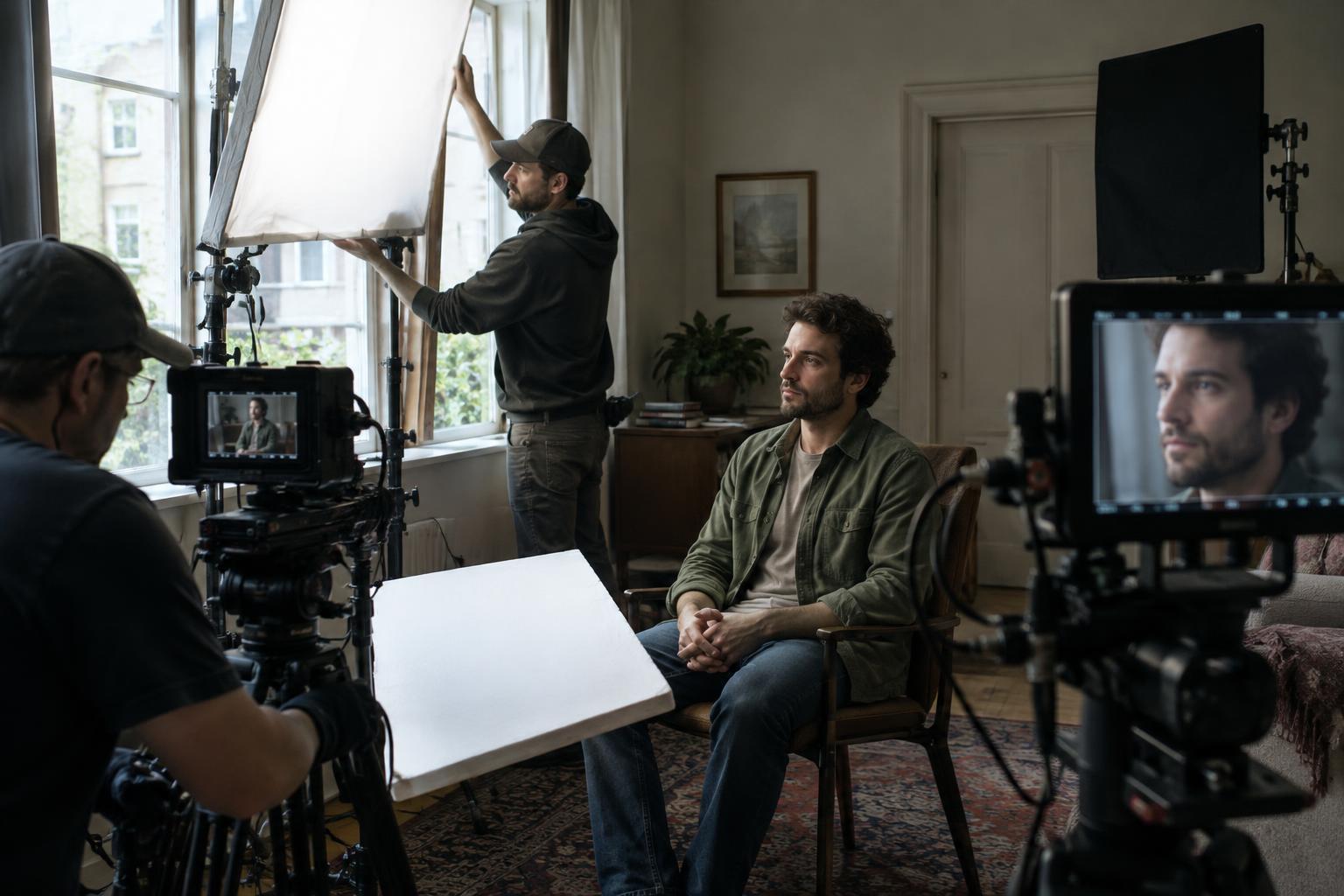
Movement also affects production. It can expose lights and crew, complicate focus, and make sound recording harder when footsteps or equipment travel with the camera. Rehearse the action before settling on an elaborate move. A simple path that preserves the important moment is often more useful than a complex one that draws attention away from the scene.
Pans and tilts: moving from one position
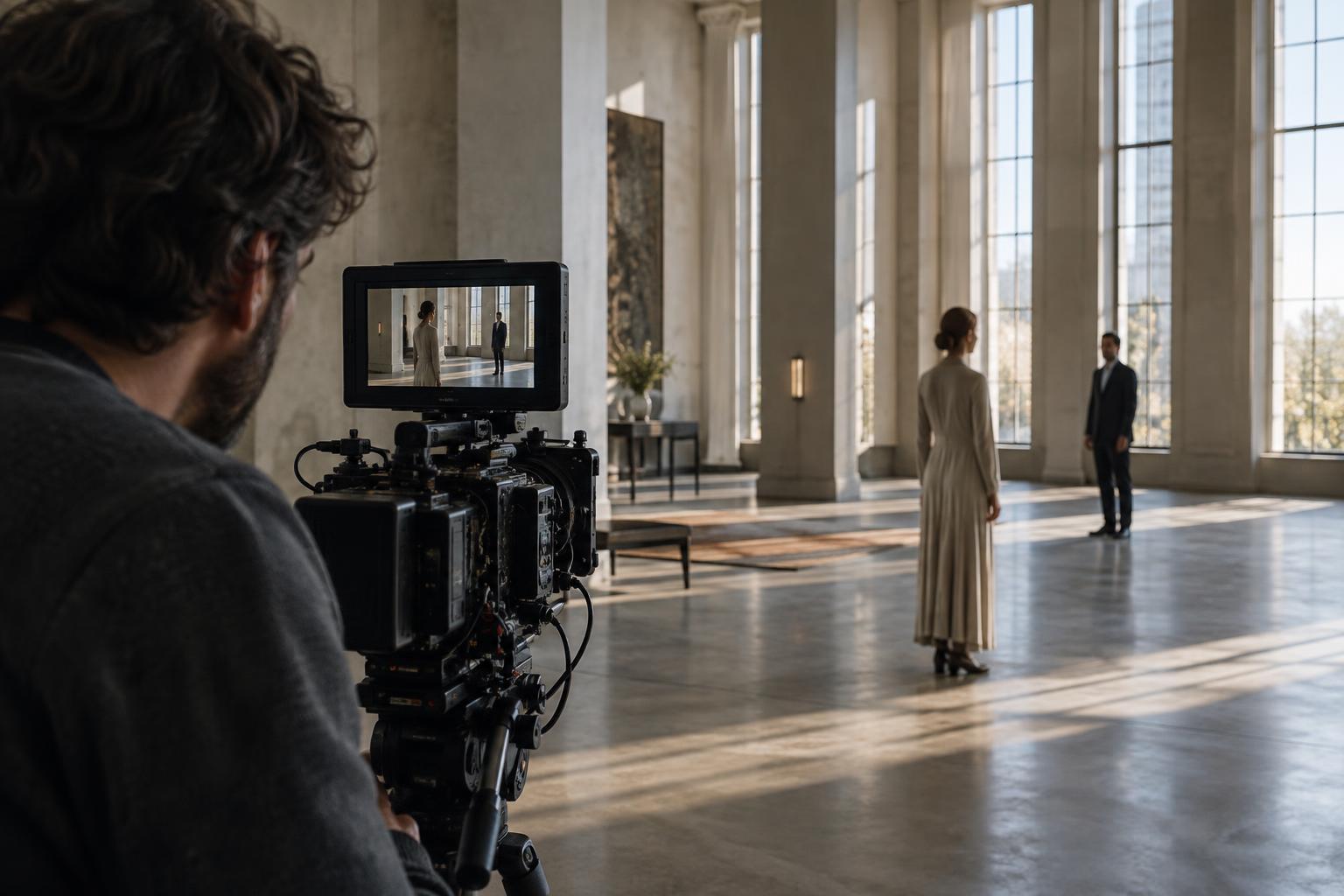
A pan rotates the camera left or right from a fixed position. A tilt rotates it up or down. Neither move requires the camera itself to travel through the space. That makes them practical ways to follow an actor, connect two parts of a location, or withhold information until the frame reaches it.
For a deliberate pan or tilt, decide where the shot begins and ends. Compose both frames, then rehearse the speed of the move against the actor’s timing. Leave a little room in the direction a moving subject is headed so the frame does not seem to chase them. If the reveal matters, consider how long the opening composition needs to register before the camera moves.
Fast moves can feel abrupt or disorienting, which may be exactly the point in a tense scene. Slower moves tend to let viewers study the space. Neither speed carries a fixed meaning: the effect depends on performance, framing, and what the edit places before and after the shot.
Tracking shots: changing the camera’s position
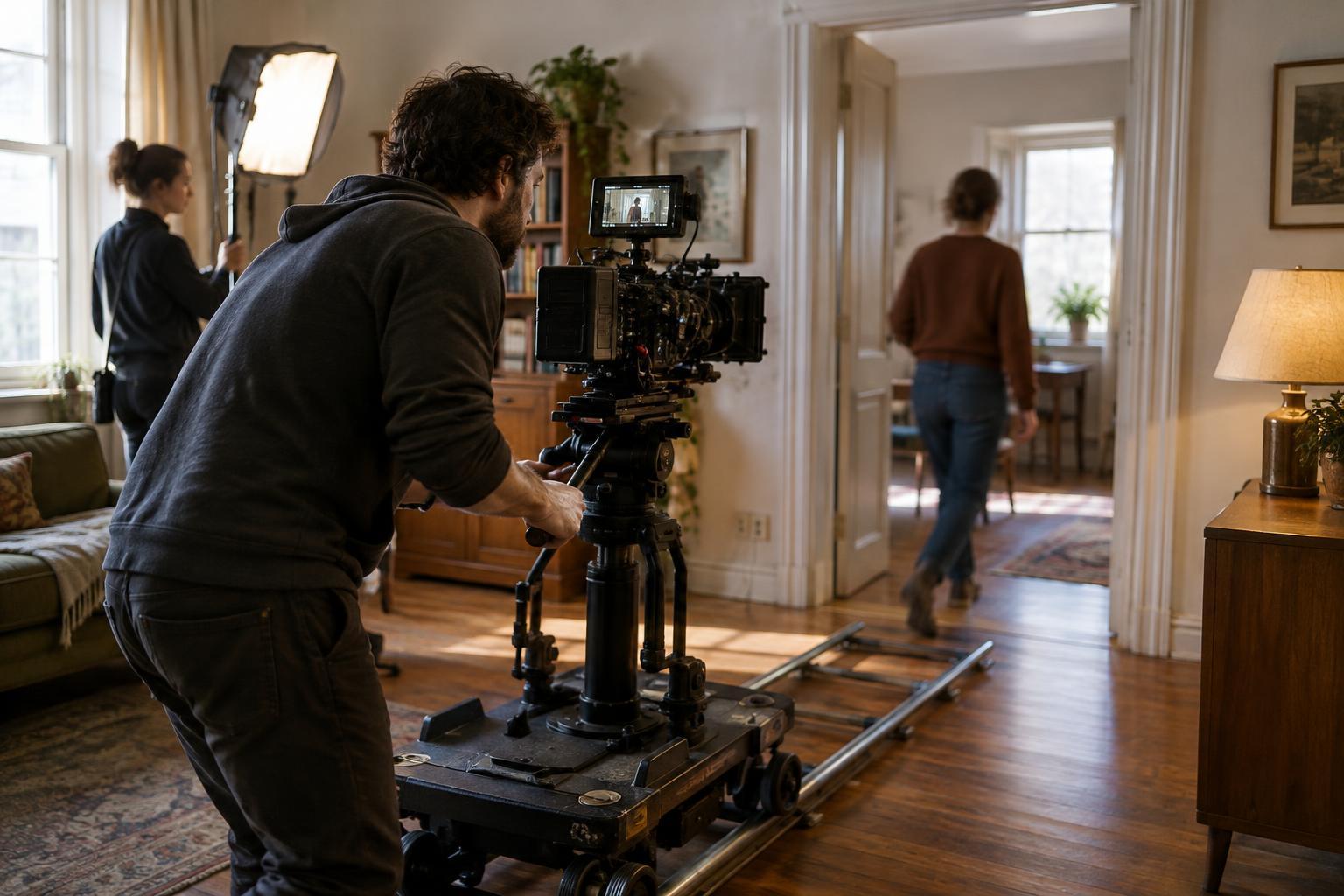
In a tracking shot, the camera travels through the scene rather than rotating in one spot. It might move alongside a walking character, advance toward a detail, or retreat as someone approaches. Because the camera’s position changes, foreground and background objects shift in relation to one another. This can give a space depth and make the viewer feel closer to the action.
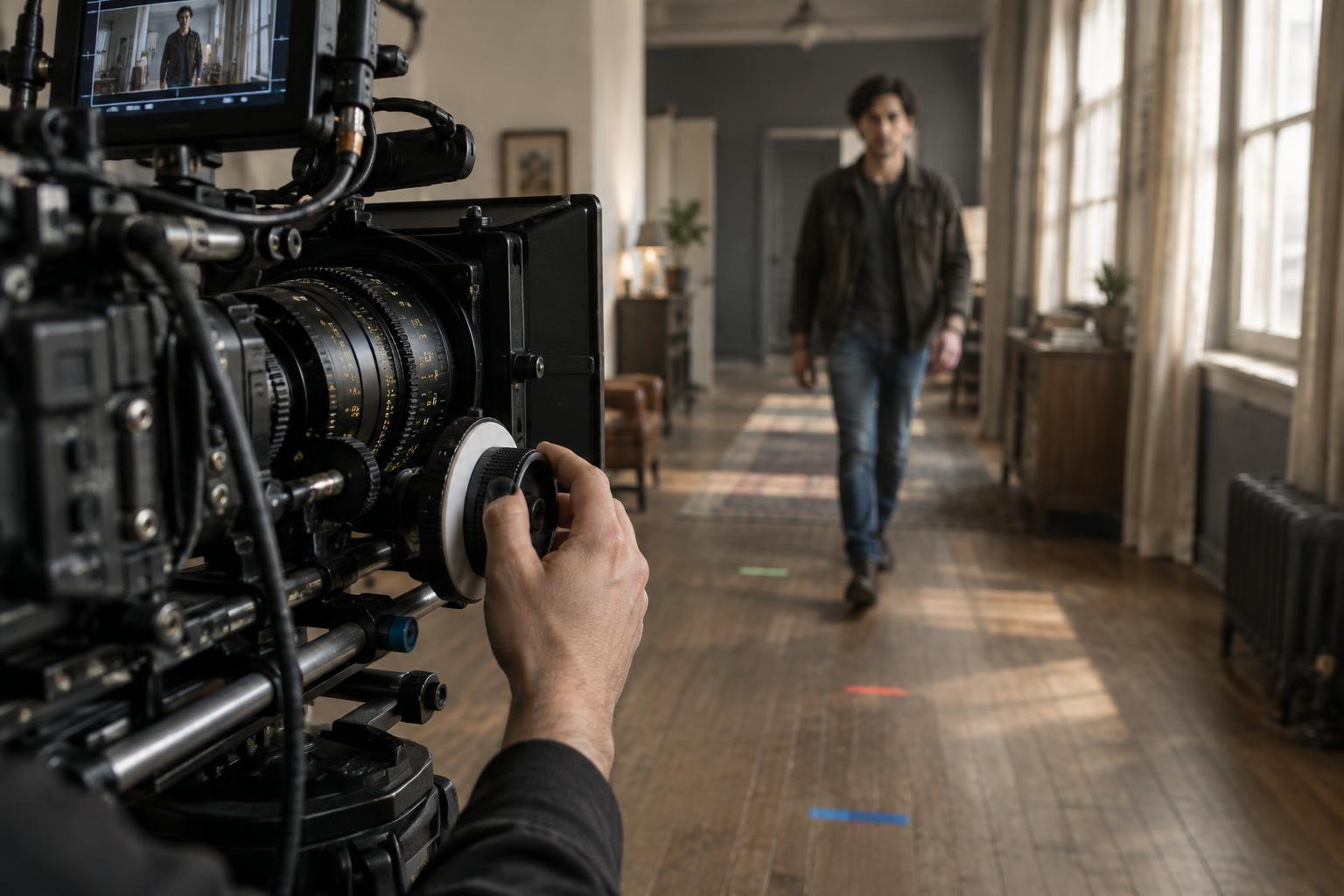
You do not need an elaborate rig to plan a useful tracking shot. First walk the route without a camera and look for obstacles, uneven ground, reflections, and places where lights or crew might enter the frame. Mark a clear start and finish, then check whether the subject remains visible throughout. A smooth move is valuable only if it delivers the intended information.
Think about distance as well as direction. Moving closer can narrow attention onto a face or object; moving away can disclose more of the setting. Those effects are not automatic, so test the framing at several points along the route. If maintaining focus or a clean path proves difficult, breaking the action into simpler shots may tell the story more clearly.
Handheld: controlled responsiveness
Handheld work allows the operator to react directly to performers and changing action. Its small shifts can make a shot feel immediate, while larger adjustments may suggest instability or urgency. Handheld does not have to mean constant shaking. The operator can hold a relatively calm frame and let movement become more noticeable at a specific story beat.
Give handheld shots the same preparation you would give any other move. Agree on the subject, the rough route, and the moments that must remain in frame. Keep the operator’s path free of hazards, and rehearse with the performers so everyone knows where the camera may be. If a shot contains important dialogue or a visual clue, make sure the movement does not obscure it.
Choose a movement the scene can support
Try describing a shot in one sentence without naming the equipment: “Follow the character until they notice the open door,” for example. That statement gives you a purpose against which to test options. A pan may reveal the door from a fixed viewpoint; a tracking move may bring the audience through the room; handheld may stay close to the character’s reaction. Each choice presents the same event differently.
When practicing, shoot a short action several ways, including one locked-off version. Watch the results in sequence rather than judging each move in isolation. Notice where your eye goes, whether the reveal arrives at the right moment, and whether the motion adds anything that a cut could not. Camera movement works best when it helps the audience follow the scene, not when it merely proves the camera can move.