Height and angle are different decisions
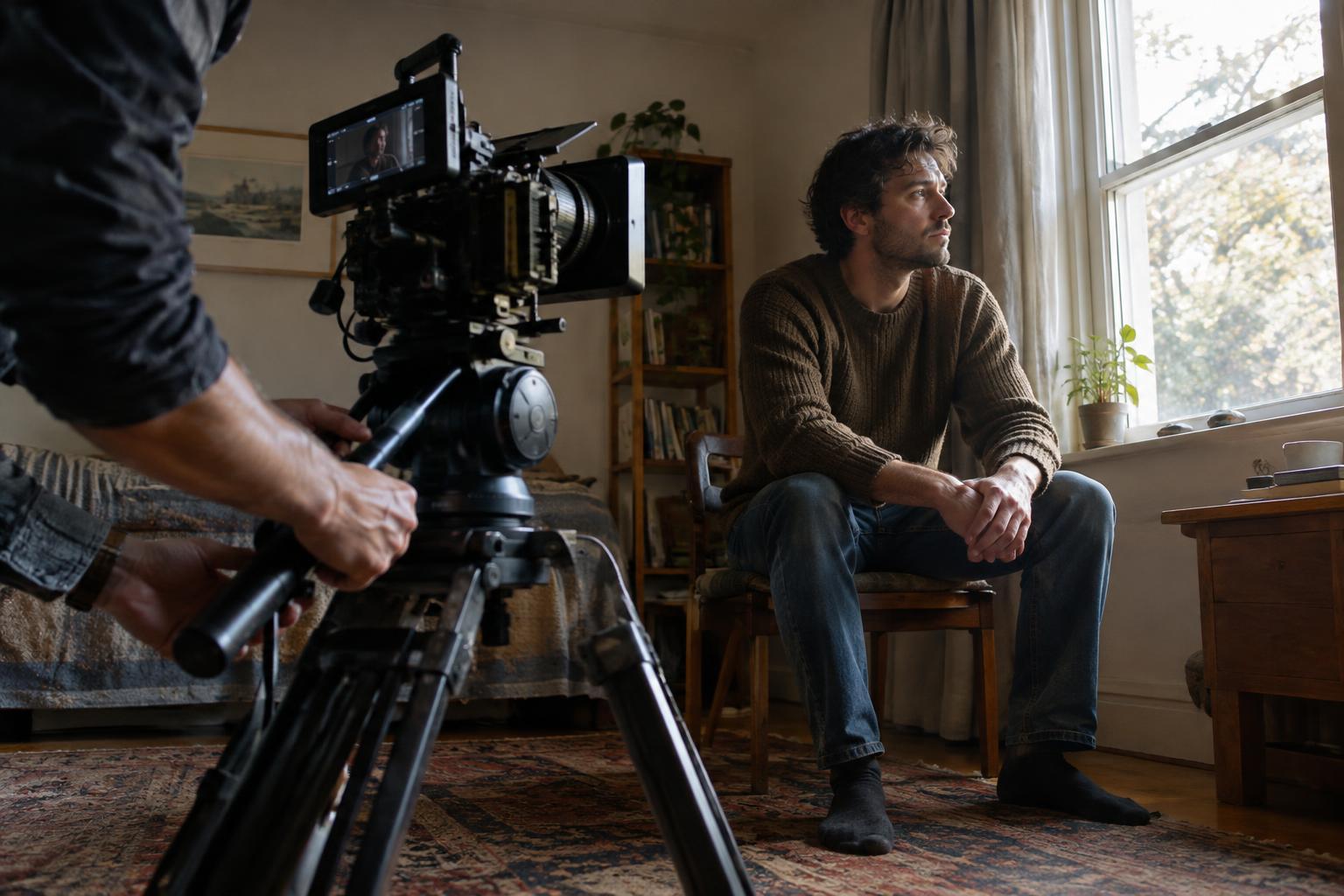
Camera height is where the camera sits vertically: near the floor, at a seated person’s eye level, above a standing person, or somewhere in between. Camera angle describes where it points. You can place a camera low and tilt it upward, or place it low and keep it level. Those choices produce different images, even when the subject stands in the same spot. A level camera near the floor may emphasize shoes and the space beneath furniture; an upward tilt may bring a face and the ceiling into view.
Before assigning meaning to a viewpoint, notice what it lets the audience see. Moving the camera up can reveal a tabletop while hiding what lies beneath it. Moving down can put foreground objects between the viewer and a character. Tilting changes the balance of walls, floor, and ceiling in the frame. These concrete changes often do more storytelling work than a rule such as “low angles mean power.”
What the viewpoint suggests about a character
An eye-level view often feels close to ordinary observation, especially when the camera is near a character’s eyeline. That does not make it neutral: distance, framing, performance, and the person being watched still affect how we read the shot. A camera set below a character and pointed up can make their presence feel larger or more imposing. Set above them and pointed down, it may make them seem isolated or exposed. Neither effect is automatic. A low shot of someone struggling to stand could stress effort rather than authority.
Think about whose experience matters in the moment. If a child looks up at an adult, a lower camera can give the adult the scale the child perceives. If the scene is about the adult noticing the child’s small gesture, a higher camera might serve that point of view better. In a conversation, giving each person a different camera height can subtly distinguish their positions. It can also distract if the visual difference is stronger than the drama calls for.
Build the composition, not just the effect
Changing height alters the background behind a face. From below, a person may be outlined against a plain wall or bright sky; from above, a patterned floor may compete for attention. Check the frame edges, headroom, and any objects that appear to touch or cut through the subject’s outline. A striking angle is less useful if it hides an important action or makes the viewer work to understand where everyone is.
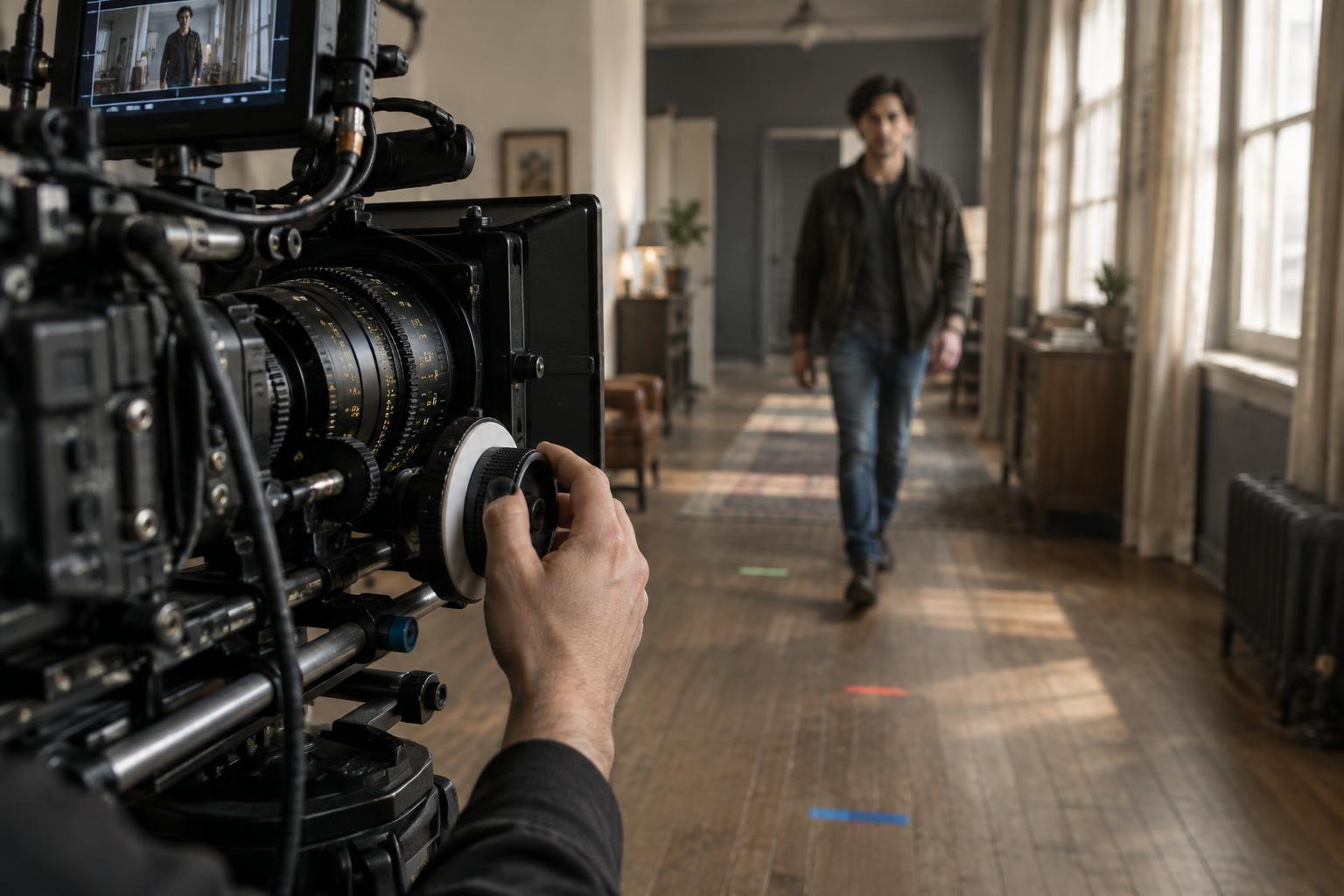
Viewpoint also works with camera distance and lens choice. Moving the camera close can make nearby features and objects more prominent relative to the background, particularly with a wider lens. Standing farther back and using a longer focal length gives a different sense of depth. If you are testing height, try to keep distance and lens choice consistent at first. Then you can judge what the vertical move itself contributes before combining it with other changes.
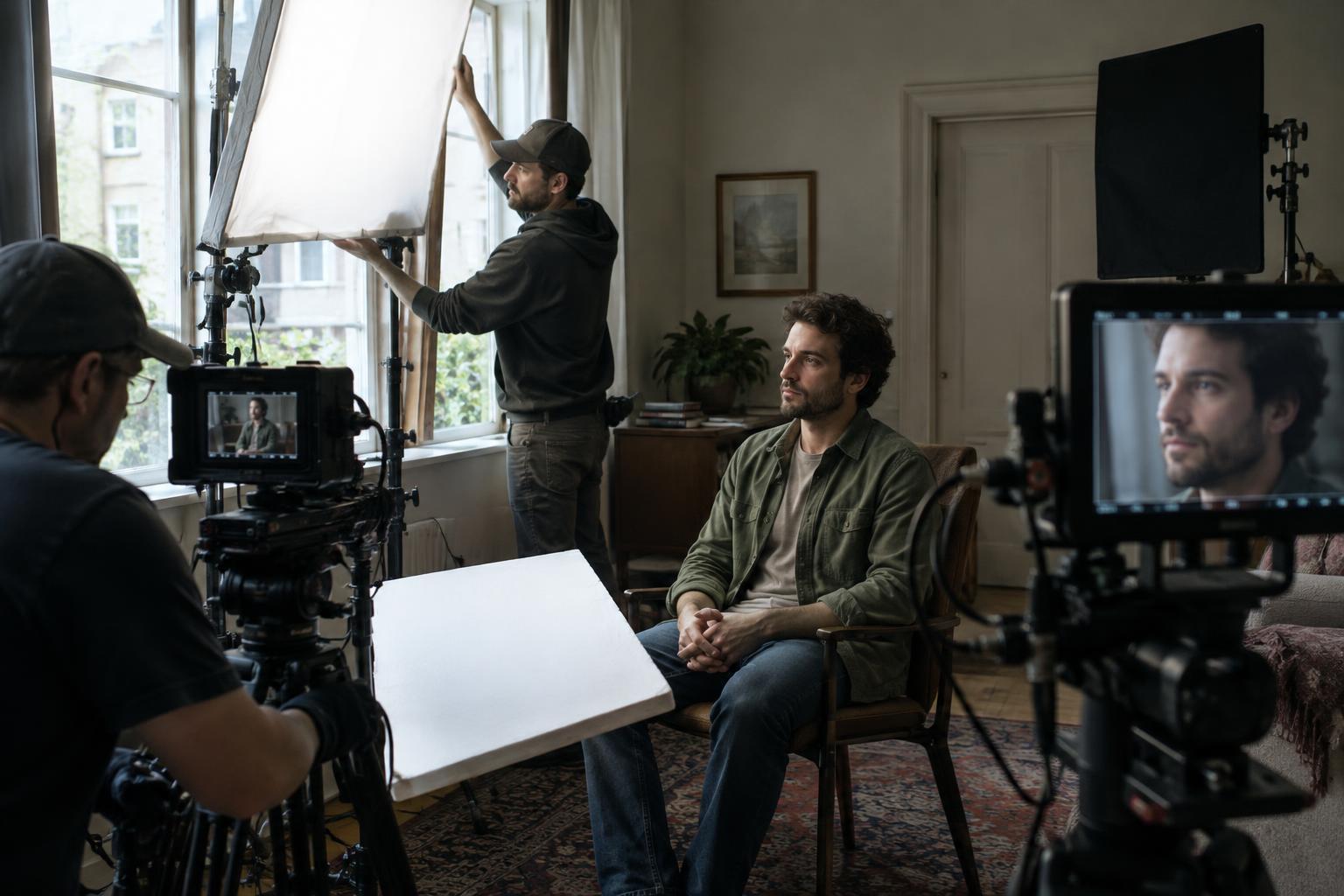
Lighting deserves another look whenever the camera moves. A higher viewpoint might reveal a light in the background; a lower one might catch glare on a table or place a shadow across an actor’s face. Watch the image on the monitor or in a test recording rather than assuming the setup will behave the same from every position.
Choose a viewpoint you can sustain through the scene
For a practical test, shoot the same short action three ways: at the main character’s eye level, noticeably lower, and noticeably higher. Keep the action and approximate framing similar. Compare where your attention goes first, what parts of the setting become visible, and how each version makes the action feel. If one viewpoint seems promising, try a smaller adjustment. A modest change in height may give you the clarity you need without calling attention to the camera.
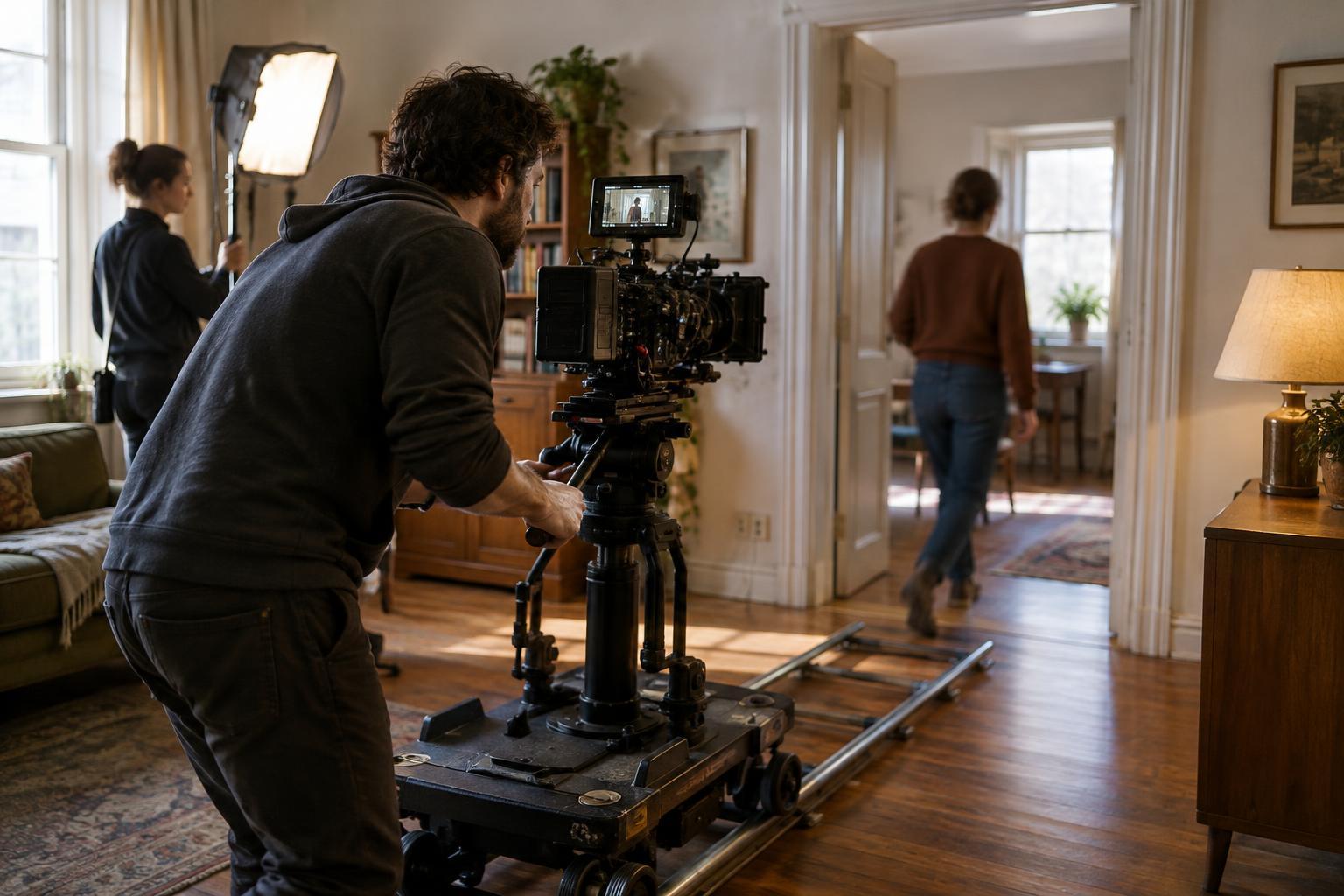
Consider how the shot will connect to its neighbors. If a character looks toward something off-screen, the next shot should give the viewer a readable relationship between the look and what is seen. When cutting between two people, shifts in height can be expressive, but check eyelines and screen direction so the conversation remains easy to follow. A deliberately disorienting angle is a choice; accidental confusion is usually a reason to rethink the setup.
Start with the scene’s immediate question: what should the audience understand or feel at this instant? Place the camera where it can show the relevant action, then adjust height and angle to shape the relationship to it. The most effective viewpoint need not be dramatic. Sometimes the clearest way to change a shot is to move the camera only a little.