What a call sheet is for
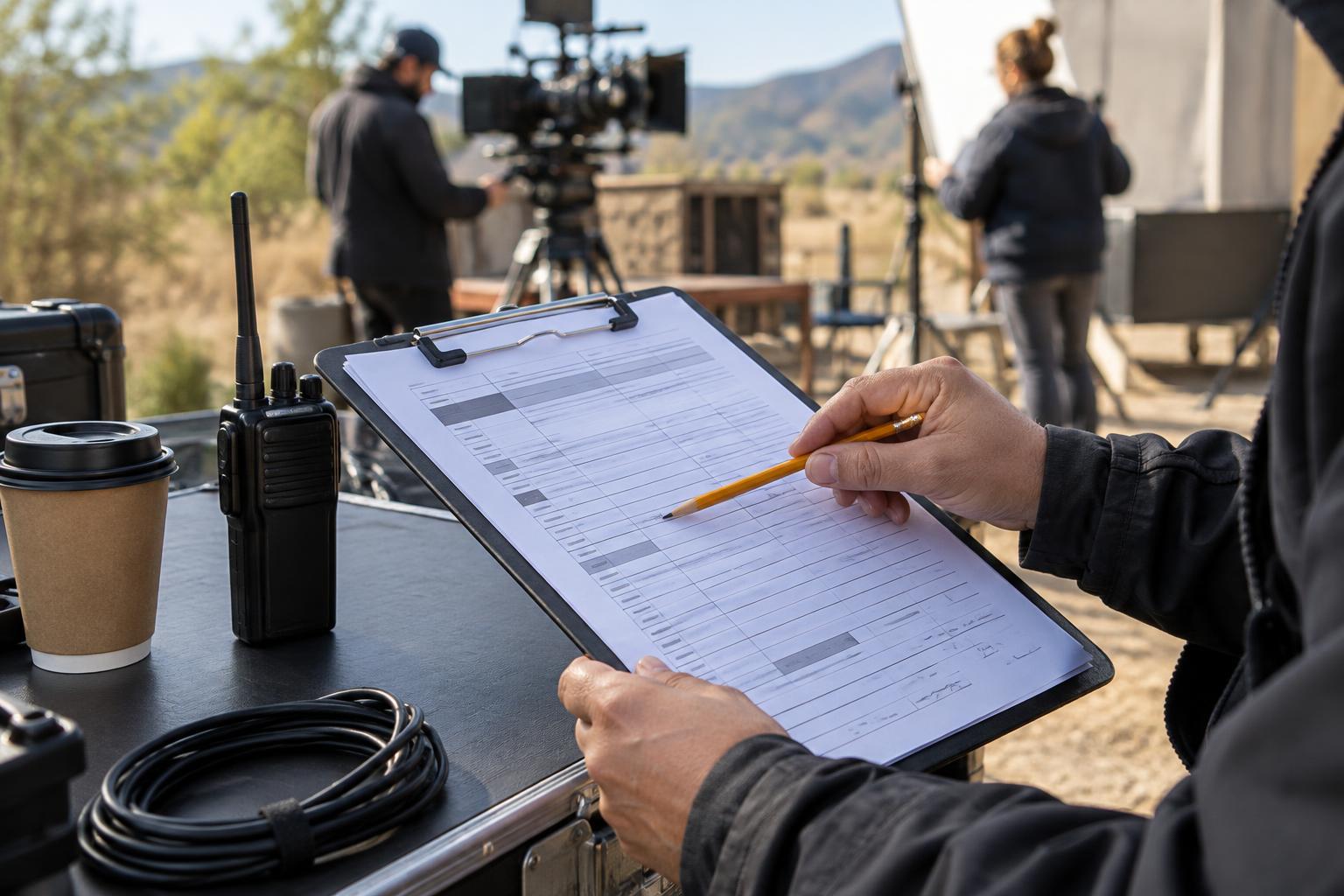
A call sheet is the day’s shared plan for a film shoot. It tells cast and crew where to report, when they are needed, what scenes are planned and whom to contact if something goes wrong. Production usually prepares it ahead of the shoot and distributes it to the people working that day. Its purpose is practical: fewer guesses in the morning mean more time to work once everyone arrives.
Treat the call sheet as a working plan, not a promise that every scene will happen at the printed minute. Lighting, performances, weather and location needs can shift the order of work. Before relying on a saved copy, check that it is the latest version. A change to a call time or address matters more than a tidy layout, so read the details even if the sheet looks familiar.
Start with your call time and reporting location
Your individual call time is the time you have been asked to report, not necessarily the time cameras roll. A general crew call may appear at the top of the sheet, while performers and particular departments may have different times elsewhere. Check the entry that applies to you. If a performer has separate hair, makeup, wardrobe and set times, read the sequence rather than assuming the earliest time is a camera-ready time.
Next, confirm exactly where to go. The filming address, parking area, crew entrance, base camp and set may be different places. Look for access instructions, transport notes and any limits on where equipment can be unloaded. Allow for the steps between arrival and your first task, such as parking, checking in or moving gear. If an address or call time is unclear, ask the listed production contact rather than guessing from an earlier message.
Use the schedule to understand the day
A call sheet often lists scenes by number, location, day or night setting, brief description and the cast needed. This helps each department prepare for the same work. A sound team might note a difficult location; a lighting team might plan around a change from interior to exterior; a performer might check which scenes require a particular costume or prop. The list is a guide to the day’s priorities, not a replacement for the script or department plan.
Look for planned meal breaks, company moves and an estimated wrap as well. A company move means the production is relocating during the day, which can affect where people and equipment need to be. An estimated wrap helps with planning but may change. If your work depends on a scene happening at a precise time, confirm the current order with the appropriate department lead or assistant director on set.
Read the notes, contacts and safety information
The less prominent parts of a call sheet can be the most useful. Notes may cover what to bring, location restrictions, expected conditions or special requirements for a scene. Read anything addressed to your department as well as the general notes. If the sheet includes emergency information, identify it before the day becomes busy. Follow the production’s on-site safety instructions, and raise a concern through the listed contact or your department lead.
Contact lists help questions reach the right person. A production contact may be the best choice for travel or access problems; an assistant director may handle questions about the day’s shooting order. Use the channel the production has provided, and say who you are and which shoot day you mean. Because call sheets can contain personal phone numbers, private addresses or sensitive story details, share them only with people who need them for the work.
Make a quick check before you leave
The night before, compare the latest call sheet with what you have packed and arranged. Check your call time, reporting point, parking or transport instructions, scenes, department notes and contact number. If you spot a conflict—such as two different addresses in messages and on the sheet—resolve it before traveling if possible. Keep the sheet accessible without depending on a signal at the location.
On the shoot day, be ready for updates. Productions may send a revised sheet or give a clear change through the agreed communication channel. When that happens, note what changed and make sure it affects your own plans as expected; do not assume a new crew call automatically changes an individual call. A call sheet works best when everyone reads their part, asks about genuine ambiguities and stays attentive to the plan as it develops.