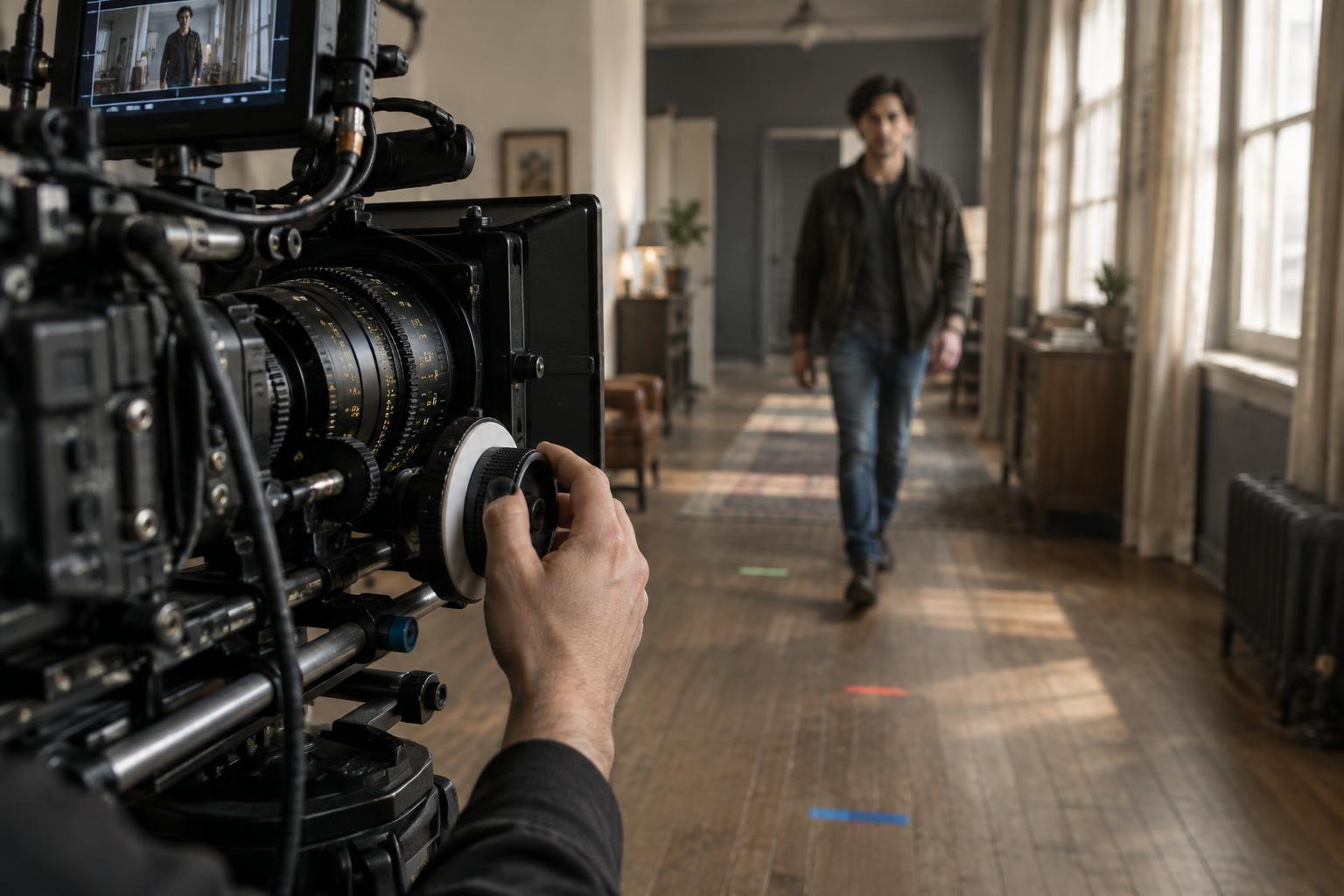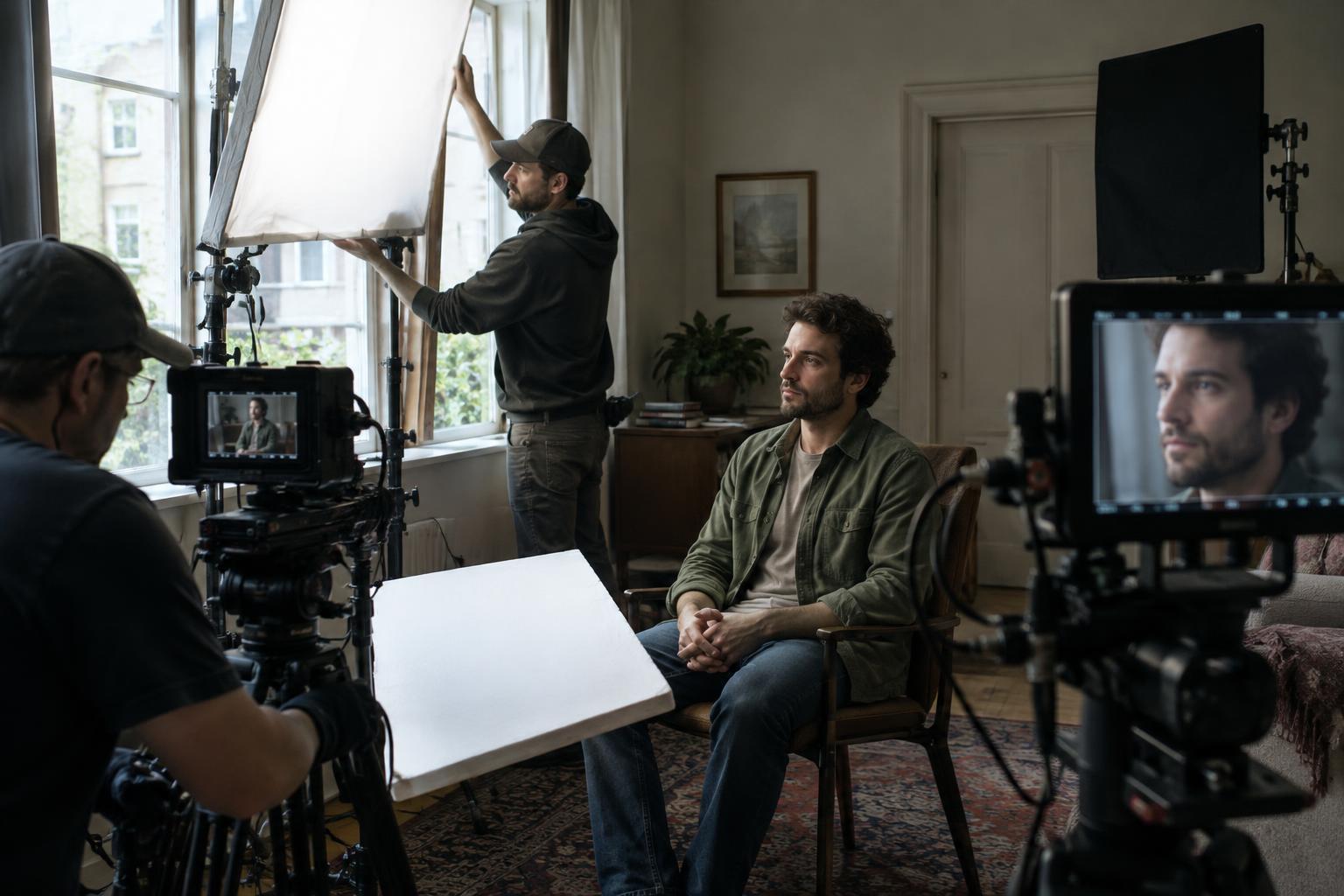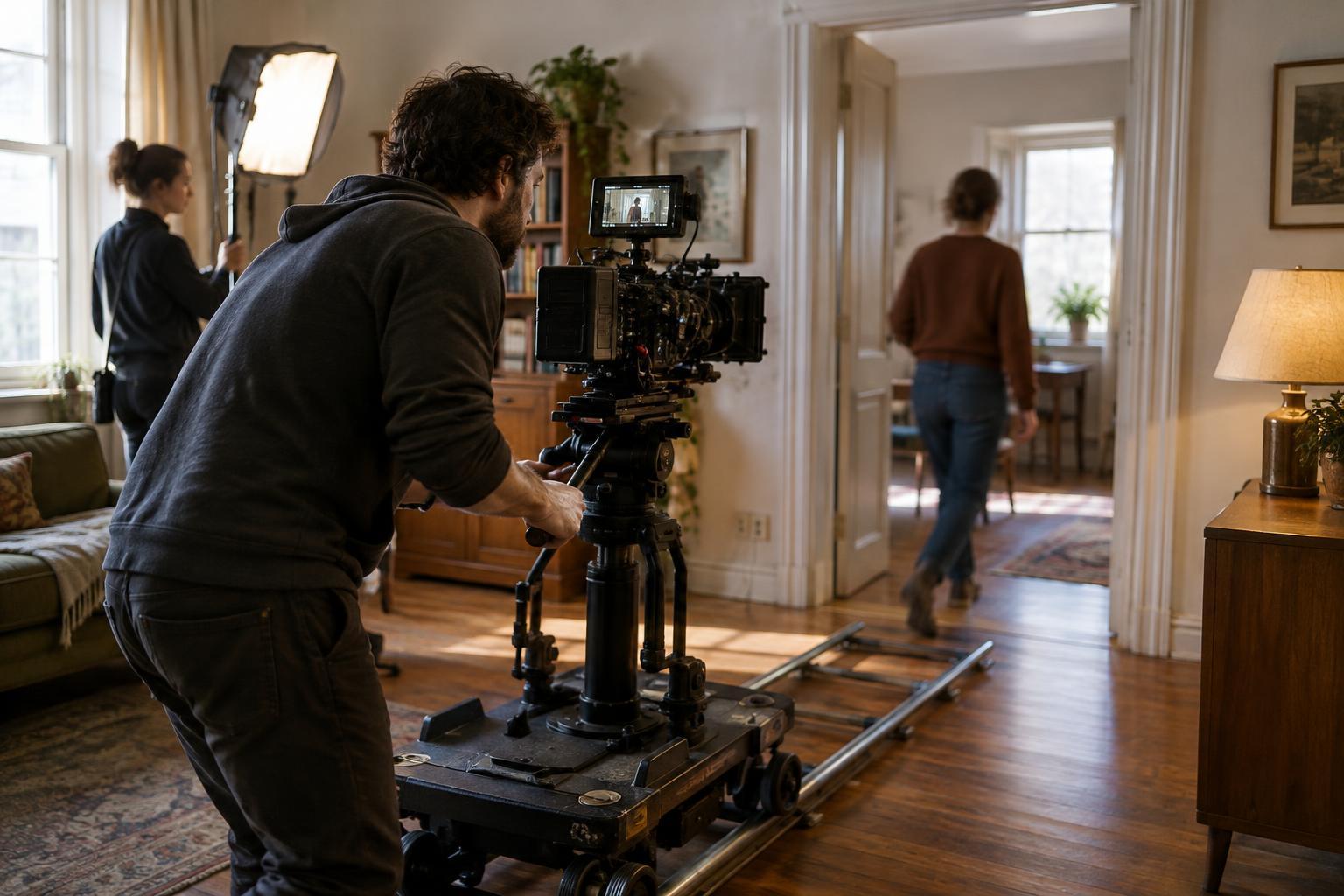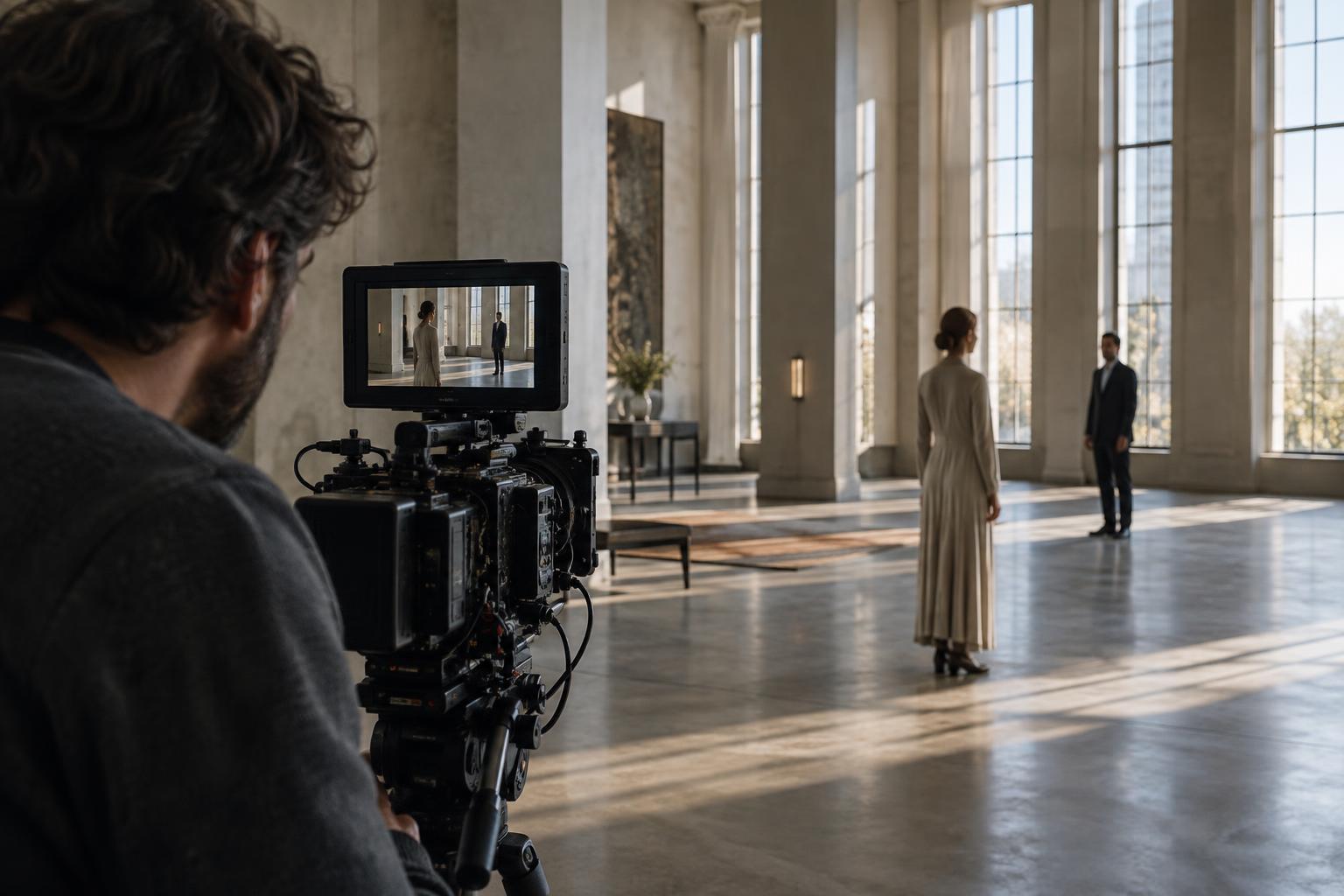
The frame is a storytelling choice
Aspect ratio describes the relationship between an image’s width and height. A 1.33:1 frame is relatively tall for its width, while 1.85:1 and 2.39:1 frames offer progressively more horizontal space. Those numbers do not determine whether an image is cinematic. They set the boundaries within which faces, movement, architecture and empty space must work together.
A wider frame might let two characters occupy opposite sides of a room without a cut. A taller frame might give more attention to a standing figure and the space above or below them. Neither shape has a fixed emotional meaning: camera distance, lens choice, lighting, blocking and editing also affect what an audience notices. Choose a ratio because it helps you stage the story, not because it resembles another film.
Choose the shape before you compose
Begin with the scenes you expect to shoot. Are conversations built around isolated close-ups or people sharing a frame? Does the location offer useful width, height or depth? Will important action move across the room or toward the camera? Sketch a few key shots inside rectangles with different proportions. Simple drawings can reveal whether a proposed ratio gives a scene useful room or leaves you repeatedly fighting its edges.
Consider delivery at the same time. A frame intended for a cinema screen may also appear on a phone or in a square promotional crop. You do not have to make every shot equally suited to every format, but you should know which version is primary. Decide whether alternate versions will be cropped, reframed or displayed with unused screen space. That decision affects how close you can place a face, gesture or crucial object to the border.
Compose for relationships, not just balance
In a wide frame, filling both sides is not a requirement. Empty space can establish distance between characters, make a doorway feel important or give someone room to enter the shot. Its effect depends on what the viewer expects to happen there. If the empty area serves no clear purpose, try moving the camera, changing the blocking or bringing a relevant part of the setting into view.
Narrower frames invite their own choices. You can stack visual information at different heights, use a corridor or window to guide attention, or hold a character against a large expanse of wall or sky. Across any ratio, check headroom and eyeline space against the action rather than applying a rigid rule. A person looking off-frame may need space in that direction; withholding it can also create pressure when the story calls for it.
Remember that a ratio cannot compensate for unclear staging. If two actors trade places, cross the lens or sit at different depths, watch how their relationship changes throughout the shot. Compose for the beginning, middle and end of the action, not only for a still frame that looks attractive on a monitor.
Test the frame on set
Set the intended aspect-ratio guides on your camera monitor and any viewing monitors before shooting. Confirm whether those guides are only an overlay or whether the camera is recording a crop. If you plan to crop later, record enough image outside the guides to make adjustments, while treating the intended frame as the real composition. A boom microphone, light stand or distracting bright patch just outside the guide may become a problem if you later shift the image.
Make short tests with people moving through representative shots. Check close-ups, two-shots and the widest planned setup. A broad composition that works for a quiet exchange may become awkward when an actor stands or approaches the lens. Review tests at a size similar to the intended viewing experience when possible: fine details that organize a large image may be difficult to notice on a small screen.
Carry the decision through the edit
In the edit, keep the project frame consistent with the chosen delivery ratio and inspect every shot after scaling or stabilization. Those processes can change the effective crop, reducing headroom or pushing a subject against an edge. If footage comes from cameras with different recording shapes, decide shot by shot how it should fit rather than allowing an automatic setting to make the compositional choice.
Finally, watch a complete sequence instead of judging each image alone. A sudden change in subject size or screen position may feel stronger than any individual shot suggests. Aspect ratio provides a stable boundary; composition gives that boundary purpose over time. The most useful frame is the one you can keep using deliberately through production and post-production.